Is your brand just a whisper in the AI-powered wind?
That’s the provocative question marketers need to grapple with now. We’re talking about a seismic shift, driven by artificial intelligence, that fundamentally alters how consumers find products and services. And here’s the kicker: AI doesn’t give a hoot about your carefully crafted jingle, your high-impression ad campaign, or your latest flash sale. For AI, all that is essentially invisible noise. It’s searching for meaning, for genuine relevance. What happens to brands that have lost that in the relentless pursuit of short-term performance metrics?
The CMO Squeeze: A Role in Peril
The statistics paint a grim picture. Forrester’s 2025 report on Fortune 500 CMOs shows a declining representation of the CMO title, down from 55% to 49% in just one year. The average tenure has plummeted to a mere 3.9 years, the shortest among C-suite executives. It’s a brutal cycle: CMOs are tasked with the incredibly complex, long-horizon job of brand building, yet they’re tethered to short-term performance systems with shrinking budgets. It begs the question: are we asking them to perform miracles?
Some companies, faced with this structural challenge, have opted for the seemingly pragmatic solution of eliminating the CMO role altogether. UPS, Etsy, and Walgreens are cited examples, folding marketing responsibilities into chief commercial or operating officer positions, or worse, leaving martech to the IT department. The underlying message? Brand leadership is viewed as overhead, not essential infrastructure. As Forrester VP Ian Bruce noted, the remit became “stretched between brand and demand, product and pipeline, digital and physical.”
The Plateau of Indifference: Where Meaning Goes to Die
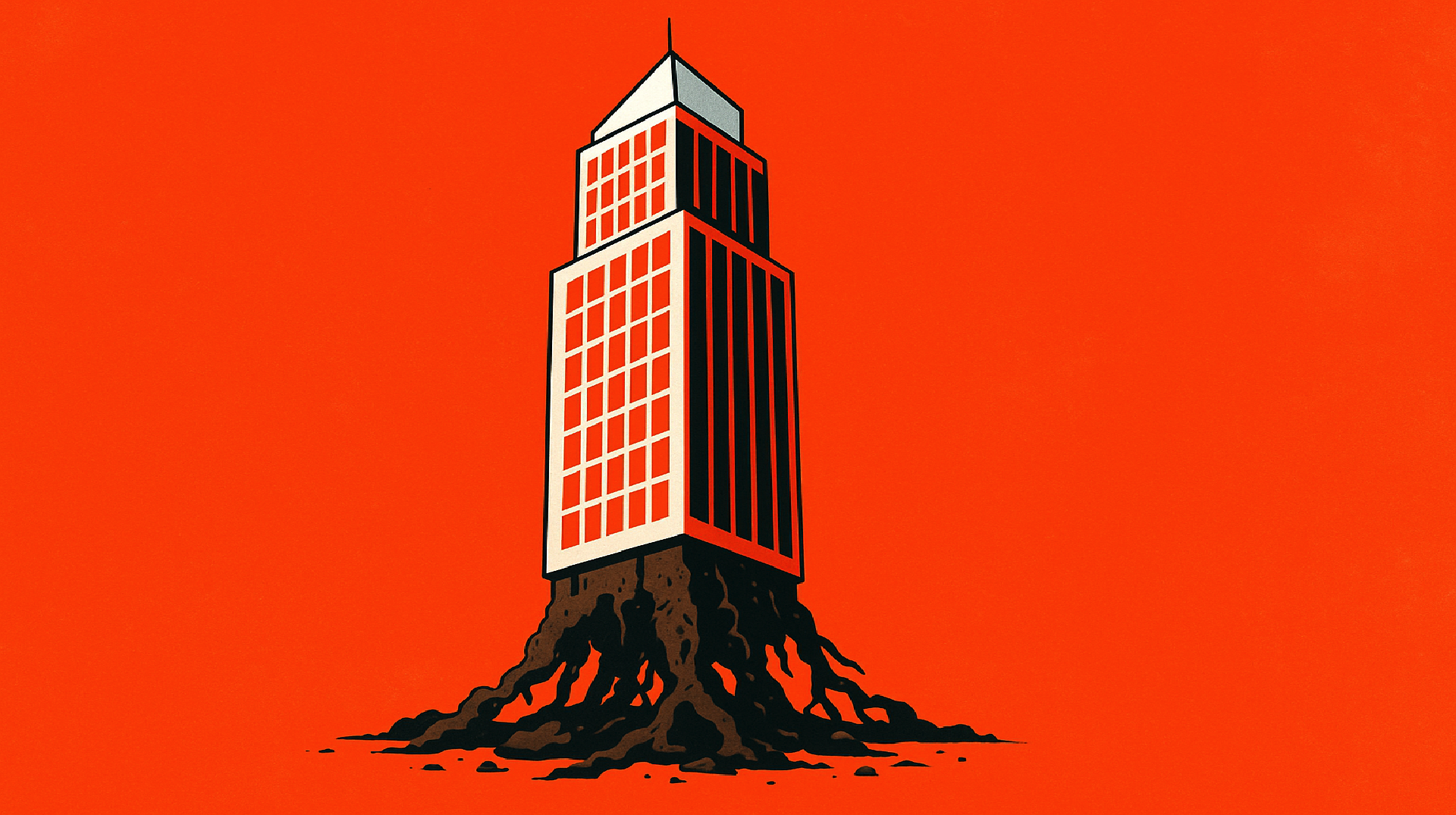
When marketing is reduced to performance spend management and endless dashboard oversight, brands inevitably drift onto what some analysts are calling the “plateau of indifference.” It’s not an immediate nosedive into oblivion. Revenue might not crater overnight; customers don’t vanish instantly. The brand remains known, available, and still spending on advertising. But it stops meaning anything to consumers. The justification for a premium price over a cheaper, me-too alternative erodes. Congratulations: you’ve successfully eroded your own margins and manufactured a greater need for perpetual promotional spend.
This is where market share begins to shuffle aimlessly between competitors employing identical playbooks. Performance spend must escalate just to maintain stagnant results. The data, even in this state of quiet decay, illustrates a crucial point: brand clarity offers a significantly longer runway over this plateau than mere price competition.
Lessons from Lacoste (and McDonald’s)
History offers stark warnings. Decades ago, General Mills’ acquisition of Lacoste and its merger with Izod initially seemed successful. However, a subsequent optimization for short-term revenue led to discount store placement and mass-market distribution. The brand’s premium cachet evaporated, and margins shrunk dramatically. It took years of patient, strategic reinvestment—pulling back from discount channels, raising prices, and painstakingly re-establishing meaning—for Lacoste to repurchase the brand and eventually achieve an 800% sales climb over the next decade. That’s two decades of lost profits, a direct consequence of sacrificing long-term brand equity for quarterly gains.
The lesson here isn’t just about successful turnarounds. It’s about the time it took—time spent actively counteracting the pressure for faster, immediate results. The real cost of residing on the plateau of indifference isn’t a single bad quarter; it’s years of compounding irrelevance that become progressively more difficult and expensive to rectify.
McDonald’s learned a version of this lesson in 2019 when it initially eliminated its global CMO. Within a year, the position was reinstated and its scope expanded. It turns out that when you remove the person ultimately responsible for imbuing a brand with meaning, you eventually realize that someone still needs to ask the question. Meaning matters, especially when you’re trying to persuade someone to part with their hard-earned money. And these days, AI gets the first vote in determining what’s meaningful.
The New AI Penalty: Your Budget is Irrelevant
The stakes have undeniably changed. AI doesn’t surface brands based on your media budget, impression share, or promotional pricing. It synthesizes a brand’s narrative footprint, identifying what problems it solves and its overall meaning in the consumer’s life. A brand that has drifted into indifference, even if it’s still widely advertised, risks becoming invisible to AI-powered search and recommendation engines. This isn’t a theoretical future; it’s the emerging reality. Companies without a strong, clear brand identity and a strategic vision for its long-term stewardship are poised to lose AI visibility and any hope of differentiation. The reign of pure performance marketing is over. The age of AI-driven meaning has begun.
Why Does Brand Leadership Matter More Than Ever?
AI’s capacity to understand and surface brands is fundamentally different from keyword matching or ad targeting. It’s about semantic understanding, user intent, and the perceived value and meaning a brand holds. When companies strip away roles responsible for cultivating this meaning—the CMO—they create a vacuum. This vacuum isn’t filled by performance marketers focused on clicks and conversions; it’s filled by indifference. AI, in its data-driven objectivity, will prioritize brands that demonstrate clear value, purpose, and a consistent narrative. Without a dedicated steward for this narrative, a brand becomes just another data point, easily lost in the vastness of algorithmic search results. This isn’t about marketing fluff; it’s about the core of how brands will be discovered and chosen in the coming era.