When it comes to influencing real health outcomes for real people, not all digital video is created equal. DeepIntent’s latest internal data doesn’t just suggest a difference; it quantifies it with a compelling statistic that should make pharma marketers rethink their digital spend: Connected TV (CTV) advertising within the healthcare sector delivers twice the new-to-brand prescription rate compared to general online video, especially when layered with sophisticated sequential messaging and clinical conversion tracking. Forget tired click-through rates; this is about tangible patient action.
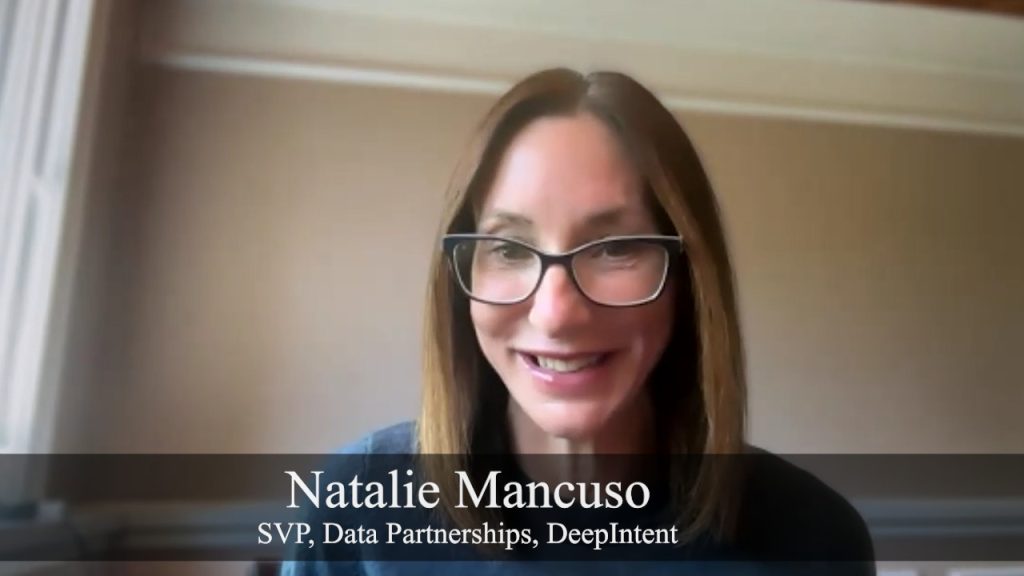
“We see CTV drive two times higher new-to-brand prescriptions than online video alone,” Natalie Mancuso, svp, data partnerships at DeepIntent, told Beet.TV. “We also have some ongoing statistics that really support a two and a half times higher rate than within display.” This isn’t abstract reach; it’s a direct pipeline to patient engagement and subsequent treatment initiation. DeepIntent’s approach centers on deterministic patient identification—using identifiers like NPIs, HIMs, IP addresses, and household signals—rather than relying on probabilistic lookalike modeling. That precision is key in a sensitive category like healthcare.
The Patient Journey, Reimagined for CTV
Think of healthcare advertising not as a single splash, but as a carefully orchestrated series of nudges. DeepIntent frames this effectively as a three-step patient journey handoff. It begins with CTV acting as a powerful opener, drawing initial awareness. This is then followed by digital carriers that advance the patient through the funnel with tailored messaging, and finally, engagement within endemic environments where they are most receptive. And the performance difference is striking: CTV completion rates are nearly double that of standard online video. That initial engagement on CTV sets a stronger foundation for subsequent interactions. The digital touchpoints that follow aren’t just repeating the message; they’re facilitating the next best action, whether it’s prompting a “talk to your doctor” conversation or delivering a valuable savings card, propelling patients further down the path toward considering a new therapy.
Beyond the Device: Household-Level Frequency
Here’s a nuance that often gets lost: a family of four shouldn’t collectively hit their ad frequency cap independently. DeepIntent’s strategy prioritizes household-level frequency management over the more common device-level limits. This means ensuring relevant messaging reaches the right people without overwhelming them. Sequential creative storytelling is paramount here; the second touch should build upon the first, not simply reiterate it. And crucially, once a patient has converted—meaning their prescription is filled—spending against that individual stops. The budget is then strategically reallocated to find the next patient, preventing wasted impressions and optimizing the entire campaign’s efficiency. This intelligent rotation extends across channels, from CTV to online video, and even audio, to avoid message fatigue while keeping the patient journey moving forward.
Deterministic Measurement: The Holy Grail in Healthcare
The true power, and frankly, the ethical imperative, in healthcare advertising lies in accurate measurement. DeepIntent’s clinical conversion tracking operates at the physician NPI level. This provides deterministic insights into whether an advertisement actually drove prescription behavior or prompted a patient to request a therapy. This is a far cry from models that suggest lift. It’s about knowing for sure. As Mancuso states, “Did a physician actually take an action as a result of seeing an advertisement as a result of a patient coming in and requesting therapy? Having this be a deterministic and not a model insight for our brands is really something that’s important in closing the loop.” Script lift measurement, by comparing exposed versus control groups, can then reveal granular behavioral changes, from faster diagnosis rates to new treatment adoption patterns.
Concurrent Campaigns: The Synergistic Approach
Smart brands understand that prescription decisions are rarely unilateral. They involve both a willing prescriber and a motivated patient. Therefore, DeepIntent advocates for concurrent campaign strategies that target healthcare providers (HCPs) and patients simultaneously, rather than in silos. You can’t just speak to one party and expect optimal results. “You can’t just speak to the HCP or the patient. That is a conversation of many and ensuring that they are running concurrently these types of campaigns,” Mancuso emphasizes. “I have to have a willing prescriber met with a patient request.” This holistic view means budgeting the entire patient journey, not just individual channels. Planning for script lift measurement before the first impression is deployed is essential. It shifts the focus from retrospective analysis to proactive goal achievement. “Planning is one consolidated campaign, ensuring that you’re setting up script lift measurement before that first impression,” Mancuso advises. “What are you trying to achieve as opposed to a retrospective analysis?” It’s about building a campaign with a clear destination in mind from the outset.
This data-driven insight from DeepIntent isn’t just a footnote; it’s a potential paradigm shift. For years, the digital video ad world has been a somewhat murky arena for performance marketers. But when you bring precision, patient-centricity, and demonstrably better outcomes to the table—especially in a sector as critical as healthcare—the strategy becomes undeniably clear. Relying on general online video for critical health campaigns appears increasingly like a missed opportunity, bordering on negligence, when CTV offers a demonstrably superior path to influencing patient health decisions.
Why Does This Matter for Pharma Marketers?
This data has significant implications for pharmaceutical marketers. The clear outperformance of CTV for driving new prescriptions suggests a need for budget reallocation. Focusing on the patient journey, employing household-level frequency capping, and demanding deterministic measurement are no longer just best practices—they’re becoming table stakes for effective healthcare advertising. Brands that fail to adapt risk falling behind competitors who are leveraging these more sophisticated, outcome-driven strategies.
Is DeepIntent’s Approach Truly Unique?
While the concept of omnichannel marketing isn’t new, DeepIntent’s emphasis on deterministic patient identification (NPI-level tracking) and household-level frequency management, coupled with their focus on clinical conversion tracking over traditional metrics, sets them apart. Many platforms still rely on modeled data and device-level insights. DeepIntent’s approach offers a level of precision and accountability that is particularly valuable in the highly regulated and performance-sensitive healthcare advertising space.
🧬 Related Insights
- Read more: Xumo: TV Home Screen Streaming’s Prime Ad Real Estate [IAB NewFronts]
- Read more: This 6-Step AI Workflow Crushed Mortgage Campaigns – Here’s Why It Works for AdTech
Frequently Asked Questions
What does DeepIntent do? DeepIntent is an advertising technology company that specializes in using deterministic data to connect brands with individual patients, particularly in the healthcare sector, to drive measurable outcomes.
Will this change how healthcare ads are shown on TV? Yes, the data suggests a significant shift towards Connected TV (CTV) for healthcare advertising due to its superior performance in driving new prescriptions compared to general online video.
How does CTV advertising work for healthcare? CTV advertising for healthcare involves reaching patients on their internet-connected televisions with targeted ads, often as the initial touchpoint in a sequential messaging strategy that continues through other digital channels.