Here’s the thing: everyone expected AI to be the silver bullet. We envisioned it streamlining workflows, unlocking insights, and propelling marketing efforts into a new golden age. But what we’re starting to see, as Ryan Warren of Razorfish points out, is that AI is less a savior and more a stark spotlight on pre-existing organizational rot.
It turns out, slapping a shiny new AI tool onto a clunky, inefficient, or poorly structured martech stack is akin to putting racing stripes on a tractor and expecting it to win the Indy 500. The fundamental architecture, the human processes, the very way teams communicate and collaborate – these are the things that need a serious overhaul, and most marketers apparently decided to skip that messy, crucial step.
When AI Meets Inertia
Warren, chief CRM officer at Razorfish, doesn’t pull punches in a recent Conversations with MarTech episode. He’s articulating a sentiment that’s likely echoing through countless marketing departments right now: the AI opportunity was missed. And it was missed not for lack of ambition, but for lack of fundamental organizational foresight. The expectation was that AI would simply slot in and improve things. The reality? It’s highlighting just how much “things” needed improving in the first place.
Many marketers missed the initial opportunity to reimagine their organizational models before implementing AI technology.
That statement alone is a gut punch to the industry narrative. We’ve been bombarded with the “AI is here, adopt it now or be left behind” mantra. But Warren suggests a critical prerequisite: redesign. Before you can effectively harness the power of artificial intelligence for data analysis, customer segmentation, or content generation, you need the underlying framework to support it. Think of it like building a skyscraper; you wouldn’t start installing the penthouse elevator before the foundation is even laid.
The Data Assembly Line: A Unified Vision
One of the core issues, Warren highlights, is how data is treated. The traditional siloed approach – where data engineers hoard raw information and marketers beg for reports – is anathema to an AI-driven future. He frames the ideal as a unified assembly line: data flowing from big data clouds and Customer Data Platforms (CDPs) all the way to the final customer experience. This isn’t just about having more data; it’s about creating a coherent, end-to-end system where AI can actually work.
And that requires a common language. The chasm between the technical jargon of data engineers and the strategic needs of marketers is a significant barrier. Establishing a shared lexicon isn’t just a nice-to-have; it’s essential for building and managing modern data foundations effectively. Without it, AI’s potential remains locked behind communication breakdowns.
Is AI Just a Fancy Button?
Warren’s prediction that AI might lead to the disappearance of traditional “buttons” in favor of more intuitive, integrated workflows is fascinating. This speaks to a deeper architectural shift. We’re moving away from discrete, manually activated functions towards systems that understand context and intent, proactively delivering what’s needed. Imagine a system that anticipates your next marketing move based on campaign performance and audience behavior, rather than you clicking through menus to find the right report or tool. That’s the promise of truly integrated AI.
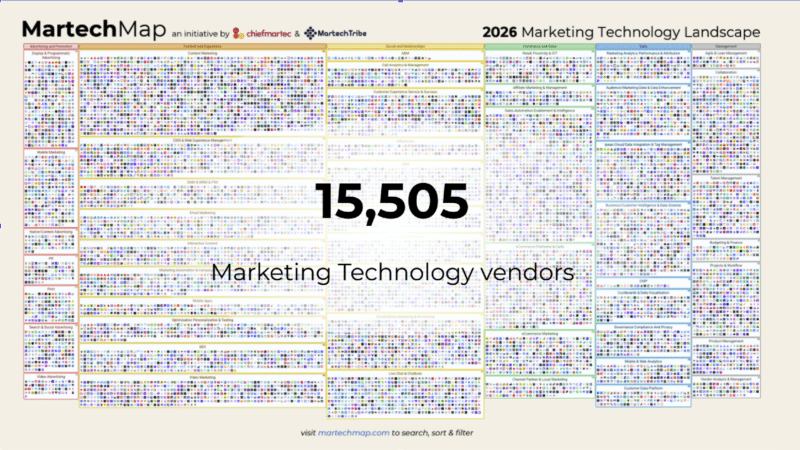
But again, this requires a strong, well-architected system. You can’t just layer this kind of intelligence onto a spaghetti of legacy applications and disparate point solutions. Warren emphasizes focusing on eight essential technology domains – a strategic approach to martech that prioritizes foundational capabilities over a hodgepodge of features.
Combating Saturation, Not Just Scaling
We’ve all seen the stats: diminishing returns on email campaigns, inbox saturation, customers tuning out direct messages. The initial promise of AI was to help marketers scale their outreach. Warren posits a more nuanced view: AI isn’t just about doing more; it’s about doing better in an increasingly noisy world. It’s about combating customer saturation and declining performance. This means using AI for more sophisticated personalization, more intelligent segmentation, and more contextually relevant communication, rather than just blasting out more generic content.
The idea that teaching teams to use AI effectively is a leadership responsibility, requiring the embedding of prompts and orchestration into daily work, is a critical leadership call to action. It’s not enough to give teams access to AI tools. Leaders must actively foster an AI-literate culture, guiding how these tools are integrated into existing processes, ensuring they’re used strategically, not just as novelties.
The Underlying Truth
What Warren’s insights reveal is that AI in marketing isn’t a technology problem; it’s a people and process problem, amplified by technology. The organizations that will truly thrive with AI are those that have already invested in modernizing their data infrastructure, breaking down internal silos, and fostering cross-functional communication. For everyone else, AI might just feel like a very expensive, very sophisticated way to illustrate how broken they already are.
🧬 Related Insights
- Read more: [Publishers Test Amazon Prebid Adapter] Early Yield Results?
- Read more: DAMs Drowning? Content Overload Tests Systems
Frequently Asked Questions
What does Ryan Warren mean by “reimagine their organizational models”? This refers to fundamentally rethinking how marketing teams are structured, how data flows between departments, and how different technologies are integrated, before adopting new AI tools.
Will AI replace marketing jobs? Warren’s perspective suggests AI will change jobs, automating repetitive tasks and requiring new skills in prompt engineering and strategic oversight, rather than outright replacement. The focus is on working with AI.
How can I tell if my martech stack is ready for AI? Look for clear data flow, good communication between data and marketing teams, and a willingness to adapt workflows beyond traditional “buttons.”