The blinking cursor on my empty spreadsheet mock-up felt less like a blank canvas and more like a tombstone for ideas nobody dared to chase.
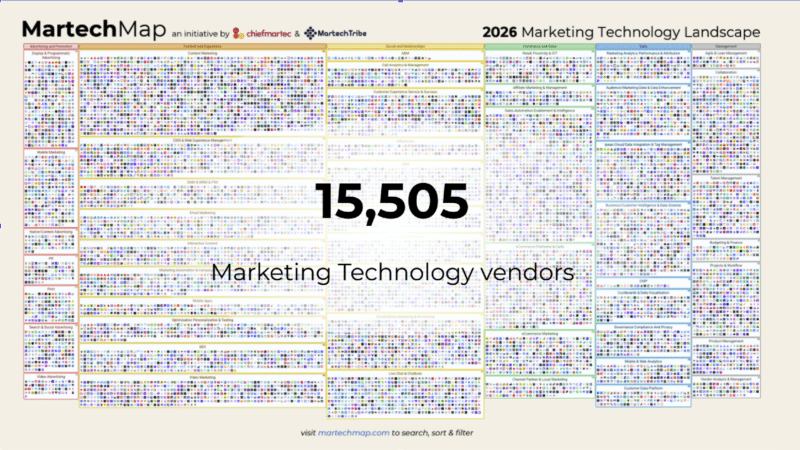
Look, we’ve all seen the AI hype cycle before, right? Remember when every other press release promised to ‘disrupt’ everything with ‘synergy’? AI has taken that to eleven. It’s in the grocery apps, the dentist’s office (seriously?), and it’s about to be in every single corner of business. The question isn’t if AI will change how we work, but when and who is going to be the one actually making money from it.
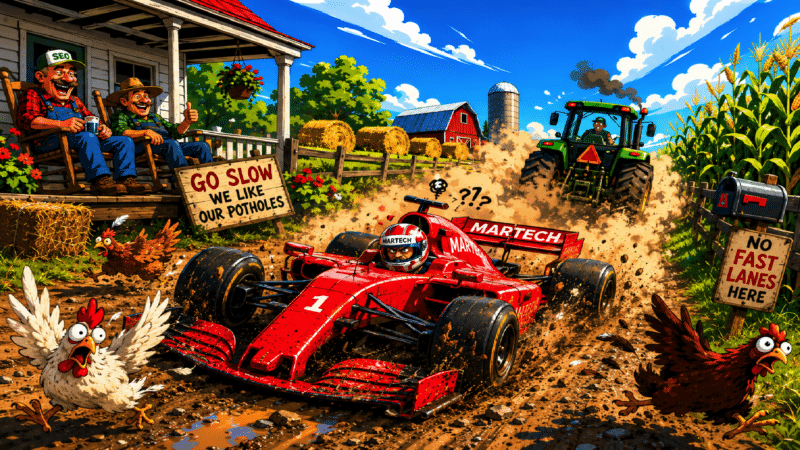
The original piece touts that we’re at an “inflection point,” comparing it to the early days of email. It’s a decent analogy, I guess, but it misses the key difference. Back then, companies were largely clueless. Now, they’re just… slow. And expensive. And bogged down in committee meetings where “risk mitigation” trumps actual innovation.
The “Bottom-Up” AI Revolution
Here’s the thing: while your VP of Marketing is still forming an AI task force to discuss potential use cases for chatbot-generated social media posts (yawn), people are out there building actual, tangible solutions. The article hits on this: “Innovation and applications are bubbling up, thanks to people working on their own or at mid- to lower-market enterprises to explore and expand AI’s uses.” It’s the opposite of the early email days where big players led. Now, the scrappy folks, the ones not afraid to break a few virtual eggs, are the ones forging ahead.
And who is actually benefiting from this? Individuals, mostly. Those who take the initiative to learn these tools on their own time. It’s a bit of a “dog-eat-dog” world out there, but with AI, it’s more like “learn-it-or-get-left-behind.”
So, Your Company is Dawdling? Start Your Own AI Side Quest.
This isn’t about waiting for permission. It’s about realizing that the future of marketing, and frankly, most professional work, is going to be deeply entwined with AI. If your company is still debating the ethical implications of AI-generated haikus, you’re already behind. The advice here is blunt but necessary: “teach yourself. Don’t wait around for your company to catch up.” It’s practical. It’s cynical. It’s probably true.
Take the author’s personal anecdote about their wine cellar. Sure, it sounds a bit like a made-up justification for playing with fancy tech, but it highlights a critical point: learn by doing, with low stakes. Instead of trying to solve a complex business problem with a tool you barely understand, tackle something personal. Your 300-bottle wine collection might be the perfect testbed for understanding the nuances of different AI models.
The Pitfalls of AI and the Power of Personal Projects
This is where the article really lands some solid punches. The author’s attempt to inventory their wine collection with ChatGPT and then Gemini. Classic. ChatGPT, supposedly the king of text generation, flubbed it. Told him he had a $2,985 bottle of Screaming Eagle. Nice try, bot. Gemini, meanwhile, apparently just hallucinated labels. Whoops. It’s a humbling reminder that these things aren’t magic wands.
For example, it told me I had a bottle of 1999 Screaming Eagle Cabernet Sauvignon worth $2,985. I wish. There were enough similar errors to make me doubt that any of ChatGPT’s inventory was accurate.
This experience is invaluable. It’s the kind of learning that can’t be replicated in a sterile corporate training session. You discover that Claude is useless for image generation, that Gemini can’t reliably process images, and that sometimes, the tool you’ve been using for sophisticated forecasting is terrible at cataloging wine. This is the real intelligence you gain – knowing what not to do, and why.
It’s this kind of empirical knowledge, gained through personal experimentation, that separates those who can talk about AI from those who can use it effectively. Companies that fail to recognize this are going to be in for a rude awakening when their competitors, powered by individuals who’ve done their homework, start eating their lunch.
This is where my cynicism kicks in. We’re being sold a bill of goods by AI vendors, and often by the companies that are too slow to adopt it, about how complex and inaccessible it is. But the reality is, for many practical applications, it’s less about a deep understanding of neural networks and more about knowing which prompt to craft, which model to choose, and what its limitations are. The wine cellar story, in its own quirky way, demonstrates this perfectly.
The real advantage isn’t in having the latest, most powerful AI model. It’s in having the people who know how to wield the tools they have available, understanding their strengths and weaknesses, and applying them to solve problems, big or small. And right now, the fastest way to build that knowledge base is on your own dime and time.
This isn’t just about marketing, either. Think about sales enablement, customer support, product development, operations. Every department is going to be touched. The individuals who are proactively learning and experimenting now will be the ones steering the ship when their companies finally decide to get on board.
The Future Belongs to the Proactive AI Experimenter
So, what’s the takeaway for AdTech professionals? Stop waiting. Start playing. Build something, break something, learn something. Because the people who are doing that in their basements and spare bedrooms are the ones who will be defining the next era of advertising technology, whether their employers are ready or not. And trust me, they’ll be the ones collecting the fat paychecks.
If your company is still stuck in the “discussion phase,” your best bet is to become an AI asset yourself. Learn the tools, understand the limitations, and be ready to deploy solutions when your company finally catches up. The alternative is becoming obsolete.
🧬 Related Insights
- Read more: AI’s New Data Foundation: Trust is Key
- Read more: Heineken Cuts Agency Roster: What It Means for Your Beer Ads
Frequently Asked Questions
What is the main benefit of experimenting with AI personally?
Experimenting personally allows you to learn AI tools without corporate restrictions, discover their limitations through trial and error, and gain practical skills that can solve business problems when your company eventually adopts AI.
Will AI replace my marketing job?
While AI will automate certain tasks, it’s more likely to augment roles. Professionals who learn to use AI effectively will be in higher demand, focusing on strategy, creativity, and oversight, rather than repetitive tasks.
Which AI tools should I start experimenting with?
Start with widely accessible Large Language Models (LLMs) like ChatGPT, Claude, Google Gemini, and Microsoft Copilot. Explore their strengths and weaknesses for tasks like copywriting, data analysis, and content creation. Also, consider image generation tools like Midjourney or DALL-E.