Sports fragmentation is here.
Look, I’ve seen a lot of hype cycles in my two decades covering Silicon Valley, and this whole ‘fragmentation’ narrative around live sports advertising is starting to smell an awful lot like one. Drew Groner over at DIRECTV Advertising is painting a picture of chaos and offering his company as the knight in shining armor, naturally. It’s a classic tale: problem, solution, and conveniently, the solution is the guy telling the story. They say every new rights deal, every app, every login creates a silo, a headache for buyers trying to reach fans. And sure, on the surface, it sounds plausible. But let’s peel back the PR gloss, shall we?
Who’s Really Making Money?
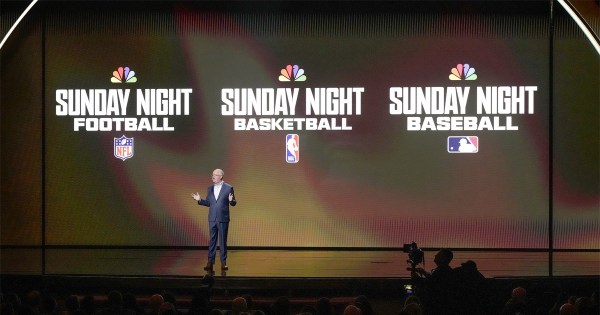
The claim is that leagues and teams are hoarding rights, prioritizing their own ecosystems, leaving media buyers scrambling. They need a platform, see? A platform that puts the pieces back together. DIRECTV, of course, is positioning itself as that very aggregator. It’s a tidy little narrative: the market is broken, and we have the key. The implication is that without these aggregators, significant incremental reach is left on the table. Given sports made up 96 of the 100 most-watched shows in 2025 – a stat that feels a tad convenient but probably not wildly inaccurate – the attention is there. The question is, who is efficiently capturing the value of that attention, and who’s just getting a bigger cut of an already premium pie?
Regional Loyalties Aren’t Dead, They’re Just Harder to Sell
And then there’s this whole song and dance about regional and local fans. Apparently, national buys alone can’t cut it anymore because viewers are too tribal. They’re devoted to their local teams, their civic pride. Shifting sports rights to streamers makes this local content more valuable, they say, because it’s now harder to find. So, what’s the solution? A “true sports aggregator like DIRECTV.” It’s almost too neat. The transformation of regional sports networks into league-led channels is apparently making DIRECTV the indispensable hub. Is it the fans following their teams, or is it a calculated move by rights holders and distributors to create new, more profitable, siloed content streams that then require an ‘aggregator’ to unlock?
Innovative Formats, Or Just Another Way to Get Paid?
Now, let’s talk about those “innovative ad formats.” Pause ads? Dooh in bars and restaurants? It sounds… creative. Viewers, apparently, are more engaged when they hit pause on sports because they don’t want to miss a play. So, advertisers can break through the clutter of 30-second spots by serving ads when a fan might be paying attention for an extra second. And these are now “fully programmatic and transactable.” Ah, programmatic. The magic word that makes everything sound efficient and modern. It’s another layer of complexity being smoothed over by a convenient technological solution, one that likely involves a new set of fees and platforms. And let’s not forget the bars and restaurants – the “untapped opportunity.” It’s a nice thought, but it also sounds like a fancy way of saying ‘we can now advertise to people who are already stuck in a place watching TV’.
For anyone who’s been in a sports bar or on an airplane during a big game, it is clear that it is hard to beat that level of communal engagement.
The Aggregator’s Gambit
The core argument here, stripped of the buzzwords, is that sports rights are splintering, and advertisers need a unified front-end to access it all. Programmatic is presented as the great equalizer, making complex cross-media buys simpler. Linear, streaming, FAST, DOOH – it’s all supposedly available through the same programmatic pipes. This allows brands with smaller budgets to participate. That’s the theory. The reality, though, is often that each layer of ‘simplification’ adds another intermediary, another point of control, and another revenue stream for those providing the ‘aggregation’ and ‘programmatic access.’ It’s not necessarily about making it easier for advertisers; it’s about creating a more lucrative, controlled distribution channel.
My two decades in this business have taught me one thing: follow the money. And while sports fragmentation might be a genuine challenge for some buyers, it’s also a golden opportunity for those who can position themselves as the indispensable solution. DIRECTV, with its bundled offerings and its claims of aggregation, is betting heavily on that premise. Whether this genuinely solves the advertiser’s problem or simply reconfigures the way the money flows from brands to rights holders and intermediaries is, as always, the real story.
Is This Actually Solving Fragmentation, Or Just Re-Bundling It?
The argument that aggregation solves fragmentation is a bit like saying a giant, all-you-can-eat buffet solves your hunger problem. It does, but it also introduces a whole new set of challenges around pacing yourself, finding what you actually want, and potentially overpaying for things you don’t. DIRECTV’s positioning as the aggregator suggests a return to a more centralized model, albeit one built on top of the very fragmentation it claims to solve. It’s less a solution and more of a strategic realignment for its own benefit. They’re not breaking down silos; they’re building bigger, more profitable ones and inviting everyone in for a fee.
Where Does Programmatic Fit In?
Programmatic is the engine driving much of this supposed efficiency. By opening up linear and streaming inventory to real-time bidding and private marketplaces, it’s indeed lowering barriers to entry for some brands. The idea is that instead of negotiating individual deals with each network or streamer, advertisers can use a demand-side platform (DSP) to access a wider pool of inventory. This can theoretically lead to better targeting, more dynamic pricing, and the ability to execute more complex campaigns across different platforms. The key question, however