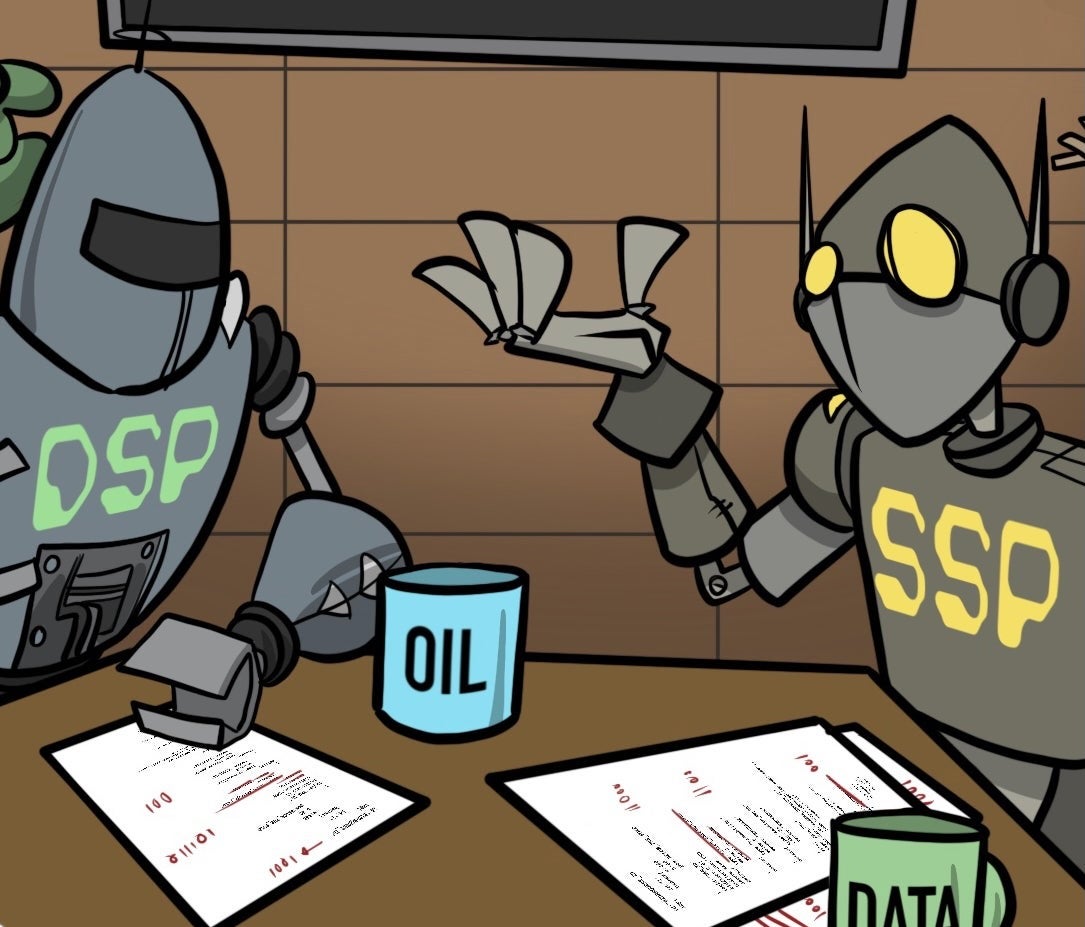
Marketers are abandoning walled gardens.
That’s the electrifying claim pulsing through Viant’s Q1 2026 earnings call, a declaration that, if it holds water, represents a tectonic shift in ad tech. The company itself saw its DSP revenue surge an impressive 18% to $50.3 million, and while a net loss still lingered (shrunk, mind you, from $3.3 million to $2.2 million), the narrative wasn’t about red ink. It was about a fundamental industry realignment, a desperate lunge for something more transparent.
Viant COO Chris Vanderhook painted a vivid picture: “advertisers and agencies have finally drawn a line in the sand with regards to the self-attributing tactics of walled gardens and the general lack of transparency provided by our competitors.” It’s a bold statement, especially when you consider the sheer gravitational pull of giants like Alphabet, which just casually printed over $100 billion in revenue. Viant, by comparison, is a speck of dust. But in the percentage-growth game, a speck can look like a supernova.
The real venom, however, is reserved for Amazon. Vanderhook detailed the alleged sins of the e-commerce behemoth’s DSP: diverting ad spend into its own properties like Prime Video and sponsored product listings. Worse still, the claim is that Amazon — along with Google and others — weaponizes its vast brand-level data, not just to improve its own performance, but to actively boost competitors to brands advertising on its platform. Imagine a fashion brand seeing its meticulously cultivated customer base suddenly morph into a general menswear purchaser, thanks to Amazon’s internal machinations. Amazon, in this telling, is even using this intelligence to spawn its own white-labeled product lines. It’s a hostile takeover, dressed up as a partnership.
“How on earth does this model represent a viable option for advertisers?” Vanderhook rhetorically asked. The implication is clear: it doesn’t. And the advertisers reportedly feeling spurned are, according to Viant, looking elsewhere.
This isn’t an isolated whisper in the wind; The Trade Desk, another significant independent DSP, echoed similar sentiments on its own recent earnings call, pitching a vision of marketer independence. But here’s the rub, the crucial question that hangs heavy in the air: Does this hypothetical, transparency-craving marketer truly exist in sufficient numbers to disrupt the duopoly?
Viant’s CFO, Larry Madden, offered a tantalizing data point: the company is currently experiencing its “largest RFP cohort in company history.” This means major advertisers are in the throes of deep evaluations, vetting multiple DSPs with a commitment to choose a preferred partner, potentially by 2027. If Viant lands these accounts, the revenue gains could be substantial. Tim Vanderhook, Viant’s CEO, underscored the weight of these decisions, describing them as a “heavy lift” for advertisers.
Why is This Alleged Exodus Happening?
The core of Viant’s argument, and the bedrock of their growth thesis, is the inherent conflict of interest within walled garden platforms. When Amazon, Google, or even Yahoo own both the ad-buying platform and a significant inventory of media properties, their DSPs are inherently incentivized to favor their own channels. Prime Video has compelling content, and YouTube has an abundance of it, and yes, they deserve ad spend. But the accusation is that these platforms “rig the reporting” to secure a disproportionate share of ad budgets, a strategy that directly harms the advertiser’s bottom line. It’s a self-serving ecosystem where the platform’s success is prioritized over the client’s.
This creates a fertile ground for independents like Viant. They contend that by not owning media, their DSP remains objective, acting solely in the best interest of the advertiser within the programmatic marketplace. It’s a cleaner value proposition, a promise of accountability that the walled gardens, by their very structure, seemingly cannot offer.
But Wall Street remains a tough crowd to convince. Analysts like Laura Martin at Needham are looking at Viant’s growth through the lens of its acquisitions — specifically, TVision, Iris.TV, and Lockr, which provide exclusive data sets. The prevailing wisdom on Wall Street, she noted, is that proprietary supply, like unique content or ad formats, commands premium pricing power.
Will Viant Cross the Supply-Side Line?
This is where the core of Viant’s ethical stance, and perhaps its strategic advantage, lies. When pressed on acquiring exclusive media inventory, Tim Vanderhook unequivocally stated, “That’s a line in the sand that Viant will not cross.” This is a critical point. Owning exclusive media would fundamentally misalign their DSP’s incentive structure. It’s a philosophical commitment that underpins their appeal to advertisers allegedly disillusioned with the opaque dealings of the giants. It’s a bet that integrity, in the long run, will trump scale.
And this is where my unique insight comes in: The current ad tech landscape, with its increasing emphasis on privacy-first measurement and a fragmented cookie-less future, creates an environment ripe for this kind of independent appeal. Marketers are already scrambling for reliable signals and transparent attribution. The very complexity and opacity of the walled gardens, once seen as their strength, are becoming their Achilles’ heel in this new era. Viant isn’t just selling a DSP; it’s selling a perceived sanctuary from the storm.
The big question, of course, is whether this perception translates into sustained market share. The RFPs are a promising indicator, but the final decisions in 2027 will be the true test. Can Viant, and others like it, truly pry open the iron grip of the walled gardens and redefine the programmatic playing field? The financial filings tell one story, but the whispers from agency desks and brand marketing departments will tell the real tale.
🧬 Related Insights
- Read more: Digitas’ Liane Nadeau: Programmatic and Direct Buys Unite Under Ad Context’s Reign
- Read more: Ad Bidding: AI Agents Win Bids, Humans Own Brand Story
Frequently Asked Questions
What does Viant’s DSP do? Viant’s Demand-Side Platform (DSP) is a technology that allows advertisers to buy digital ad space across various channels programmatically, focusing on transparency and independent data.
Are advertisers really leaving walled gardens? Viant claims a significant shift is occurring, with advertisers growing disillusioned with the lack of transparency and self-dealing tactics of platforms like Amazon and Google. The company’s Q1 earnings show strong growth in its DSP revenue, which it attributes to this trend.
Will Viant’s strategy succeed against major tech companies? Viant is betting that its commitment to transparency and independence will attract advertisers wary of walled gardens. While this strategy shows early promise with a large RFP cohort, its long-term success against the scale of tech giants remains to be seen.