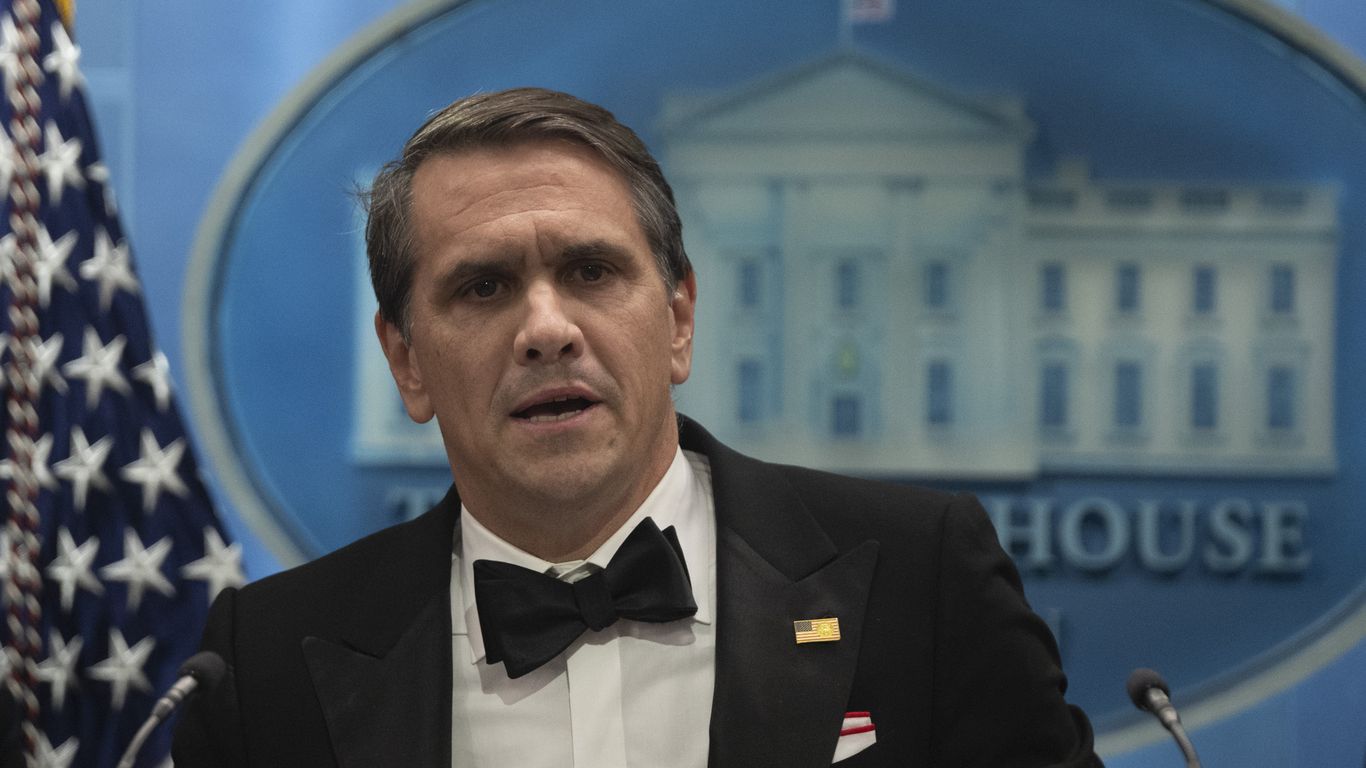
Here’s the thing: a shooting. Right there, in Washington D.C., at a high-profile event. And the immediate political instinct, for some, is to point to the firearms involved. But acting Attorney General Todd Blanche isn’t playing that game. Not this time. He’s drawing a hard line, arguing that restricting gun laws is not, and should not be, the response to the gala shooting.
A Stark Contrast in Rhetoric
It’s a position that stands in sharp relief to just a few months prior. Remember January? After that ICE shooting in Minneapolis, some Republican officials were suddenly suggesting—wait for it—restricting gun rights. That stance, however, was a political quicksand trap, especially with Trump’s base, and it quickly became a “serious political problem.” This time, Blanche is preempting that potential pivot, making it clear his focus isn’t on new legislation.
Cole Allen, the alleged shooter, a teacher from Southern California, apparently arrived in D.C. by train, bringing multiple firearms. Blanche noted that Allen seems to have acquired these weapons legally over the past couple of years. The questions, naturally, zeroed in on possession and, crucially, transportation. How does someone move firearms across state lines without a thorough security check?
“Look, this isn’t about, in my mind, changing the law or making the laws more restrictive around possession of firearms,” he told CBS’s “Face the Nation.”
Blanche then doubled down, directly pushing back against the idea that the train route itself—a method of transport lacking the same stringent checks as air travel—represented a loophole needing to be plugged. He was unequivocal: talking about changing those laws isn’t the focus. He even acknowledged, with a certain pragmatism, that the train travel could have been a deliberate choice to facilitate gun transport. The investigation is ongoing, with authorities still securing warrants and piecing together Allen’s movements and motives. Charges are expected imminently.
The Architecture of Opposition
What’s really fascinating here isn’t just Blanche’s pronouncement, but the underlying strategic architecture of it. This isn’t a spontaneous eruption of principle; it’s a calculated political maneuver, informed by past missteps. The backlash in January wasn’t just noise; it was a seismic event within the Republican party, a clear signal that restricting gun rights, even in the wake of tragedy, carries an enormous political cost. Blanche, and by extension the administration he represents, has learned that lesson.
His argument isn’t about the mechanics of how Allen acquired the guns, or even the specifics of the train journey, though those are crucial points for investigators. His argument is about the narrative. He’s actively trying to deconstruct any attempt to frame this event as a failure of existing gun laws, or an impetus for new ones. It’s an exercise in containment, ensuring that a terrifying incident doesn’t spill over into policy debates that could alienate key voting blocs.
It’s a pattern AdTech Beat has seen before: when a controversial event happens, the initial political reaction is often about signaling intent. But for those who understand the deep currents of their constituent base, the subsequent strategy is about redirection. Blanche is redirecting, hard. He’s not engaging with the ‘how’ of gun accessibility in this specific instance, at least not publicly. Instead, he’s focused on the ‘why not’ of changing the laws—a clear message to those who believe stricter gun control is the only logical step. It’s a bold, some might say cynical, move, but one that speaks volumes about the current political landscape.
What This Means for Future Legislation
The implication here is significant. This isn’t just about one shooting, or one acting Attorney General’s statement. It’s a statement of intent that signals a strong resistance to any legislative action on gun control at the federal level, at least in the current political climate. While investigations will undoubtedly uncover details about how the weapons were obtained and transported, Blanche’s pre-emptive strike aims to shut down the broader policy discussion before it gains traction. It’s a clear demonstration of how political expediency and the protection of certain rights—in this case, gun ownership—can often take precedence over calls for enhanced public safety through legislative means.