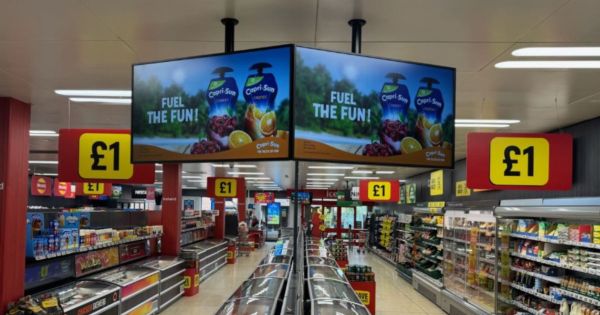
A digital display flickers to life in aisle five, the product on screen suddenly aligning with what’s in a shopper’s basket—not through a centralized command, but via a network of distributed intelligence. This isn’t sci-fi; it’s the imminent reality T-Mobile is pushing with its ambitious move into in-store retail media.
The company, with its sprawling network of 10,000 physical stores, is making a calculated wager: that the future of advertising isn’t just online, but deeply embedded within the brick-and-mortar experience, powered by sophisticated, localized technology. Their aim? To stitch together the fragmented worlds of online targeting and the tangible reality of the shopping trip, creating what they term “addressable media environments.”
And here’s the kicker: they’re not just dabbling. This is a full-throated commitment, leveraging their acquisition of Vistar Media and a proprietary network of connected media players. The pitch is simple, yet profound: transform your physical space into a dynamic advertising channel.
The 10,000-Store Proving Ground
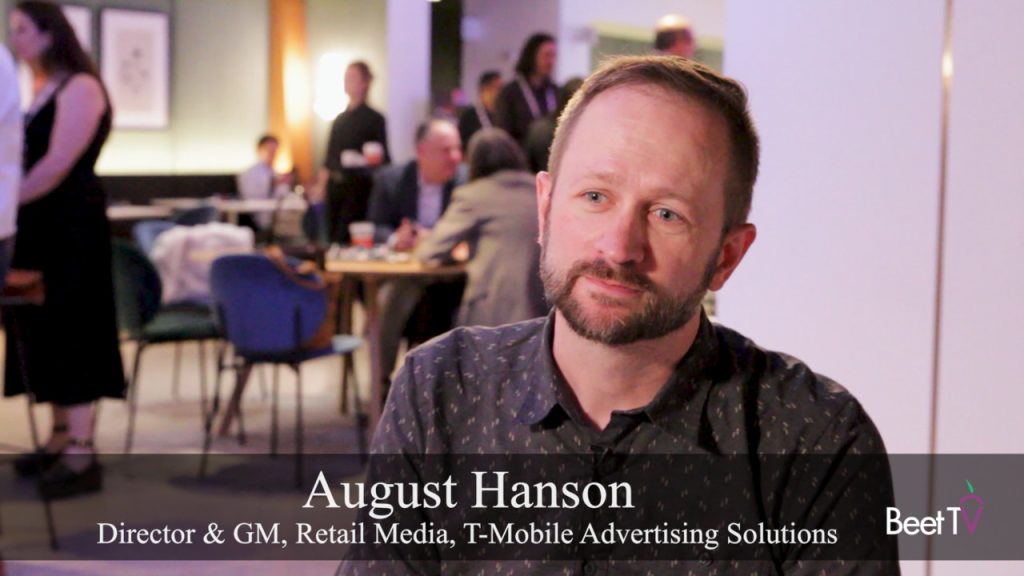
Running T-Mobile stores as a live-fire testbed for this technology offers a unique advantage. August Hanson, director and GM of retail media at T-Mobile Advertising Solutions, articulated this point clearly, noting that their extensive operational footprint provides an intimate understanding of both retailer challenges and advertiser demands. It’s one thing to theorize about in-store media; it’s another to manage it daily.
But T-Mobile isn’t just handing retailers a box of screens. Their offering is a comprehensive, full-stack solution. Think end-to-end implementation, operations, go-to-market strategy, network configuration, even construction and ongoing break-fix maintenance. This holistic approach is designed to lower the barrier to entry for retailers, many of whom are not equipped to handle the complexities of deploying and managing sophisticated digital advertising infrastructure.
Measuring the Immeasurable: Making In-Store Ads Accountable
The perennial bogeyman of in-store media has always been measurement. Unlike the meticulously tracked clicks and conversions of digital campaigns, proving that a digital ad glimpsed between the cereal and the dairy aisle actually moved the needle on sales has been a shadowy art. T-Mobile is attempting to bring digital-style rigor to this problem.
Their methodology centers on a matched-pair approach, pitting groups of stores against each other in a controlled experiment. Verified impression data is then fused with point-of-sale information, and statistical modeling is employed to tease out demonstrable sales lifts. It’s an acknowledgment that for brands to seriously shift budgets from online to offline, the accountability metrics need to be just as sharp.
“We bring that back to our brands and help them understand what content is driving increased purchase behavior,” Hanson explained.
This pursuit of data-driven accountability is crucial. It’s the bedrock upon which the entire retail media sector is being built, and T-Mobile’s approach signals a clear intention to be a leading architect.
Beyond the Aisle: Omnichannel Dreams
Hanson’s vision extends far beyond just the four walls of a T-Mobile store. He frames in-store media not as an isolated channel, but as a critical node within a broader omnichannel strategy. The real power, he suggests, lies in connecting the in-store experience with online advertising, offsite campaigns, and even “near-store” digital out-of-home placements. The goal is a fluid, interconnected consumer journey.
The retail media market is already a juggernaut, projected to balloon to $52.2 billion by 2026, according to eMarketer. This explosive growth has naturally attracted a host of tech providers, all vying to help retailers monetize their customer data and physical spaces. T-Mobile’s entry, with its considerable physical footprint and technological backing, is a significant play in this escalating arms race.
Edge Computing: The Real-Time Advantage
But the true technological frontier, the one Hanson is watching with keenest interest, is edge computing. This isn’t about sending all data back to a distant server for processing. Instead, edge computing pushes computational power closer to where the data is generated—in this case, the individual display screen within the store.
Imagine a screen that doesn’t just passively display ads, but actively understands its environment. Hanson painted a picture of screens with built-in “localization rules,” capable of adapting their messaging based on real-time data. This means dynamically adjusting creative, color palettes, and even the specific product promotions shown, all in response to immediate sales figures and — potentially — anonymized customer presence data. The optimization happens locally, instantly, and without human intervention.
This architectural shift away from centralized processing to distributed intelligence is what truly differentiates T-Mobile’s bet. It’s the difference between a static billboard and a responsive, intelligent agent embedded in the retail environment. If they can execute this vision, it could fundamentally alter how brands engage with consumers at the crucial point of decision.
Is This Just Another Tech Fad?
It’s easy to dismiss ambitious tech pronouncements as mere marketing puff. But T-Mobile’s investment in Vistar Media and its direct operational control over thousands of retail locations lend this initiative considerable weight. The core challenge—bridging the gap between online precision and offline influence—is real. Whether edge computing proves to be the silver bullet remains to be seen, but the underlying trend toward making physical retail spaces more dynamic and data-rich is undeniable.
It’s a complex engineering feat, requiring not just strong hardware and sophisticated software, but also a deep understanding of retail operations and consumer behavior. The race is on to see if T-Mobile can successfully weave these threads into a coherent, profitable advertising mix.