Are those flimsy foam drones suddenly getting smarter? You bet they are, and it’s not because Russia’s suddenly got a conscience about its expendable hardware.
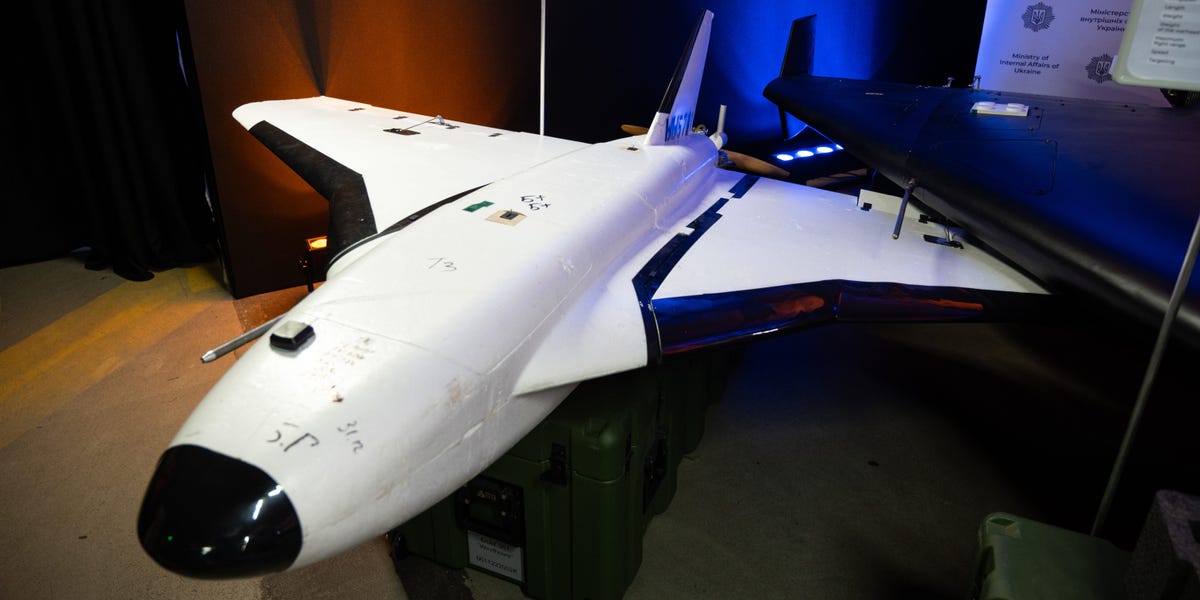
Here’s the thing: Ukrainian forces are snagging Russian Gerbera drones—the ones Russia typically tosses out like chaff to soak up air defense fire—and finding them bristling with what amounts to advanced anti-jamming antennas. We’re talking 12-element Kometa antennas, the kind that used to be reserved for actual, you know, attack drones or precision glide bombs. Last year, the intel was that Russia was staring down a three-to-five-month wait for these components. Now? They’re slapping ‘em onto $10,000 foam decoys that look suspiciously like the Iranian Shahed-136 (aka Geran-2) from a distance.
The ‘Decoy’ Gets Serious
Serhii ‘Flash’ Beskrestnov, a Ukrainian drone analyst who moonlights as an advisor to their defense minister on drone tech, spilled the beans on social media. He posted pics of these tricked-out Gerberas, noting that the Kometa antennas are showing up. “For me, this is a sign that the plant that produces Kometa has increased its production capacity,” he wrote. Increased capacity. Funny how that happens after Ukraine starts targeting production facilities, isn’t it? The VNIIR-Progress complex in Cheboksary, supposedly a hub for these antennas, has been hit by Ukrainian drones before. How much damage stuck? Apparently not enough to stop the flow.
Look, for years, Russia treated the Gerbera like a cardboard cutout with a propeller. Cheap to make, cheaper to lose. They’d launch them without any jamming protection, or maybe with some basic Iranian four-element jobs. Now? The 12-element Kometa. That’s a significant jump in electronic warfare resilience. It means Russia is either getting more confident in its ability to protect its actual valuable assets, or it’s getting stingy and doesn’t want its decoys whiffed by sophisticated EW tactics.
Who’s Actually Making Money Here?
This is where it gets interesting, and frankly, a bit grim. Russia’s been trying to onshore its drone production, right? Less reliance on shaky supply chains, more control. But the real story is the upstream component manufacturers. If they can churn out advanced antennas like this, and put them on cheap decoys, it signals two things: one, a genuine surge in manufacturing capability that bypasses previous bottlenecks, and two, a strategic decision to up-armor even its expendable assets. Who benefits? The factories, the engineers who suddenly have secure jobs, and ultimately, whoever’s signing the checks for these components. It’s hard to say precisely who within the sprawling Russian defense industrial complex is raking it in, but they’re clearly scaling up. The Ukrainian efforts to disrupt production? They’re having an impact, sure, but perhaps not the knockout blow everyone hoped for.
A New Layer to Drone Warfare
So, what’s the takeaway for anyone watching this bloodbath? It’s not just about better drones. It’s about the whole ecosystem. Russia was apparently wrestling with monthslong delays for these crucial anti-jam components just a year ago. That delay has seemingly evaporated, replaced by a strategy that equips even its low-priority decoys with this tech. This implies a maturing industrial base and a more sophisticated approach to drone deployment. The Gerberas, once just fodder, are now potentially playing a more complex role—maybe drawing out air defenses, confusing enemy EW systems, or even acting as more survivable platforms for basic reconnaissance or kinetic effects if the need arises. It’s a quiet escalation, a technological arms race playing out on the most basic battlefields.
It’s a stark reminder that in modern warfare, the low-tech often gets a high-tech upgrade, and the economics of war—who can produce what, and at what volume—often dictates the pace and nature of the conflict. The question isn’t just ‘can they build it,’ but ‘can they build enough of it to matter.’ And right now, the answer for Russia’s anti-jam antennas appears to be a resounding, and rather chilling, ‘yes.’