Gemini is the OS now.
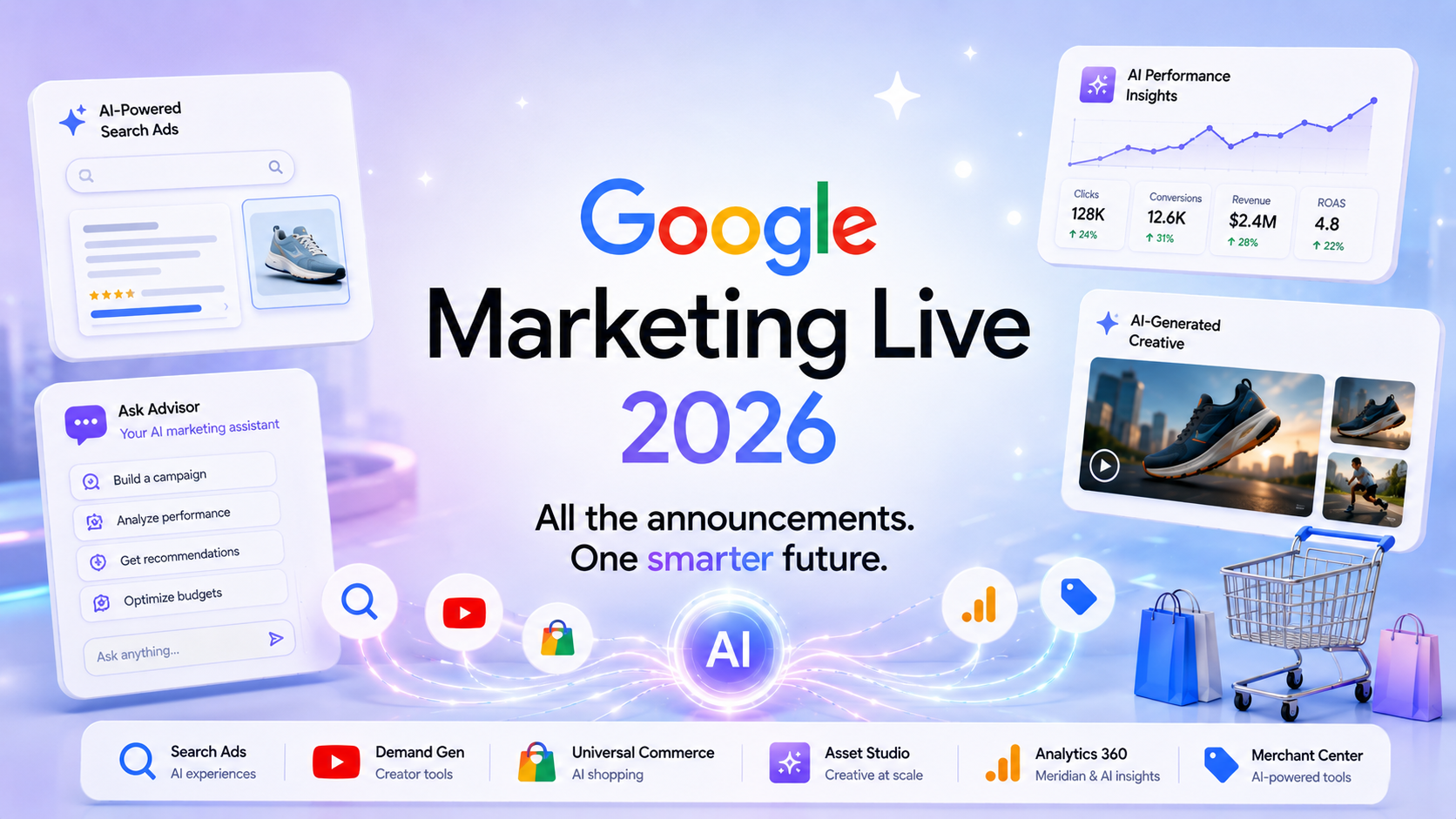
This isn’t just about a new AI chatbot or sleeker ad formats. Google Marketing Live 2026 laid bare a fundamental architectural shift: Gemini is no longer a feature layered on top; it’s being integrated as the foundational operating system across advertising, commerce, and measurement. The emphasis this year swung hard toward agentic AI, conversational interfaces, and the automation of creative production and shopping experiences. From Search to YouTube, Merchant Center to Analytics, the message was clear: campaigns are becoming more autonomous, predictive, and, frankly, interwoven into the fabric of user interaction.
The AI-Powered Search Revolution
Forget static keywords and predictable ad placements. Google is unleashing a new wave of Gemini-powered Search ads specifically engineered for its nascent AI Mode and the escalating trend of conversational queries. We’re talking about ‘Conversational Discovery ads,’ ‘Highlighted Answers,’ and ‘AI-powered Shopping ads’ – formats designed to embed AI-generated explanations and interactive dialogues directly into the user’s journey. This move, coupled with the expansion of the Direct Offers pilot featuring AI-generated bundles and native checkout, signals a future where ads are less interruptive intrusions and more contextual, helpful assistants. The goal? To make the transition from curiosity to purchase feel as natural as asking a question to a knowledgeable friend.
Ask Advisor: Your Unified AI Marketing Lieutenant
But the real connective tissue, the kind of plumbing that makes a complex ecosystem hum, is ‘Ask Advisor.’ This Gemini-powered AI collaborator isn’t just another dashboard widget; it’s designed to be a singular point of command, bridging Google Ads, Analytics, Merchant Center, and the broader Google Marketing Platform. Imagine a single AI agent capable of building campaigns, dissecting performance, surfacing proactive recommendations, and automating those grinding operational tasks that eat up precious hours. Google claims Ask Advisor can synthesize insights across these platforms, dramatically shortening the cycle from initial planning to real-time optimization. This is the enterprise-level AI promise – unifying silos, accelerating decision-making, and, in theory, democratizing sophisticated analysis.
The Universal Commerce Protocol Gets Smarter (and Smoother)
For anyone tracking the long game of e-commerce integration, Google’s push on the Universal Commerce Protocol (UCP) and Universal Cart is significant. This year brought AI-assisted checkout flows, deeper buy-now-pay-later integrations with heavy hitters like Klarna and Affirm, and the tantalizing prospect of cross-retailer shopping experiences. Think AI orchestrating complex purchases across different brands with a single interface. The expansion of UCP into Demand Gen campaigns, YouTube Shopping ads, and AI Mode experiences suggests Google is building a persistent, AI-supercharged shopping layer across its entire user surface. This isn’t just about presenting products; it’s about architecting frictionless transactions.
Asset Studio: AI as Your Creative Director
Where does the creative fuel for all this come from? Google’s Asset Studio is now leaning heavily into Gemini’s multimodal capabilities. Advertisers can now use natural language prompts to churn out not just images and text variations, but full-blown video assets and even thematic concepts. The integration of Gemini Omni for video workflows and the introduction of ‘1-Click Creative Testing’ point toward a future where creative iteration is hyper-accelerated. This could democratize high-quality ad production, but it also raises questions about originality and the potential for creative homogenization. Will AI-generated creativity truly resonate, or will it become a sea of polished, soulless sameness?
Demand Gen’s Expansion: Creators, Maps, and AI Optimization
Demand Gen, Google’s answer to performance-driven campaigns, is also getting a serious AI injection. Updates focus on empowering YouTube creators with partnership tools, expanding ad inventory into Google Maps—a fascinating new frontier for local commerce—and leveraging AI for campaign setup and dynamic product video distribution. The promise is enhanced conversion performance, especially for businesses with extensive product catalogs. The integration with Maps is particularly noteworthy, blurring the lines between online discovery and offline intent.
Measurement Gets Predictive with Meridian and QFCs
The perennial challenge of accurately measuring advertising’s impact is being tackled with two key initiatives for Google Analytics 360: Meridian and Qualified Future Conversions (QFCs). Meridian, Google’s open-source marketing mix modeling framework, is being woven directly into Analytics 360. This aims to provide more sophisticated media mix modeling capabilities. Simultaneously, QFCs, a new predictive reporting metric powered by Gemini, is designed to connect current ad activity with future revenue signals. This move toward predictive forecasting and incrementality measurement, while ambitious, is crucial for demonstrating long-term value in an increasingly complex ad ecosystem. It’s an attempt to bridge the gap between immediate clicks and sustained business growth.
Merchant Center Adapts to the Conversational Commerce Era
Retailers are not being left behind. Merchant Center is receiving updates aimed at improving discoverability within these new AI-powered shopping environments. ‘AI Performance Insights’ and ‘Conversational Attributes’ are designed to help product feeds and descriptions better align with how users will interact with AI agents. The integration with Ask Advisor also means retailers will have a direct AI assistant for optimizing their listings. The core challenge here is adapting product data and catalog management to a conversational paradigm, a significant shift from traditional keyword optimization.
The Underlying Architecture: A Generative Future
What we witnessed at Google Marketing Live 2026 wasn’t just a suite of new products; it was the unveiling of a reimagined architecture for digital marketing. The pervasive integration of Gemini signals a move towards generative AI as the core engine for creation, optimization, and interaction. This shift implies a future where the majority of campaign elements—from initial ad copy and visuals to audience segmentation and performance forecasting—will be AI-assisted or AI-generated. For marketers, this presents a dual challenge and opportunity: mastering the tools to use AI’s power while ensuring brand authenticity and strategic oversight in an increasingly automated landscape. The question isn’t whether AI will drive advertising, but how deeply and effectively it will be woven into every decision, from ideation to measurement.