AI is for ads now.
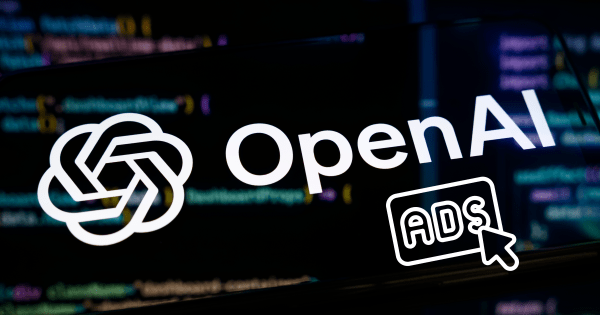
This isn’t just another job posting. OpenAI, the company that brought us ChatGPT and made us all collectively question our futures, is now apparently interested in our advertising budgets. They’re looking for a “head of ads enterprise marketing.” The job description itself is practically a mission statement: shape perceptions among CMOs, agency brass, and the poor souls who actually buy media. This isn’t some minor side hustle; it’s about building a brand, a reputation, a whole damn business unit dedicated to selling us AI-powered advertising solutions.
And the ambition is palpable. The listing explicitly mentions expanding presence at industry shindigs like Cannes Lions, CES, and Advertising Week. You know, the places where deals are made, trends are set, and everyone pretends to understand what’s coming next. OpenAI wants to be a “leading voice” on AI and advertising. Cute.
Is This a Trojan Horse?
Let’s be frank. For a company whose primary product is a language model, this feels like a significant pivot. Or perhaps, it’s the logical, inevitable next step. They’ve taught the world to talk to machines, now they want machines to talk to advertisers. The executive’s job will be to craft narratives, build programs, and generally convince the ad world that OpenAI isn’t just a tech novelty, but a vital partner for… well, for whatever the future of advertising looks like when filtered through algorithms that can write poetry and code. This smells like a calculated move to legitimize their ad tech aspirations before the competition — or the regulators — can even get their act together.
The executive will build programs and content “that position OpenAI as a leading voice on the future of advertising, AI, creativity, and measurement,” per the listing.
This quote is the linchpin. It’s not just about selling ad space. It’s about selling a vision. A vision where AI doesn’t just assist creativity, but is creativity. Where measurement is hyper-accurate because the AI understands intent better than your average focus group. And where the entire advertising ecosystem is, dare I say, more efficient because OpenAI said so.
What’s In It For Them (and Us?)
For OpenAI, the revenue potential is astronomical. Ad tech is a colossal, often murky, beast. If they can carve out a significant slice by offering truly innovative AI-driven ad tools — tools that go beyond the tired old programmatic playbook — they could redefine the market. Think hyper-personalized creative generation at scale, predictive targeting that actually works, and performance metrics that aren’t gamed. It’s a tempting proposition, assuming they can deliver without breaking the internet (or our privacy).
For the rest of us? It’s a mixed bag. On one hand, better AI tools could genuinely improve campaign performance and unlock new creative avenues. Imagine ad copy that truly resonates, or visual assets that adapt in real-time to viewer engagement. On the other hand, this could accelerate the erosion of nuanced human creativity in favor of algorithmically generated, potentially bland, content. And let’s not even get started on the privacy implications of AI that knows us that well.
It’s a bold move. A very bold move. OpenAI is essentially planting its flag on the advertising battlefield. Whether they’ll conquer it or get bogged down in the mud of brand safety and data ethics remains to be seen. But one thing is for sure: the AI advertising arms race has just gotten a serious jolt.