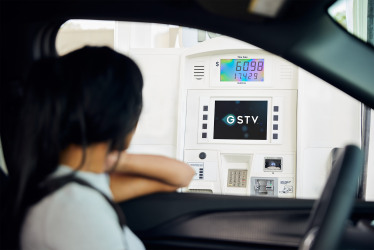
The playbook for reaching consumers was supposed to be simple: stream more, target better. We all anticipated that with the explosion of connected TV and walled gardens, advertisers would finally gain granular control, meticulously slicing and dicing audiences across a digital ether. But that neat picture? It’s shattered. Now, with attention splintered across countless platforms and a fierce war for eyeballs, marketers are doing what smart players always do when the game changes: they’re looking for new fields of play. Enter on-the-go video, championed by outfits like GSTV, which argues it’s the overlooked frontier for capturing audiences before they’ve even decided what to watch.
Reaching the Unreachable, One Commute at a Time
Everyone’s talking about how hard it is to find consumers, especially those coveted 25-34-year-olds and the notoriously brand-agnostic Gen Z. They’re not parked on one platform; they’re a blur of activity. Netflix one minute, a quick stop at a 7-Eleven the next, then dissecting the latest reality TV drama on the way to wherever. Andrei Maglica from GSTV paints a picture of this nomadic consumer, and GSTV’s thesis is that traditional screen-based advertising misses these crucial, in-between moments. Their research suggests a significant chunk of viewers are already contemplating their next binge before they settle in, making the journey itself a prime real estate for influence. It’s a pragmatic approach: if you can’t catch them on the couch, catch them on the curb.
The Video Imperative in a Content Deluge
Entertainment marketers are in a bind. The sheer volume of content is staggering, and cutting through the noise feels like shouting into a hurricane. Video, predictably, remains the king of storytelling. It builds emotion, sparks anticipation, and, crucially, nudges decisions. But the where and when matter as much as the what. Even premium content can go unseen if it’s served in the wrong context. On-the-go video’s supposed superpower is its ability to intercept consumers at the precise moment their decision-making process is active. GSTV boasts 95% of its impressions have eyes-on-screen, with attention levels that apparently dwarf CTV and linear TV – a claim that, if true, directly links exposure to action. It’s about being present when impulse meets opportunity.
“On-the-go video captures those high-attention, real-world environments—often in the moments when decisions are forming; like their commute home from work.”
This isn’t just about slapping a traditional ad onto a gas station screen. The real innovation, Maglica suggests, lies in creating content that feels native. Amazon MGM Studios’ collaboration for “Oh. What. Fun.“ with Jason Schwartzman, woven into GSTV’s IGNITE Studios, exemplifies this. It’s less a commercial break and more an extension of the narrative, turning promotion into an integrated part of the viewing experience, albeit a very brief and context-specific one.
Beyond the Gas Station: Where’s the Real Growth?
The potential isn’t limited to fuel stops. Airport TV, Taxi TV, Bar TV – any high-traffic, physical space offers an opportunity. But the key, as GSTV sees it, is treating these locations as dynamic digital channels, not just passive billboards. The industry has, for too long, viewed Digital Out-of-Home (DOOH) as an afterthought. Now, with consumers blending physical and digital lives, DOOH must evolve, prioritizing data, targeting, and measurable outcomes over mere presence. This pivot is especially timely as younger demographics, particularly Gen Z, show a renewed interest in in-person experiences and physical retail. The most potent environments will be those that sit closest to the point of intent, where media can genuinely sway choices in real-time.
Out-of-Home Reimagined: Not an Extension, but a Partner
Out-of-home advertising is no longer just the big billboard on the highway. When executed as true DOOH, it’s an indispensable component of a modern marketing mix, operating as a peer to channels like CTV and mobile, not a lesser appendage. It’s about injecting digital precision into the physical world, enabling precise audience targeting in specific locations. This isn’t about reaching “everyone”; it’s about reaching the right someone, at the right moment, while they’re navigating the tangible world.
Is This Just a New Flavor of Digital Hype?
The narrative GSTV presents is compelling, offering a solution to a real problem: audience fragmentation. The data points about attention and intent, if independently verified, are significant. However, the industry is perpetually susceptible to the siren song of the “next big thing,
🧬 Related Insights
- Read more: AI Search: B2B Metrics Are Shifting
- Read more: Trade Desk Bets Big on Dollar General Retail Media