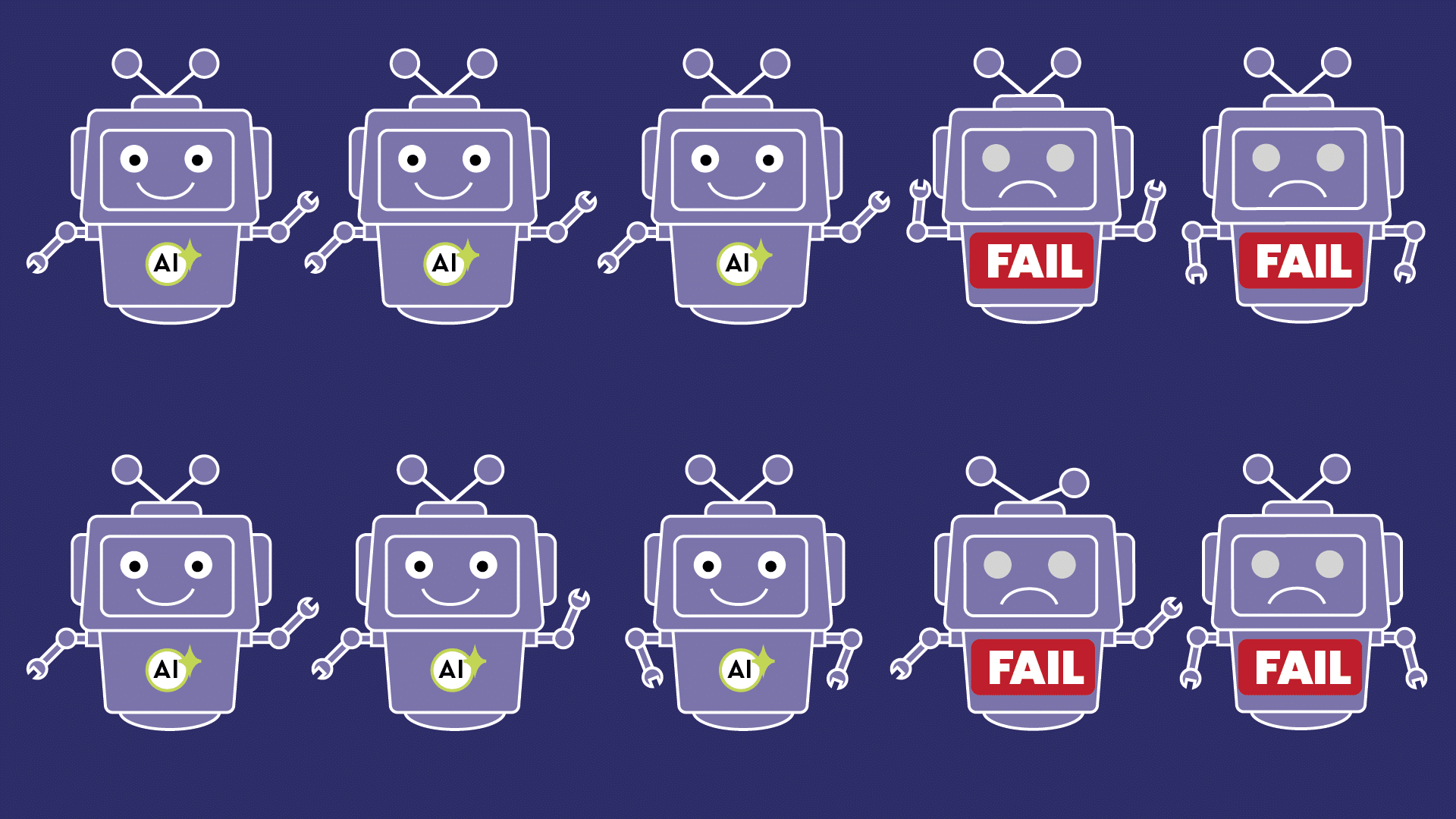
Brands still don’t get it.
Look, we’ve been talking about personalized marketing for what, two decades now? Yet here we are, with Adobe itself admitting that fewer than half of brands can consistently deliver what the vast majority of consumers (71%, according to their own 2025 AI and digital trends report) actually want: personally relevant offers and information. Seventy-eight percent expect smoothly experiences across channels. Seventy-eight percent! And yet, what do we get? A mess. A digital equivalent of a poorly managed filing cabinet where relevant files are buried under mountains of junk. It’s enough to make you want to unsubscribe from everything.
It’s not about AI, folks.
The spin, as always, is to point fingers at some vague future where AI will magically fix everything. But Adobe, bless their hearts, is being a little more honest here. The real culprit, they say, is “structural.” When your customer data lives in a thousand different black boxes – email, web, mobile, support tickets, heck, even your CRM might be a relic from the dial-up era – trying to get a coherent picture of a single human being is like trying to assemble a jigsaw puzzle blindfolded, during an earthquake. AI can’t overcome a fundamentally broken data foundation. In fact, their 2026 report shows less than half of organizations think their current data setup can even support AI at scale. Shocker.
When customer data lives in disconnected systems, teams will struggle to align insight, timing, and execution quickly enough to take meaningful action. AI can’t magic the problem away.
Think about it. You browse some shoes online, get an email a day later with a different price. Or you call support, and have to re-explain your entire life story to three different people. Or, my personal favorite, you buy something and then still see ads for it weeks later. It’s not just annoying; it actively erodes trust. Adobe even points out that nearly half of customers disengage when promotions feel irrelevant or mistimed. Mistimed. That’s the killer. We’re talking milliseconds here. The brain processes ads that fast. If your systems can’t catch up, the moment’s gone. Poof.
Why Can’t Brands Get Personalization Right?
It all boils down to a lack of cohesion. Brands have the data, usually. They just can’t put it together fast enough to be useful. This isn’t a new problem. I remember back in the late 2000s, we were already talking about the ‘single customer view.’ Twenty years later, and we’re still struggling. The vendors love to sell you the next shiny object—the AI platform, the predictive analytics tool—but without a solid, unified data strategy, they’re just expensive paperweights.
The ‘Unified Customer Profile’: A Familiar Tune
So, what’s the solution Adobe’s peddling? The same old song, with a new coat of paint. Step one: build a unified customer profile. Revolutionary, I know. This means ditching those siloed records and creating one dynamic view that tracks behavior across all channels in real-time. Every click, every purchase, every support call—it all needs to feed into a single source of truth. Then, and only then, can you make your segmentation smarter and your messaging relevant. No more duplicate emails, no more contradictory offers. And you can actually measure what’s working across the entire customer lifecycle instead of just fiddling with individual campaigns.
Step 2: Connect insights to activation in real time. This is where the rubber meets the road, or rather, where the data meets the customer. Abandoned cart? Send a follow-up. Browsed a product? Recommend something similar. It’s not rocket science, but it requires systems that can react instantly. And yes, AI can help here, but again, it needs clean, unified data to work. Garbage in, garbage out, as they say.
Finally, Step 3: Scale securely in the cloud. As if privacy wasn’t a concern before, now with all this data unification, it’s paramount. Governance needs to be built-in, not an afterthought. A modern cloud foundation is touted as the answer, allowing data to be processed and activated where it lives, reducing latency. All sounds good, theoretically. The question, as always, is who actually builds and manages this stuff, and at what cost?
This push for a unified customer experience, while framed as a path to better personalization, is fundamentally a data plumbing problem. Brands have been collecting data for years, but the inability to connect and activate it in a timely, relevant manner is the persistent Achilles’ heel of modern marketing. Adobe’s report, while somewhat self-serving given their product suite, highlights a truth many in the industry are still grappling with: you can’t personalize effectively if you don’t truly know your customer across all touchpoints, and that requires a fundamental overhaul of how data is managed and utilized. The hype around AI might be new, but the need for clean, connected data is an old, unaddressed problem.
Who is Actually Making Money Here?
Let’s not kid ourselves. While Adobe is happy to highlight the consumers’ desire for personalization, their real play is selling MarTech solutions that can achieve it. Companies that haven’t cracked personalization are companies that need Adobe’s (or similar vendors’) tools. So, while the consumer benefits from feeling understood, the primary beneficiaries of this ongoing struggle are the tech companies providing the solutions to fix the mess. It’s a classic case of identifying a problem, explaining why it’s complex, and then offering the expensive cure. And we, the marketers, are left holding the bag, trying to justify the spend while our campaigns still feel like a shot in the dark.
Nearly half of customers say they disengage when promotions feel irrelevant or mistimed.
My prediction? We’ll still be having this conversation in 2030. The tech will evolve, the buzzwords will change, but the core issue of siloed data and organizational inertia will persist until companies fundamentally change how they think about customer data. It’s not just a marketing problem; it’s an organizational one. And those are the hardest to fix.
🧬 Related Insights
- Read more: 82% of Service Pros Can’t Keep Up — Salesforce Pushes Unified CCaaS-CRM as the Fix
- Read more: Incrementality Testing: How to Measure True Ad Campaign Impact
Frequently Asked Questions
What does ‘personalized marketing’ mean to customers? Customers recognize personalized marketing when offers and information feel relevant and timely, creating a smoothly experience across channels without them needing to articulate the underlying data processes.
Why is it hard for brands to deliver personalized marketing? Most brands struggle due to disconnected customer data systems (data silos) that prevent timely alignment of insights and execution across different departments and touchpoints, hindering the creation of a unified customer view.
Does AI solve the personalization problem for brands? AI can support personalization at scale by identifying patterns and predicting actions, but its effectiveness is entirely dependent on accurate, unified data. A broken data foundation will limit AI’s ability to deliver relevant outcomes.