The flickering neon of a 24-hour bodega casts a sickly glow on a rain-slicked street as a delivery driver curses under his breath.
Agents. They’re the new buzzword, the shiny object in the ever-churning ad tech machine. Omnicom’s CEO is apparently testing these AI-driven go-betweens, promising to cut out the middleman and boost publisher yields. Sounds great, right? More money in the pockets of the people actually creating the content. But let’s not get ahead of ourselves.
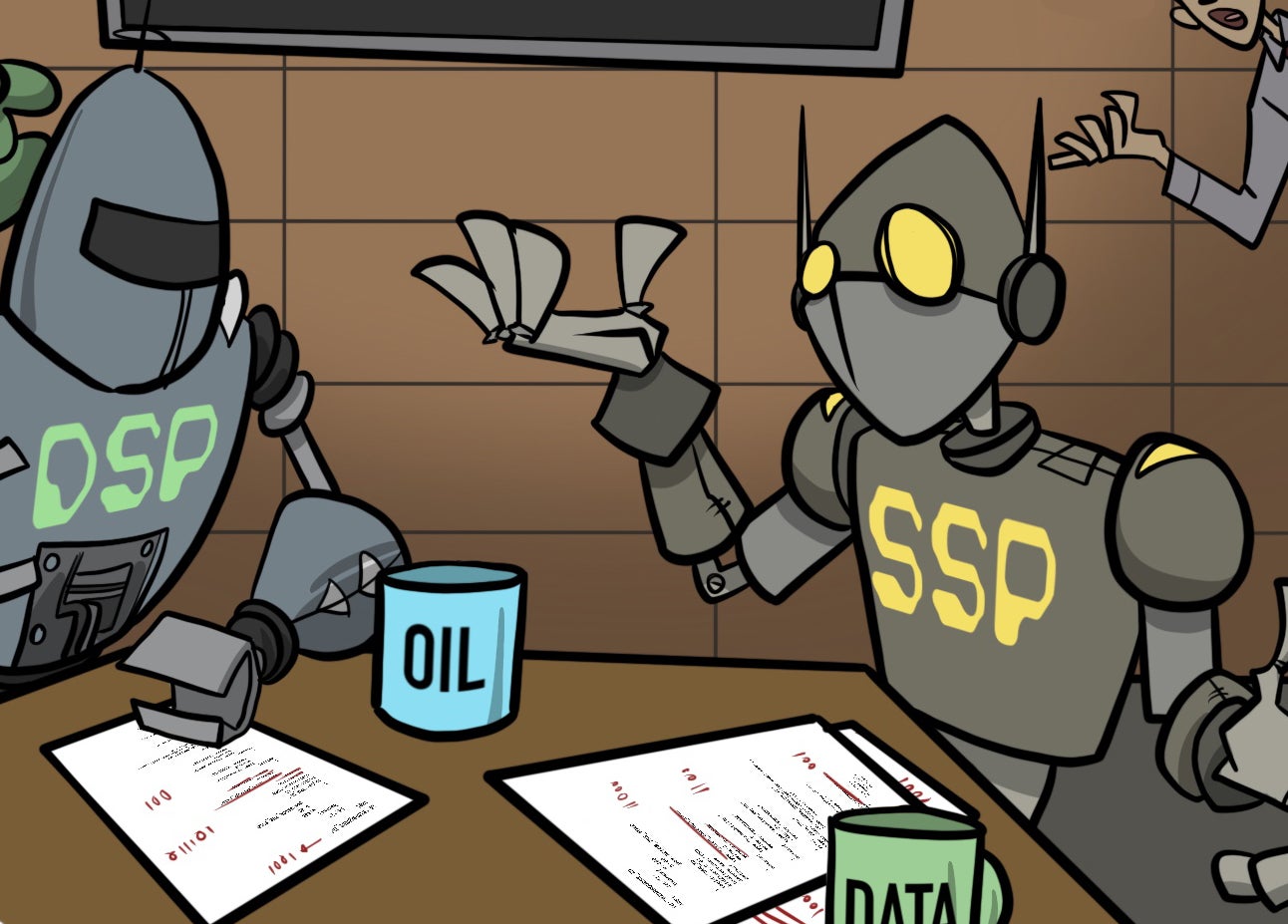
Look, I’ve seen this movie before. Every few years, someone trots out a new piece of tech that’s going to ‘disrupt’ the programmatic supply chain. Usually, it just adds another layer of complexity and another fee structure for someone to skim off the top. The Trade Desk’s Jeff Green, bless his pragmatic heart, is already calling out the potential for a million tiny ad networks to sprout up. He’s not wrong. When you’ve got AI agents yapping at each other on behalf of one advertiser and one publisher, what are you really creating? It smells a lot like the old ad networks, just with fancier jargon.
Will Agents Actually Clean Up the Supply Chain?
Proponents say these agents will bring buyers directly to publishers’ ad servers, ditching the usual suspects. Justin Wohl over at Aditude is quoted as saying it’ll “move other middlemen from the transaction.” And I want to believe him. I really do. But experience has taught me that for every middleman ostensibly removed, two more pop up in their place, clad in slightly shinier chrome.
So, who’s actually making money here? That’s the perennial question, isn’t it? Is it the folks building these agentic platforms? The holding companies testing them? Or is it just another way to extract more from the already squeezed publishers? I’m leaning towards the former, with a side of more complexity for everyone else.
The Squeeze: From Ad Tech to Grocery Aisles
Meanwhile, the rest of the world is grappling with more terrestrial problems, like the fact that your damn cereal costs more than your rent. The grocery industry, according to reports, is a dumpster fire. It’s not your fault; you’re just trying to buy milk. It’s the convoluted supply chains and razor-thin margins that are buckling under the strain. Retailers are slapping fancy digital price tags on shelves, ostensibly to save associate time, but we both know it’s about data and personalization. Because who doesn’t love being upsold on toilet paper while they’re just trying to grab a loaf of bread?
And the brands themselves? Drowning. Tariffs, fuel prices, the general chaos of global commerce – it’s all seeping into your grocery bill. They’ve already cut marketing, laid off staff, and jacked up prices. Now they’re just bracing for the next wave of increases. It’s a grim reminder that sometimes, the most complex problems aren’t in the digital ether but right there in the dairy aisle.
Micro-Dramas: Is This Peak Content or Peak Laziness?
And just when you thought things couldn’t get stranger, we have microdramas. Yes, apparently, those bite-sized reality shows you might have scrolled past on TikTok are now big business. Peacock is getting in on the act, pairing up with Bravo for some short-form gossip fests. App figures show apps like ReelShort pulling in billions. Billion dollars. For 10-minute episodes that are essentially just content filler.
It’s a fascinating, if slightly depressing, evolution. We’re so starved for attention that we’re consuming entertainment in micro-doses. And naturally, ads are part of the equation. Pay with your time, pay with your money, or just endure a few ads to unlock the next two minutes of manufactured drama. It’s the ad tech model, distilled to its purest, most desperate form.
Short And Sweet
Microdramas are officially a macro-trend.
On Monday, Peacock announced that it will bring two unscripted microdramas (think: incredibly short-form reality TV shows) to its streaming app, TechCrunch reports.
The announcement shouldn’t come as a surprise. Last year, microdrama app ReelShort raked in roughly $1.2 billion in consumer spending, according to app intelligence firm Appfigures. DramaBox, a similar app, hit $276 million, more than doubling its 2024 total.
Ads are part of the equation. Through in-app purchases and rewarded viewers pay with their time or money (or both) to unlock episodes.
Earlier this year, TikTok distributed its own microdrama app, but Peacock will be the first major US streaming platform to produce its own microdramas. Peacock is partnering with Bravo for the two shows. “Southern Charm” star Madison LeCroy will perform makeovers on clients while they share bite-size gossip. The other show features a group of university students in Miami, among them a daughter of someone from “The Real Housewives of Salt Lake City.”
You get it.
Bravo is a potentially clever entry point for Peacock’s microdramas, given Bravo viewers’ penchant for soapy reality TV. Peacock already hosts a legion of Bravo fanatics who are there to watch “Vanderpump Rules” and “Summer House.” And who’ll apparently just consume the new micro-dramas like amuse-bouche.
But Wait! There’s More!
Retail media networks are in their “gangly teenager” phase. They’re trying to grow up. [WSJ]
TikTok launches a paid, ad-free subscription for UK users. [BBC]
Writers are leaving Substack over its 10% cut of subscription revenue and switching to Ghost and Beehiiv, which collect flat fees. [The Verge]
Here’s one new way for news publishers to raise revenue: The New York Times is executive producing a new game show to air on NBC based on the word game Wordle. [Today]
Meta is being sued by Santa Clara County, California, for facilitating and earning billions of dollars from scam advertisements. [Bloomberg]
Byron Allen is investing a majority stake in BuzzFeed and will become its next CEO. [Variety]
You’re Hired!
Nisan Schitrit is the new CEO of YouAppi. [release]
Havas Media Network North America names Kristin Gower as managing director of B2B, a new role at the agency. [MediaPost]
🧬 Related Insights
- Read more: Horizon’s Campanelli Slams CTV’s ‘Extra Step’ to Real Performance
- Read more: WBD Shifts Ad Strategy: Real Results Over GRPS
Frequently Asked Questions
What are “agentic solutions” in ad buying? Agentic solutions use AI to automate and execute media buying decisions, theoretically streamlining the process and removing intermediaries.
Are microdramas profitable? Yes, apps like ReelShort have generated over a billion dollars in consumer spending, suggesting a strong demand for short-form, episodic content.
Is the grocery industry struggling? Yes, reports indicate significant challenges due to complex supply chains and rising fuel costs, leading to higher prices for consumers.