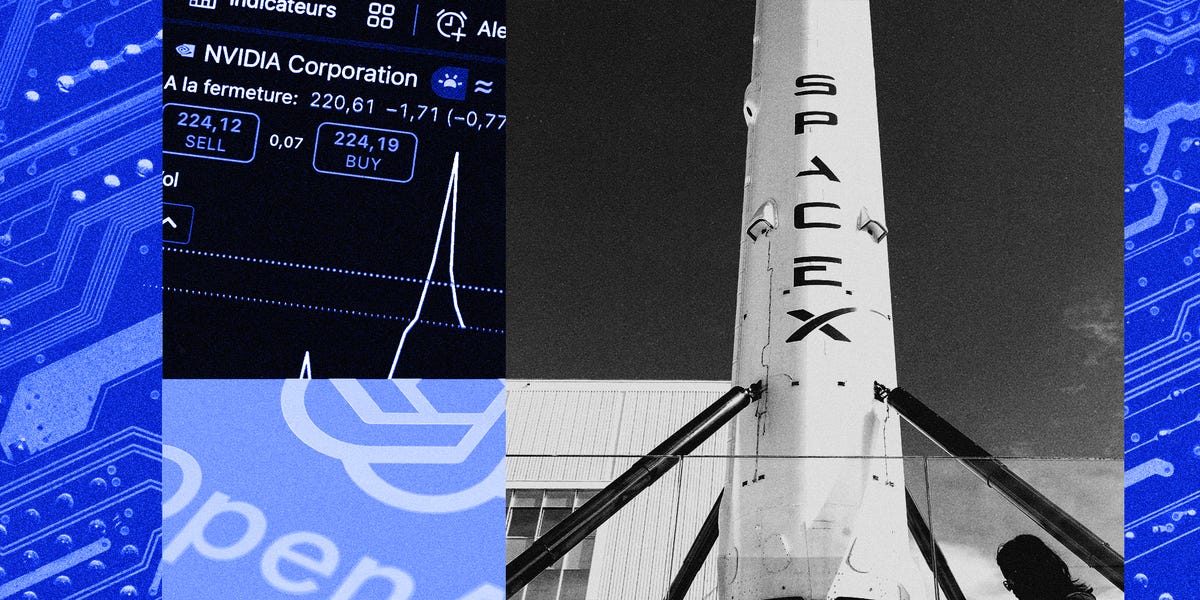
So, AI just had its March 11, 2020. You know, the day Rudy Gobert tested positive and the NBA suspended its season, the day the world collectively woke up and realized the old normal was gone. That feeling of a seismic shift, a dizzying, stomach-churning realization that the map we’d been using was suddenly obsolete? It hit last Wednesday. Forget the buzzwords and the future-gazing; this is about the tangible, the imminent, and frankly, the kind of change that makes you sit up and take notice. Because this isn’t just about better chatbots or cooler image generators anymore. This is about the fundamental architecture of our digital and economic lives beginning to warp.
Look, the numbers being thrown around are, frankly, absurd. Nvidia, the silicon beating heart of this AI explosion, isn’t just doing well; it’s posting quarterly revenues so astronomical they read like a typo. Eighty-one-point-six billion dollars. That’s twenty-six times what they pulled in back in early 2020. And Anthropic? The AI safety company that barely existed a few years ago? They’re projecting billions in revenue, growing faster than Zoom did during its pandemic peak. It’s a gold rush, sure, but one built on foundations that are being laid right now, with real-world consequences.
The architectural shift here isn’t just about more powerful algorithms; it’s about a wholesale re-evaluation of what constitutes value and competitive advantage in the tech sector. For years, we’ve been building digital infrastructure, optimizing ad delivery, and refining user experiences. Now, the very tools that power those optimizations are becoming intelligent agents capable of creating and executing with a speed and scale that upends traditional workflows. This isn’t incremental improvement; it’s a paradigm shift that forces us to ask not if AI will change things, but how it’s already changing them, and what we’re doing to adapt.
And then there’s the OpenAI news, dropping like a precision-guided missile. The company, fresh off its very public spat with Elon Musk, is reportedly gearing up for an IPO. Think about that for a second: a private company, still in its relative infancy, commanding a valuation that could reshape the financial landscape. It’s not just about the money; it’s about the signal it sends. It says that the future is here, and it’s AI-driven, and the market is ready to bet big. Coupled with the mind-bending revelation that one of their models solved an 80-year-old geometry problem—a problem that had mathematicians losing sleep—it underscores the profound capabilities we’re talking about.
We have this incredible model that is showing emergent capabilities that we didn’t explicitly train for. We are now at the point where we’re realizing that the world is much more complex than we thought, and that there are fundamental questions about how AI systems learn and reason.
This quote, plucked from the breathless announcement, isn’t just hyperbole. It’s an admission of the unknown, a peek behind the curtain at systems that are, in essence, teaching themselves in ways we don’t fully comprehend. The implications for industries that rely on complex problem-solving, scientific discovery, and even artistic creation are staggering. It’s the quiet hum of a new intelligence, learning, and evolving at an exponential clip.
The Tsunami Effect: Layoffs and Market Domination
Meanwhile, amidst this torrent of AI-fueled growth, Meta is shedding 8,000 employees. Eight thousand. They join a growing exodus from tech giants – Amazon, Google, Microsoft, you name it – who are pivoting hard, clearing decks, and funneling resources into AI development. This isn’t a cyclical downturn; it’s a strategic realignment. Companies are betting their future on AI, and if you’re not part of that bet, you might be deemed… unnecessary. This is the messy, human consequence of the architectural shift: jobs that were once secure are now vulnerable to automation and AI augmentation, forcing a brutal recalculation of the workforce.
The SpaceX filing adds another layer to this unfolding drama. Beyond the mind-boggling potential of Musk becoming the world’s first trillionaire, the filing reveals an ambition that dwarfs its space endeavors. They see AI as the ultimate frontier, a $26.5 trillion market, more than six times the GDP of China. This isn’t just a company building rockets; it’s a company aiming to dominate the AI infrastructure that will underpin our future. And the fact that Anthropic is paying $15 billion a year for their cloud computing services? That’s a tangible, real-world indicator of the immense demand and the strategic partnerships being forged.
This deluge of news—Nvidia’s numbers, Anthropic’s projections, OpenAI’s IPO plans and mathematical prowess, SpaceX’s AI-centric vision, and the subsequent layoffs—all coalesced into a single, undeniable truth by Wednesday morning. It’s a confirmation that the old guard, the familiar frameworks of technology and business, are being fundamentally rewritten. The “unknown duration” of this new era has begun.
Is This AI’s ‘COVID Shutdown’ Moment for My Job?
What does this mean for the average person? It means the tools you use daily, the services you rely on, and the jobs you might be aiming for are about to become significantly more intelligent—and potentially, more competitive. It’s a call to action. If you thought AI was a distant future concept, think again. It’s here, it’s accelerating, and it demands your attention. Adaptation isn’t optional anymore; it’s survival. The skills that were valuable yesterday might be commoditized tomorrow. The question isn’t whether you’ll interact with advanced AI, but how you’ll use it, or how it will use you.
We saw a similar, albeit less technologically focused, societal jolt in early 2020. Suddenly, remote work wasn’t a perk, it was a necessity. Online shopping went from convenient to essential. Our entire social fabric reconfigured in a matter of weeks. This AI moment, while perhaps less immediately visible in its disruption, is arguably more profound in its long-term implications. It’s not just about how we work or shop; it’s about how we think, create, and interact with the very definition of intelligence itself.
This isn’t the time for passive observation. It’s the time for active engagement. Understand the shifts, upskill where necessary, and prepare for a future where AI is not just a tool, but an integrated partner—or competitor—in nearly every aspect of our lives.
🧬 Related Insights
- Read more: Publicis Drops $2.5B on LiveRamp for AI Ad Dominance
- Read more: Media Mix Modeling vs Multi-Touch Attribution: Choosing the Right Approach
Frequently Asked Questions
What are the immediate economic impacts of this AI boom? The immediate economic impacts include unprecedented revenue growth for AI infrastructure and development companies like Nvidia, massive investment influxes into AI startups, and significant strategic realignments within established tech giants, often leading to workforce reductions in non-core areas as companies pivot to AI. The potential for new trillion-dollar valuations, like that seen with SpaceX’s AI ambitions, indicates a reshaping of market dominance.
How will this AI shift affect everyday consumers? For everyday consumers, this AI shift means that the technologies and services they interact with will become significantly more intelligent and capable. This could lead to enhanced user experiences, more personalized services, and new product categories. However, it also signals a need for individuals to adapt their skill sets as AI augments or automates certain job functions, potentially impacting job markets and the skills required for future employment.
Is this AI ‘shutdown moment’ similar to the COVID-19 pandemic’s impact? Yes, the article draws a parallel to the COVID-19 pandemic’s societal and economic upheaval, likening last Wednesday’s AI news surge to the March 11, 2020, “everything changed” moment. Both represent inflection points that rapidly altered established norms, accelerated existing trends (remote work during COVID, AI adoption now), and ushered in periods of significant uncertainty and adaptation for individuals, businesses, and societies.