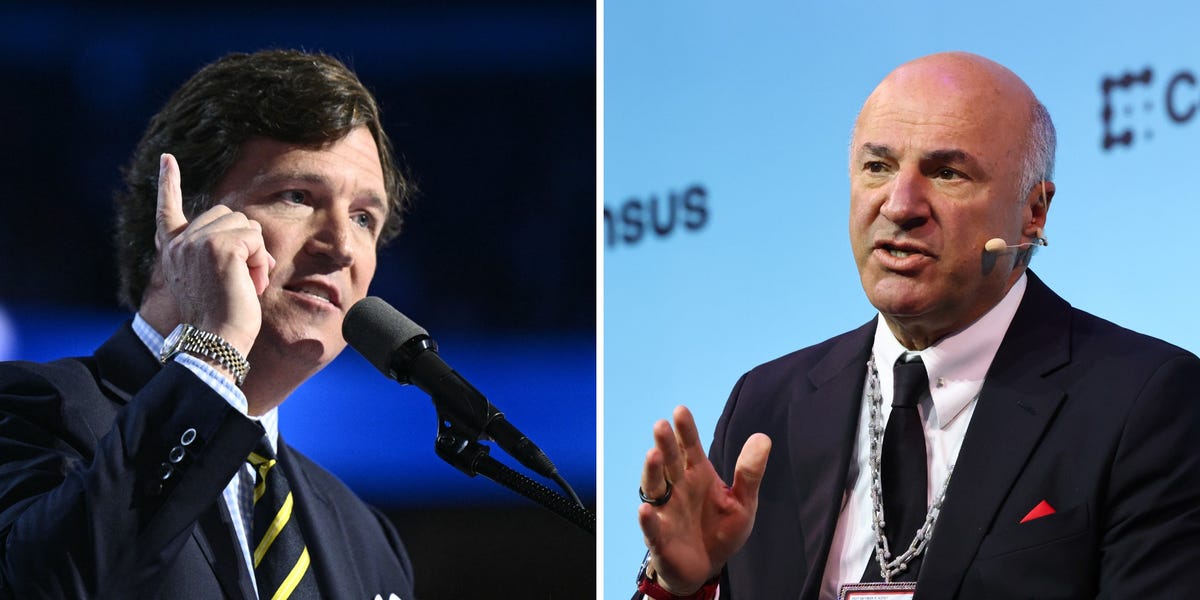
And just like that, Kevin O’Leary’s shovels are deep in Utah soil, stirring up more than just dust. Tucker Carlson, ever the provocateur, decided it was high time to put the ‘Shark Tank’ investor on the spot about those hefty taxpayer subsidies earmarked for O’Leary’s Stratos data center project. Carlson’s angle? Why should the little guy bail out billion-dollar tech behemoths like Amazon and Microsoft? It’s a question as old as time in this country, and O’Leary’s answer, frankly, was pure Silicon Valley boilerplate laced with a touch of defiance.
He’s been on this kick for a while, this AI arms race narrative. The script goes: China’s gaining, we’re falling behind, so naturally, Uncle Sam — and by extension, Utah taxpayers — needs to open the vault for data centers. Because, you know, if states don’t offer these sweet, sweet incentives, they just “won’t win any contracts.” Sounds less like national security and more like a corporate lobbying tour de force, if you ask me.
Carlson’s not wrong to question the optics. A 40,000-acre behemoth that could chug more energy than Utah currently uses, promising a pittance of actual long-term jobs in return for subsidies that, as Carlson points out, shift the cost onto ordinary citizens. It’s a classic play: build it big, promise the moon, snag the tax breaks, and let the community deal with the fallout — water shortages, power grid strain, and maybe a few dozen jobs that could have been created with actual investment, not handouts.
Carlson repeatedly asked O’Leary why taxpayers should subsidize a private business whose tenants could be ‘some of the richest companies in the world.’
O’Leary’s response, “Welcome to America, buddy. This is how it’s gone on for 200 years,” is as telling as it is dismissive. It’s an admission, really. An acknowledgment that this isn’t about some grand vision for AI innovation; it’s about the established, deeply ingrained system of corporate welfare that’s been powering the Valley’s growth for decades. Who benefits? Not the taxpayers signing the checks. Not the communities left grappling with strained resources. It’s the companies getting their infrastructure built for pennies on the dollar, and guys like O’Leary, who get to claim they’re building the future while collecting a hefty government bonus.
Is this actually about the AI race with China? Maybe a little. But let’s be honest, the primary beneficiaries are the tech giants who get cheap real estate and power, and the developers who get lucrative construction and management contracts. The “jobs” narrative is always trotted out, but the numbers often don’t add up, especially when you’re talking about automated data centers. It’s the old bait-and-switch: promise local prosperity, deliver corporate profit.
What O’Leary seems to be missing, or perhaps deliberately ignoring, is that while the AI race is real, the methods of funding it are subject to scrutiny. Citizenry is one thing; demanding public funds for private ventures that primarily serve already-wealthy corporations is another. This isn’t about stopping progress; it’s about asking who’s truly driving it and who’s getting rich off the public dime.
The whole “new industries will emerge” argument is a comfortable platitude, but it doesn’t pay the water bill. Historical parallels are fine, but history also shows us that unchecked corporate power, fueled by public money, rarely ends well for the public.
Who’s Really Building the Future?
Look, O’Leary’s not wrong that there’s a geopolitical element to AI dominance. The US needs strong infrastructure. But when a project of this magnitude, demanding gigawatts of power and potentially straining resources, gets a green light with taxpayer backing, the public deserves more than a lecture on national competition. They deserve transparency. They deserve to know that their investment, their tax dollars, are actually serving the public good, not just lining the pockets of the already exceedingly wealthy.
This isn’t just about Utah. It’s about a national pattern. Every state is scrambling to attract these data centers, offering increasingly generous tax breaks. Meanwhile, the real cost — environmental impact, grid stability, and the fairness of the economic equation — gets glossed over with talk of innovation and global competition. It’s a conversation that’s long overdue, and Carlson, for all his own controversies, at least managed to force O’Leary to defend a practice that smells increasingly like corporate handouts masquerading as national strategy.
Why Are Taxpayers Funding Data Centers?
The simple answer is competition. States offer incentives to attract large-scale projects like data centers, fearing they’ll lose out on potential job creation and tax revenue to neighboring states that offer better deals. O’Leary’s argument is that these incentives are necessary to compete globally, particularly with China, in the AI race. He believes that building out massive data infrastructure now is essential for future economic and military strength, and that without state support, these projects wouldn’t materialize fast enough.
**
🧬 Related Insights
- Read more: Alexa Gets an AI Upgrade: Amazon’s Ad Ambitions Take Center Stage
- Read more: AI Kills Web Traffic: Where Are Audiences Going?
Frequently Asked Questions**
What is the Stratos data center project?
The Stratos data center is a massive infrastructure project proposed by Kevin O’Leary in Utah, aiming to be a significant hub for AI development and cloud computing. It’s a 40,000-acre development that has sparked controversy due to its potential energy and water demands and the use of taxpayer subsidies.
Will this data center create jobs?
O’Leary claims the project will create numerous jobs, but critics argue that the number of long-term jobs offered by highly automated data centers is relatively small compared to the scale of the project and the public investment involved.
Is Kevin O’Leary a US citizen?
No, Kevin O’Leary is a Canadian citizen.