AI in ad ops: Works when connected.
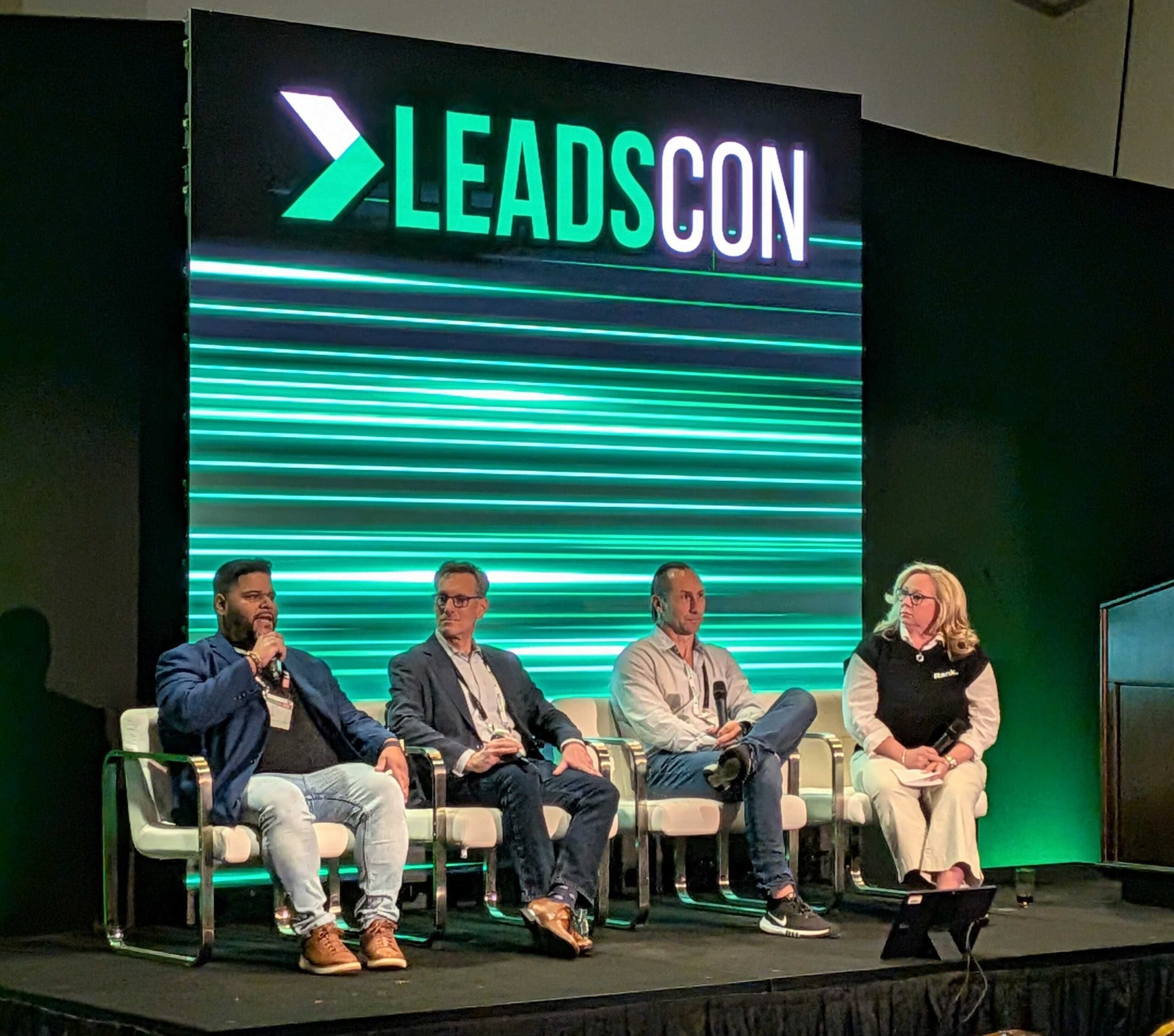
For all the breathless pronouncements about artificial intelligence transforming ad operations, the reality for many publisher teams remains frustratingly grounded. They’re still slogging through manual GAM report pulls, attempting to decipher revenue drops with gut instinct rather than data. It’s a scenario that Jordan Cauly, now a publisher monetization consultant after a significant tenure at Mediavine, has directly addressed. His core argument, laid bare at Programmatic AI in Las Vegas, is starkly pragmatic: Large language models only deliver tangible value in ad tech when they’re directly plugged into the systems publishers already rely on – think Google Ad Manager (GAM), GitHub, and crucial revenue reconciliation feeds.
Cauly’s message was aimed squarely at publisher ad ops and product departments, those on the front lines seeking genuine relief from daily drudgery. He wasn’t peddling futuristic fantasies; his examples were rooted in the nitty-gritty of everyday tasks: pinpointing revenue anomalies, understanding the ripple effects of Prebid software updates, and, perhaps most critically, reconciling discrepancies across SSPs without sacrificing days to painstaking manual checks. The ultimate benefit he champions? Time saved. His clients have reportedly slashed tasks that once demanded two weeks of investigative work down to a mere three hours.
He painted a picture of an AI untangling the mystery of a Prebid update that, months after its deployment, had silently cannibalized a publisher’s outstream video revenue. His own morning routine, once a pre-coffee scramble across three different platforms, has been streamlined into a single, synthesized dashboard consolidating GAM data, GitHub activity, and SSP revenue gaps. This is the actual work.
But here’s the crucial asterisk: none of this magic happens out of the box. Every GAM instance is, as Cauly notes, a bespoke beast. LLMs still exhibit a tendency to hallucinate. And many of the so-called “agents” flooding the market? They’re more reliably described as a sputtering Pinto than a finely tuned Ferrari.
Connecting the Dots: Why Integration Is King
For publishers truly seeking to extract real work from AI in ad ops, the formidable challenge lies not in the AI itself, but in its meticulous wiring into the right systems and the subsequent, vital process of teaching it the nuances of their specific business operations. It’s a far cry from plug-and-play.
One of AI’s most impactful use cases in ad ops, as Cauly articulated, revolves around diagnosing sudden revenue dips that lack any obvious culprit. In a traditional workflow, such an anomaly triggers a cascade of activities: the manual pulling of hyper-specific reports, the filing of engineering tickets, and the agonizing wait for confirmation on when a change was implemented. He estimates this kind of deep dive, for a significant issue, used to consume up to two weeks of an ad ops team’s time.
Once Cauly’s clients began integrating models like Claude and ChatGPT directly into their GAM instances and ad stacks, the same diagnostic process was compressed to approximately three hours for resolution. Instead of methodically building one GAM report after another, the AI model can execute multiple queries concurrently across various inventory slices or ad formats, subsequently synthesizing the disparate findings into a coherent narrative.
He further illustrated how this AI integration can alleviate the tedium associated with tracking changes in GitHub and other version control systems. The system is capable of retrieving recent code commits—essentially snapshots of code modifications prior to updates—that are directly linked to the ad stack. It then correlates these code changes against GAM revenue and impression trends from the days preceding and following each software deployment. Manually performing this comparison is so labor-intensive that it’s rarely done with the necessary depth. AI, however, can be instructed to conduct this analysis with a single prompt.
“Doing this manually is hard. Doing this with Claude or ChatGPT takes minutes. This is life-changing stuff.”
However, because each publisher’s ad stack is inherently unique, LLMs face a significant learning curve. “The data structures from GAM’s APIs are actually really solid,” Cauly explained. “The biggest problem is that every single publisher has set up GAM in a completely different way.”
Cauly’s solution involves an initial phase of instructing the AI model on the specific operational realities of a given publisher. This begins with feeding it internal documentation that clarifies key values and revenue definitions, followed by exploratory queries designed to map out the publisher’s specific GAM configuration. He also advises clients to explicitly direct the models to prioritize accuracy over speed and to rigorously cross-check AI-generated analyses against raw GAM exports whenever any output raises a suspicion.
Publishers, he contended, possess a distinct advantage due to their direct access to their own systems, allowing for definitive validation of events. If an AI-generated analysis appears questionable, ad ops professionals can always retrieve the raw report, reconcile it with SSP data, or meticulously review the underlying changelogs. This fallback mechanism renders this domain of AI application more secure than, say, generative AI tasks for creative content, provided teams maintain strict verification protocols.
Agents: Still in Their Infancy
Beyond these tangible operational benefits, Cauly remains circumspect regarding the widespread hype surrounding agentic workflows, particularly those built on nascent frameworks like the Ad Context Protocol, as the definitive next frontier. Vendors are already actively marketing AI agents purported to negotiate deals and autonomously optimize campaigns on behalf of publishers. Yet, Cauly expresses skepticism about the actual maturity of these systems.
He perceives genuine potential in frameworks like AdCP for publishers managing a high volume of direct deals through GAM. However, he foresees considerably less value for teams whose revenue streams are predominantly driven by SSPs and Private Marketplaces (PMPs). Despite these reservations, his overarching outlook on AI’s role in ad ops remains decidedly optimistic. The truly difficult technical hurdles—building strong connectors or wrangling complex APIs—have largely been overcome. The current work, he emphasizes, is concentrated on the crucial task of integrating AI into the correct data sources and diligently imparting to it the unique operational logic of each individual business.
Why Does This Matter for Publishers?
This shift signifies a move away from AI as a theoretical add-on towards AI as a functional component of the ad tech stack. Publishers that fail to invest in this integration risk falling behind competitors who can use AI for more efficient diagnostics and resource allocation, ultimately impacting their bottom line.
Historical Parallel: The Rise of ERP Systems
This push towards integrated AI in ad ops mirrors the evolution of Enterprise Resource Planning (ERP) systems in other business functions. Early iterations of ERP were often clunky and required significant customization. Yet, those businesses that successfully integrated them reaped massive efficiency gains by connecting disparate functions like finance, HR, and supply chain into a single, unified system. Publishers adopting this integrated AI approach are essentially building their own operational ERP for ad monetization – a powerful competitive differentiator.
How Can Publishers Get Started?
The initial step is a candid assessment of existing tech infrastructure and identifying key pain points in ad ops. From there, publishers can explore AI tools that offer strong API integrations and a clear pathway for data ingestion. Crucially, they must be prepared to invest time in training and validation, treating AI not as a black box but as a highly capable, albeit initially novice, team member.
**
🧬 Related Insights
- Read more: 62% of Gen Z & Millennials Prefer AI Shopping Tools
- Read more: Contextual Ads: The Return of Real Estate, Not Just Keywords
Frequently Asked Questions**
What does integrated AI in ad ops actually do? It automates complex tasks like revenue anomaly detection, code update impact analysis, and discrepancy reconciliation by directly connecting AI models to existing publisher systems like Google Ad Manager and revenue databases.
Will this AI replace ad ops professionals? Not entirely. AI is best suited to handle repetitive, data-intensive tasks, freeing up human professionals for more strategic thinking, complex problem-solving, and higher-level decision-making.
Is this technology available off-the-shelf? No. While AI models are increasingly accessible, achieving genuine value in ad ops requires significant customization and integration with a publisher’s unique tech stack and business logic.