Here’s the seismic shift: your online advertising spend is about to get a serious upgrade. This isn’t just another industry report; it’s a roadmap to where your money actually works. For years, we’ve been awash in a sea of questionable ad placements, bleeding budget into the digital ether. But Picnic’s new PIQ10 2026 rankings? They’re the lighthouse, cutting through the fog and illuminating the publishers delivering genuine value. Think of it like this: before, we were buying lottery tickets in the ad space. Now, we’re getting stock tips on blue-chip companies.
This isn’t just about a few websites staying on a list. This is about the fundamental health of the open web. When nearly half of all domains can’t even pass a basic quality threshold, that’s a five-alarm fire for advertisers and publishers alike. Picnic’s platform, PIQ, is essentially a hyper-intelligent quality scanner, working overtime to sift the gold from the digital dross. They’re using over 100 signals – a symphony of data points – to give each domain a score. It’s not a popularity contest; it’s a rigorous, data-driven evaluation. And the stakes? Sky-high. A controlled test for VO5, for example, saw PIQ-curated inventory generate a staggering 5x more consented site sessions than low-quality placements. That’s not a marginal improvement; that’s a paradigm shift in efficiency.
Is Your Favorite Site Still a Quality Haven?
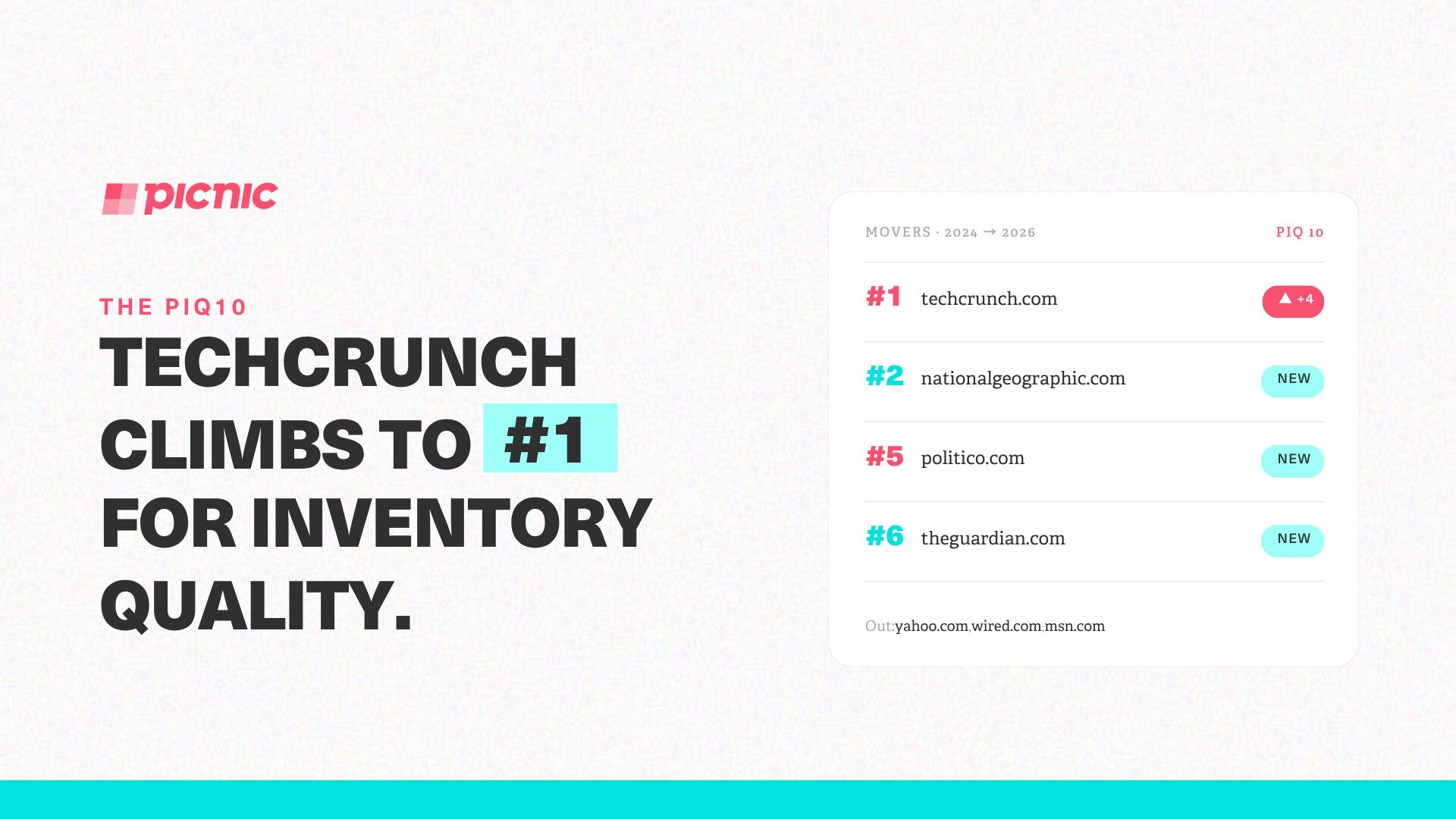
The PIQ10 2026 isn’t static. It’s a snapshot of a living, breathing ecosystem. TechCrunch, for instance, has rocketed from fifth place to the top spot. That’s not just a climb; that’s a statement about their sustained commitment to quality. Then you have National Geographic, Politico, and The Guardian making impressive debuts. These are publishers proving that they understand what advertisers actually need: audiences engaged with quality content, not just eyeballs passively scrolling.
But here’s the gut punch: Yahoo.com, Wired.com, and MSN.com have dropped off entirely. This isn’t a minor dip; it’s a vanishing act from the quality elite. It’s a glaring reminder that resting on your laurels is a surefire way to become yesterday’s news. As Matthew Goldhill, Picnic’s CEO, puts it:
We had some domains drop out of the list this year but that’s not a criticism of those publishers, it’s proof that the Open Web is genuinely dynamic. Quality scores shift all the time, and the advertisers who act on up-to-date intelligence are the ones who prevent wasted spend and drive better outcomes for their campaigns.
This is the crucial insight: quality isn’t a destination; it’s a continuous journey. The technology powering this judgment – Picnic’s PIQ platform – is built for this ongoing vigilance. It’s not a one-and-done check. It’s a daily refresh, a constant pulse on the health of ad inventory. This kind of real-time intelligence is what separates the advertisers who get fleeced from those who truly optimize their campaigns. It’s like having a weather forecast for your ad spend, allowing you to avoid the digital storms and capitalize on the sunny days.
The AI-Powered Truth Serum for Ad Spend
What’s truly exciting here is the underlying technology. Picnic has poured six years into developing PIQ. This isn’t a veneer of AI; it’s AI and advanced data science as the bedrock. They’re looking at over 100 signals, factoring in everything from user experience to the publisher’s own content strategy. This creates a single, clear PIQ Score. And critically, this evaluation is independent. It’s not influenced by who’s selling what or who’s paying whom. It’s purely about the quality of the ad experience and the integrity of the publisher’s profile. This separation is key, preventing the fox from guarding the henhouse of ad quality.
This independent, data-driven approach is what makes the PIQ10 so compelling. It’s a signal to the entire industry that the era of simply buying impressions is over. The future belongs to those who invest in quality impressions. The impact on campaign outcomes is undeniable – that 5x improvement in sessions isn’t a fluke; it’s the predictable result of targeting environments where users are genuinely receptive and engaged.
For real people – both consumers and those working in advertising – this means a cleaner, more relevant online experience. Ads won’t feel like intrusive billboards anymore; they’ll be integrated into content we care about, from trusted sources. For advertisers, it means a more efficient use of their budget, leading to better results and, ultimately, more sustainable businesses. This is the fundamental platform shift AI and sophisticated data analysis are enabling: a more transparent, effective, and valuable internet for everyone.
🧬 Related Insights
- Read more: CreativeOps Platforms: Simplicity or Hidden Dependency?
- Read more: Yahoo & Kochava: The Agentic DSP Revolution Starts Now
Frequently Asked Questions
What does Picnic’s PIQ score mean?
Picnic’s PIQ Score is a number between 0 and 100, generated by their signal-led inventory intelligence platform. It assesses the quality of online advertising inventory based on over 100 signals, categorized into Ad Experience and Publisher Profile indexes.
Why did Yahoo.com and others drop out of the PIQ10?
Publishers drop out of the PIQ10 because ad quality is dynamic and requires continuous measurement. Domain scores shift over time, and Yahoo.com, Wired.com, and MSN.com no longer met Picnic’s quality threshold, indicating their inventory’s quality has declined relative to others.
How does this impact advertisers?