The email landed, innocent enough, Subject: Submit Your Architect Session: The Dreamforce 2026 Call for Participation Is Open. My inbox, already a digital graveyard of fleeting trends and corporate pronouncements, pinged. Another year, another conference, another plea for ‘thought leaders’ to grace a stage. Dreamforce, predictably, is back in San Francisco, September 15–17, 2026, promising over 1,600 sessions, the usual mix of expert-led trainings and live demos, all aimed at crafting this nebulous “Agentic Enterprise.” Sounds important. Or maybe just expensive.
Look, I’ve been to enough of these shindigs, both as a wide-eyed newbie and a jaded observer, to know the script. Presenting at Dreamforce. Sure, it’s an opportunity to share your ‘expertise’ with ‘one of the world’s most engaged technical audiences.’ That’s PR speak for ‘come tell us your war stories so we can package them into marketing materials.’ They want ‘real-world insights,’ ‘best practices,’ and for you to ‘elevate’ yourself into a ‘thought leader.’ Translation: make yourself look good so you can sell more Salesforce licenses, or get a better gig.
Who’s Actually Building the ‘Agentic Enterprise’?
The architect track, they say, is hunting for ‘compelling, high-quality session proposals.’ Technical deep dives, architecture patterns, real-world designs—stuff that teaches. They want to see how you ‘navigate complexity at scale.’ All well and good, but here’s the perennial question: who is actually making money here? Is it the presenter whose company is getting eyeballs on their solution? Is it Salesforce, selling more cloud subscriptions? Or is it the poor schmo in the audience trying to piece together a functional system from the mountain of advice, half of which will be outdated by next quarter?
The call is open from April 29 to May 27, 2026. A tight window, as always. Plenty of time to craft the perfect proposal, assuming you haven’t already built a solution that requires a whiteboard, a clever workaround, a late-night insight, or that magical “wait, hear me out…” moment. Those are apparently the golden tickets.
They’re looking for technical deep dives, pilot experiences, solutions built on ‘well-known and established technologies’ (read: anything that works), guided implementations, and projects aligned to the ‘Well-Architected Framework.’ Whatever that means this year. Cross-cloud content is apparently ‘very powerful’—because nothing screams ‘enterprise solution’ like a tangled mess of integrations across Slack and who-knows-what-else. And, of course, ‘forward-looking designs’ that highlight ‘proven best practices’ for the ‘next generation of Salesforce technology.’ I’m sensing a theme: more tech, more buzzwords, more promises.
Breakouts vs. Theaters: The Stage Time Shuffle
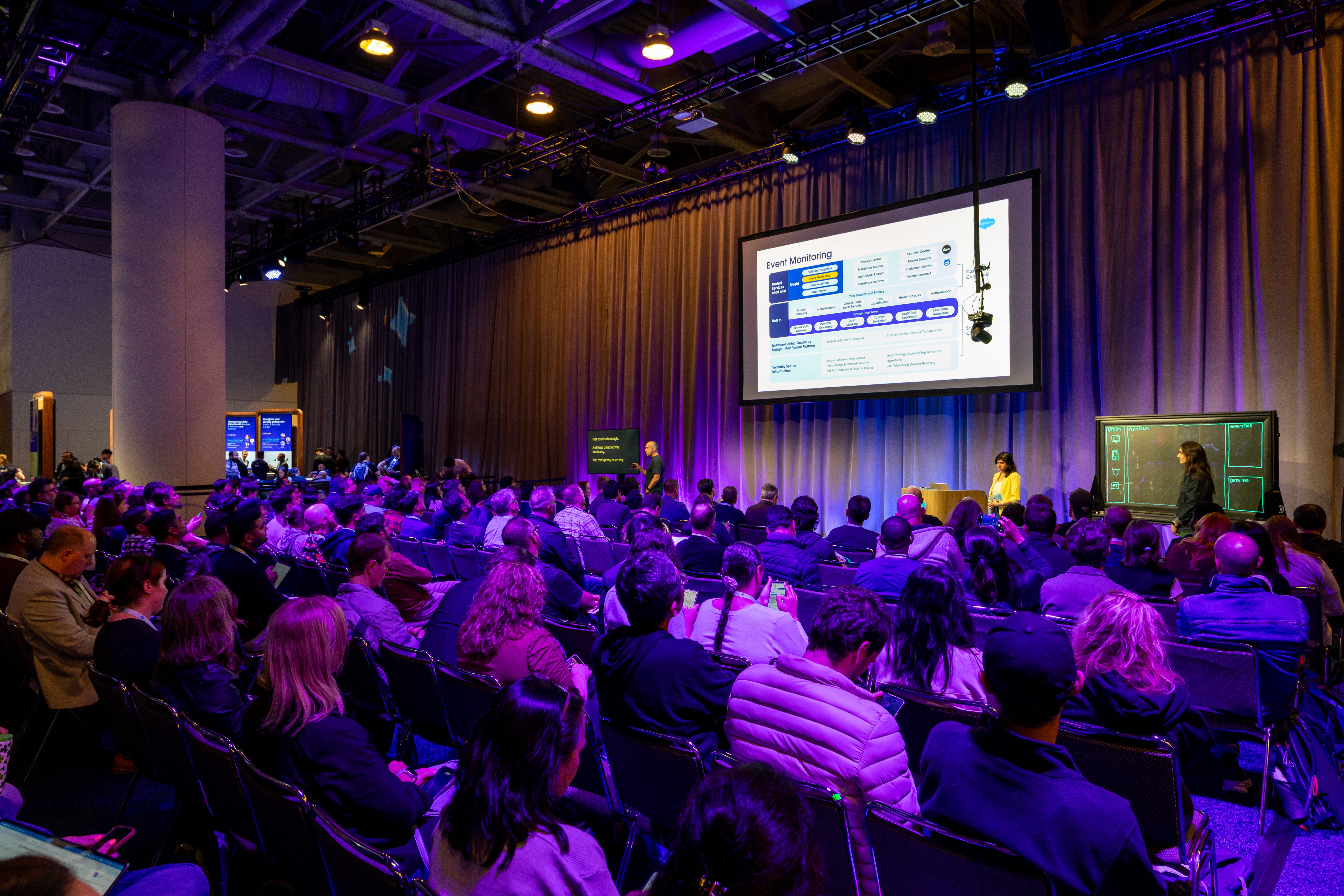
So, you’ve got your brilliant idea. Now you get to cram it into a box. Breakout sessions: 40 minutes. Ample time to deep dive, apparently. Plenty of room for audience interaction and live questions. Or, the 20-minute theater sessions: fast, focused, impact. Demo a specific capability, walk through a concise pattern, highlight a technical insight. No formal questions, but you can ‘continue the conversation’ afterward. Which, of course, means cornering you by the coffee station. It’s all about the optics, isn’t it? Who gets the bigger stage? Who gets the more captive audience? And more importantly, who gets the most leads for their sales team?
“The architect track is looking for compelling, high-quality session proposals that inspire and teach. Showcase your expertise through technical deep dives, architecture patterns, real-world designs, interactive sessions, and innovative business solutions.”
It sounds noble. It sounds like knowledge sharing. But remember, every one of these sessions is a carefully curated piece of marketing. The presenter gets a platform, Salesforce gets to showcase its ecosystem, and attendees get… well, they get a lot of information, some of which might even be useful. The real question is whether the ‘Agentic Enterprise’ they’re all building is going to be a genuine leap forward or just another over-engineered Frankenstein’s monster held together with duct tape and vendor promises.
The PR Filter: What Are We Really Submitting?
When you boil it down, this is a call for case studies disguised as educational content. They want the stories of success, the elegant solutions, the triumphs. What they don’t typically want are the epic failures, the systems that nearly imploded, the ‘whiteboard sessions’ where the solution was so complex it required an exorcism. Those are the real lessons, the ones that save others from the same pain. But you can’t put ‘How We Almost Burned Down the Data Center’ in the proposal form. It just doesn’t have that… forward-looking vibe.
So, architects, if you’re thinking of submitting, ask yourself: what story do you really want to tell? Is it the one that gets you applause and a LinkedIn boost, or the one that actually helps someone else avoid a multi-year headache? Because Dreamforce, like most tech conferences, is a performance. And the best performers know how to work the crowd, and more importantly, how to work the room for their own benefit. Just don’t forget to ask yourself who’s paying for the stage, and what they expect in return.
What is the ‘Agentic Enterprise’?
The ‘Agentic Enterprise’ is Salesforce’s vision for a future where business processes are more automated, intelligent, and predictive, driven by AI and data. It aims to create a more proactive and efficient work environment where technology anticipates needs and takes action.
When is the deadline to submit a proposal for Dreamforce 2026? The deadline to submit a proposal for Dreamforce 2026 is May 27, 2026.
What are the session formats available at Dreamforce? Dreamforce 2026 offers two session formats: Breakout Sessions (40 minutes) for in-depth topics and Theater Sessions (20 minutes) for concise, high-impact presentations.