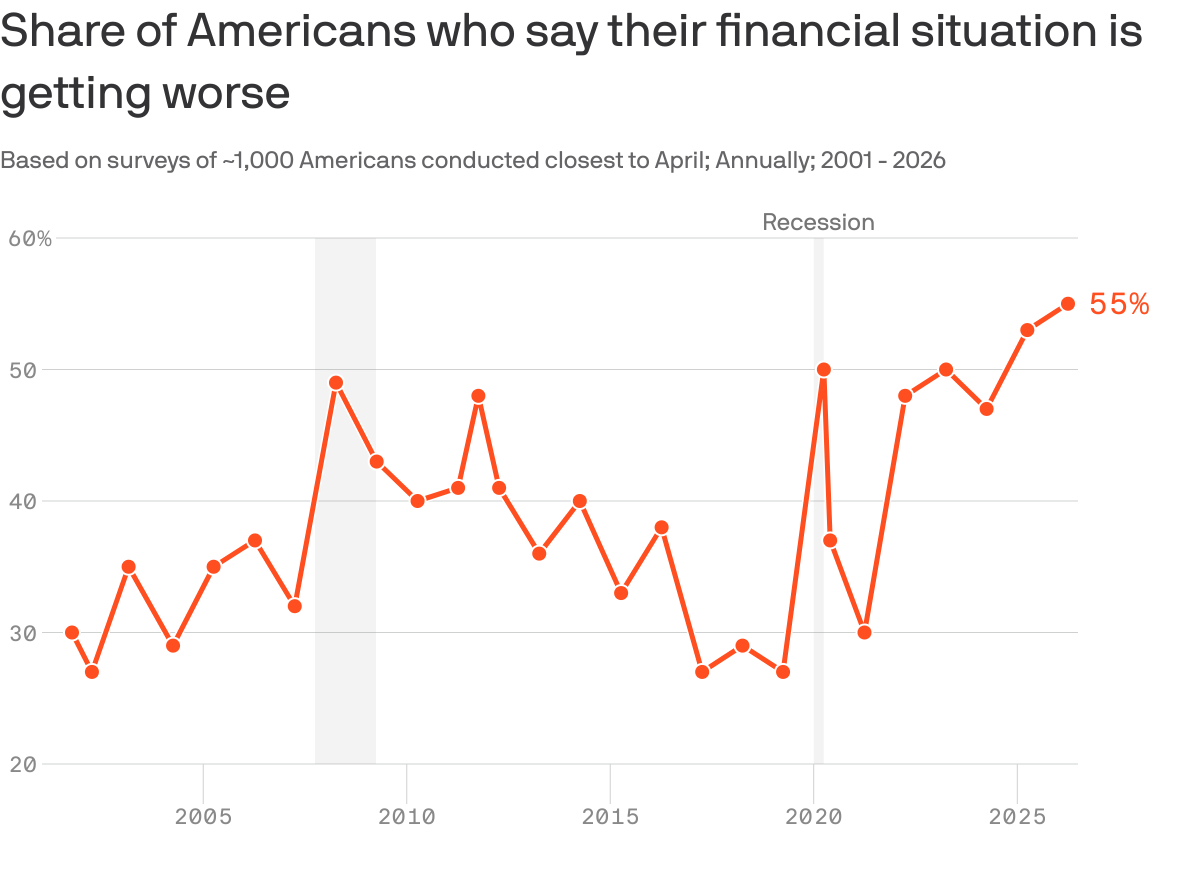
Here’s a number to make your eyes water: 55%. That’s the percentage of Americans who now say their financial situation is getting worse. Not a little worse. Just… worse. And get this—it’s the highest it’s been in 25 years. Yes, even higher than during the pandemic panic or the 2008 financial meltdown. Apparently, we’ve all been ignoring our bank accounts for too long.
This isn’t some fringe opinion. Gallup’s poll, conducted earlier this month, paints a grim picture. For five years running, more people feel poorer than richer. It’s a consistent drumbeat of discontent, and it’s getting louder.
Why the gloom? Well, the cost of living is biting. Thirty-one percent of folks pointed to it as their number one financial headache. That’s not a surprise, is it? Prices have been on a rocket ship, even if they’re not at their absolute peak anymore. But don’t tell that to the gas pump.
Energy costs have shot up. Thirteen percent of Americans are grumbling about it. That’s a 10-point jump from last year. It’s the highest we’ve seen since 2008. And conveniently, gas prices have surged since late February. Coincidence? Maybe. But with average prices nudging over $4 a gallon, it feels more like a punch to the gut.
Is This Political Posturing or Real Pain?
Politicians love to talk about the economy. They point to job numbers, GDP growth, whatever shiny metric they can polish. But this Gallup data cuts through the spin. It’s a direct line to how ordinary people are feeling. And they’re feeling the pinch. For any administration, especially with elections looming, this is a colossal problem. Telling people their finances are worse than at any point in a quarter-century isn’t exactly a winning campaign slogan.
This isn’t just about numbers on a spreadsheet. It’s about groceries. It’s about rent. It’s about the freedom to decide if you can afford to fill up your car without taking out a second mortgage.
The share of Americans who say their financial situation is getting worse is higher now than at any point in the past 25 years.
This sentiment is palpable. It’s the quiet dread before checking your credit card bill. It’s the strategic planning that goes into every trip to the supermarket. It’s the constant, low-grade anxiety that’s become the soundtrack to modern American life.
What Does This Mean for the AdTech Industry?
Look, the adtech world often operates in its own bubble, obsessed with impressions, CPMs, and the latest attribution models. But here’s the thing: people spending less means brands spend less. It’s that simple.
When consumers are stressed about their finances, they pull back. They cut discretionary spending. That means fewer impulse buys, fewer upgrades, and less willingness to try that fancy new product advertised during their favorite show. And what happens when brands see a dip in sales? They slash marketing budgets. And guess where the first cuts usually land? You guessed it. Adtech.
Expect campaigns to be scrutinized more heavily. ROI will be king. No more throwing spaghetti at the wall and hoping it sticks. Advertisers will demand demonstrable results, and platforms that can’t prove their worth will be left out in the cold. This is where the efficiency and effectiveness of programmatic advertising will be tested like never before. Can it deliver real business outcomes when consumers are clutching their wallets?
This data isn’t just a warning shot. It’s a five-alarm fire for anyone relying on consumer spending. The days of easy growth might be over, at least for a while. Adaptability and genuine value proposition will be the only currencies that matter.
🧬 Related Insights
- Read more: Google’s DV360: PAIRing Data for the AI-Powered Internet
- Read more: Grubhub’s Tax Day ‘Fee Return’: Desperate Measures?
Frequently Asked Questions
What is the main reason Americans’ finances are getting worse? Americans cited the cost of living as their most significant financial problem, with energy costs seeing a notable surge.
Is this financial decline unprecedented? Yes, the current level of financial decline reported by Americans is the highest in 25 years, surpassing figures from previous recessions and crises.
How will this impact consumer spending and advertising? Increased financial strain typically leads to reduced discretionary spending by consumers, prompting brands to scrutinize marketing budgets and demand higher ROI from advertising platforms.