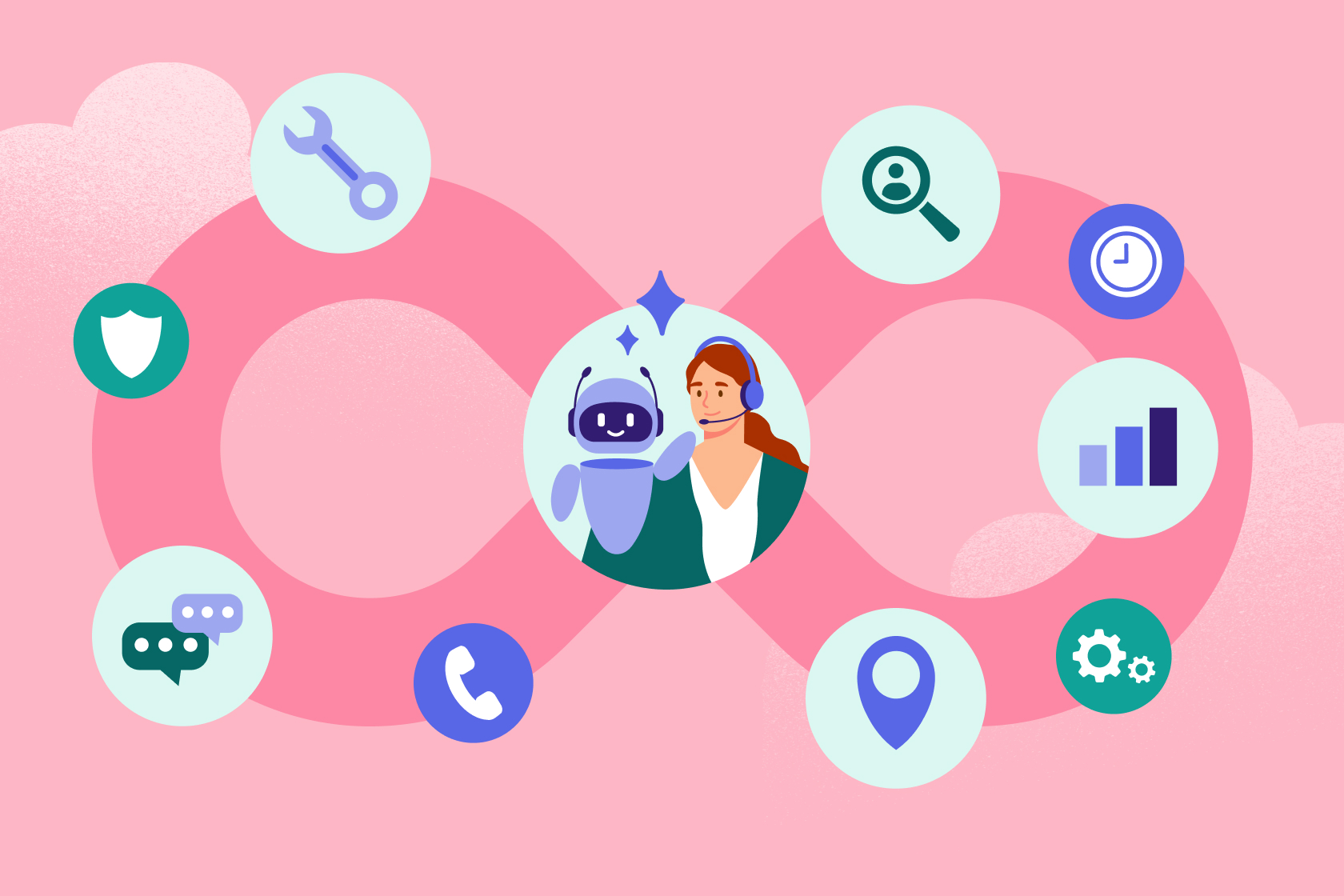
The hum of a customer service center, once a background noise of problem-solving, is now the vanguard of revenue generation and brand loyalty. It’s a dramatic flip, and with AI agents stepping from the wings to center stage, this transformation is no longer a gentle nudge—it’s a full-blown metamorphosis. Most businesses see the writing on the wall, but few are truly architecting their operations to capitalize on this wave.
And here’s the kicker: as AI agents become not just assistants but autonomous actors, companies that can weave together connected, intelligent service experiences will rocket ahead. Those stuck in old structures? They’ll find their organizational architecture becoming an anchor, dragging them down.
Limitless Service: The Dawn of Autonomous Action
This isn’t just a buzzword; it’s the blueprint for how leading organizations are operating in this brave new world where AI doesn’t just offer suggestions, it executes them. Think of it as a single, AI-powered nervous system connecting every customer-facing department—service, sales, marketing, field ops, even internal IT and HR. Everyone’s working off the same intel, acting in concert.
This fundamental reordering changes how value is minted across the entire customer journey. As AI agents shoulder more responsibility, the very scaffolding of your organization—how it’s built and how it functions—becomes as critical as the tech itself. Limitless Service is built on three pillars, shining a beacon for this new operational paradigm:
- Shared Context is King: Customer data, historical interactions, and subtle signals are no longer siloed. They’re accessible, usable, and actionable by both humans and their AI counterparts in every single touchpoint.
- Action, Not Just Insight: AI isn’t just pointing out what’s happening; it’s doing things. It’s resolving issues, completing tasks, and pushing workflows forward, with human intervention reserved for those moments demanding true judgment and empathy.
- Value That Never Sleeps: Every interaction becomes a contribution to retention, a source of fresh insight, and a catalyst for growth. Proactive signals don’t just ping; they ripple through the system, triggering the precise next action needed, in real time.
This is the engine that powers your business when AI agents are no longer just novelties but integral members of your workforce.
Why the Old Way Crumbles Under AI’s Weight
So many companies are still chained to a functional model—a relic from a bygone era. Work is chopped up by department: sales acquires, service fixes, marketing shouts. Each function marches to its own drum, with its own systems, its own processes, loosely tethered by a shared customer identity.
This departmental dance made sense when customer interactions were dial-up slow and relatively simple. But in the agentic era? A single customer query can now involve a swarm of AI agents and humans across multiple departments, all happening in the span of minutes. Decisions cascade, actions build on each other with dizzying speed, and from the customer’s perspective, it’s a singular, fluid experience.
Inside the organization, however, it’s often a different story entirely. Silos persist. Data sprawls across disparate systems. Actions are taken in a vacuum, without full awareness of what just transpired or what’s on deck. When AI agents operate on incomplete context—and let’s be honest, they often do when fed fragmented data—they might move fast, but they’re not always moving in the right direction.
This is where the current model utterly fails:
- Outreach that feels jarringly out of sync with a customer’s present reality.
- Missed golden opportunities to de-escalate issues or expand business at the perfect inflection point.
- Critical signals that evaporate into the ether, never reaching the team best equipped to act.
As automation continues its relentless march, these cracks will only widen and scale. And the fallout isn’t just about a clunky customer experience. Fragmentation inflates the cost of serving customers, obscures pathways to growth, and makes the bedrock of customer loyalty feel increasingly shaky.
Limitless Service: Unleashing Unprecedented Possibilities
Limitless Service stitches these fractured interactions into a singular, harmonized system—a symphony orchestra designed for both human and AI players. Its impact reverberates across the entire enterprise:
-
Autonomous Customer Service: Imagine issues resolved end-to-end without the dreaded game of hot potato. AI agents, armed with real-time data, deep interaction history, and vast company knowledge, don’t just redirect; they complete the work.
-
Supercharged Assisted Service: When a human does need to step in, they’re not starting from scratch. AI agents instantly surface the complete customer narrative, relevant knowledge bases, and meticulously calculated next-best actions, ensuring human responses are swift, consistent, and powerfully effective.
-
Intelligent Field Operations: AI can spot potential problems before they even surface, equipping field technicians with precisely what they need before they arrive. As work unfolds, insights are captured and fed back into the system, and any necessary handoffs—from the field to remote teams—occur with absolute contextual clarity.
-
Streamlined Internal Support: Common IT and HR requests? AI handles them instantly. More complex issues? They’re routed with perfect context, ensuring employees don’t have to repeat themselves and internal teams can achieve true efficiency.
-
The Contact Center as the CRM: Forget a contact center bolted onto a CRM. In this model, the contact center is the CRM. AI agents orchestrate interactions with total context, and when humans join the fray, they inherit a panoramic view of the customer. Every single outcome is a data point, feeding a unified, indispensable customer record.
-
Orchestrating Revenue and Growth: AI acts as a constant sentinel during service interactions, detecting whispers of frustration, flickers of interest, or burgeoning opportunities. These signals are intelligently routed to the most pertinent teams—sales, customer success, marketing—transforming service conversations into proactive growth engines.
One of the most profound shifts here is the reimagining of the contact center. Traditionally viewed as a cost center, often burdened with outdated CRM systems, it’s poised to become the very core of customer relationship management. When AI agents manage interactions with full context, and human agents smoothly inherit that complete view, every outcome contributes to a unified, dynamic understanding of the customer.
This isn’t just about optimizing workflows; it’s about fundamentally changing the economic engine of the customer relationship. AI agents, by resolving issues autonomously and empowering human agents with complete context, dramatically slash the cost-to-serve. Simultaneously, by identifying growth signals within service interactions and routing them intelligently, they unlock new revenue streams. It’s a dual-edged sword cutting through inefficiency and forging new paths to expansion. This integrated approach is the true promise of the agentic era.
Historical Parallel: The Telegraph and the Railroad
It’s easy to get lost in the AI jargon and forget the profound historical parallels. Think back to the telegraph. It revolutionized communication, allowing messages to travel at unprecedented speeds. But it was the integration of the telegraph with the burgeoning railroad network that truly unlocked a new era of commerce and expansion. Suddenly, information and physical goods could move in tandem, at scale. Limitless Service operates on a similar principle, connecting AI-driven information flow with actionable business processes, creating a new infrastructure for growth.
Will Limitless Service Replace Human Jobs?
This is the million-dollar question, isn’t it? The short answer is: it will transform them. Limitless Service emphasizes autonomous and assisted action, meaning AI will handle a significant chunk of repetitive, data-driven tasks. However, it also highlights the ongoing need for human intervention where judgment and empathy matter most. Think of it as a powerful co-pilot. Humans won’t be replaced en masse; rather, their roles will evolve towards higher-value, more strategic, and more human-centric work. The focus shifts from transactional tasks to relationship building and complex problem-solving.
How is Limitless Service Different from Traditional CRM?
Traditional CRM systems are largely databases designed to store and manage customer information. They provide a historical record but are often reactive and siloed. Limitless Service, on the other hand, is an AI-powered operating model that goes far beyond data storage. It’s built on shared context, enabling autonomous and assisted action, and driving continuous value creation. While a CRM might tell you who your customer is, Limitless Service helps you understand what they need, when they need it, and empowers AI and humans to act on that knowledge in real-time to drive outcomes across the entire business.
What Kind of Businesses Benefit Most from Limitless Service?
Any business with significant customer interaction stands to benefit. However, those with complex customer journeys, multiple customer-facing departments (sales, service, marketing, operations), and a desire to drive deeper customer loyalty and revenue growth will see the most immediate and profound impact. Industries like e-commerce, financial services, telecommunications, and technology, which often deal with high volumes of customer inquiries and have diverse service needs, are prime candidates to adopt this new operating model.