The faint glow of a phone screen illuminated a tired face as Drake’s latest sonic offering filled the room.
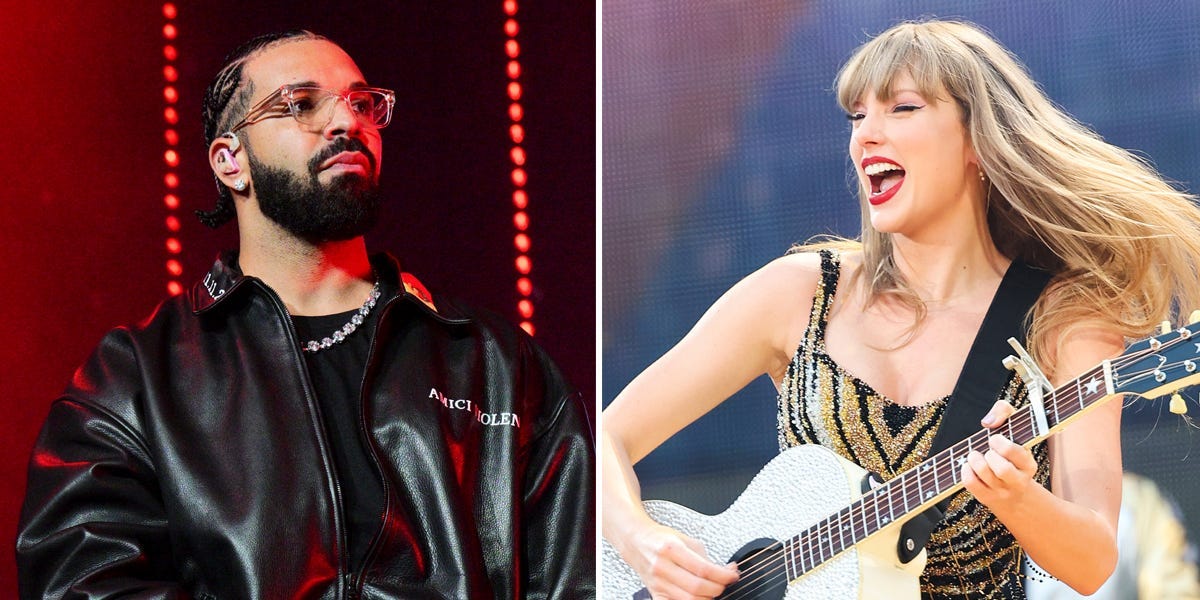
Drake has done it again, folks, but this time it feels less like a seismic artistic event and more like a meticulously engineered system exploit. We’re talking about his recent triple-album blitz – “Iceman,” “Habibti,” and “Maid of Honour” – which didn’t just top the Billboard 200, they owned it, nabbing the top three spots simultaneously. Six hundred eighty-seven thousand album-equivalent units in a single week. That’s not just hitting it out of the park; that’s building a new stadium just for the ball.
For years, we’ve watched Drake navigate the music industry’s shifting tides with an uncanny ability to stay afloat, and frankly, to dominate. But this wasn’t just another album release; it was a strategic detonation. Dropping three distinct projects on the heels of intense public scrutiny, particularly after that Kendrick Lamar spat (which, let’s be honest, was its own reality TV show), felt less like a creative impulse and more like a calculated maneuver. Forty-three new songs, all at once. It’s like a digital buffet where you’re encouraged to just keep eating, whether you’re truly hungry or not.
This feels like the AI moment for music, doesn’t it? The original article points out that Drake seems to be leaning into a quantity-over-quality playbook, and honestly, it’s hard to argue. When you’re chasing algorithmic supremacy, the nuance of artistic expression can feel like a quaint, old-fashioned notion. He’s practically handed us the keys to his strategy, lamenting in “B’s On the Table” about being “numb to that” and waiting for his “Spotify Wrapped.” It’s a chilling admission, a wink at the very metrics that fuel his empire.
It reminds me of those early social media platforms. Remember when the goal was simply to get eyeballs on the screen for as long as possible? They weren’t necessarily building the most engaging, life-affirming experiences, but they were masters of addiction. Drake, in this context, is the ultimate platform builder for his own musical universe. He’s not just releasing music; he’s cultivating an environment where engagement, measured in streams and time spent, is the ultimate currency.
The Data-Driven Artist: Is This the Future of Music?
Drake’s new releases are a fascinating case study in the symbiotic relationship between artist and algorithm. The sheer volume ensures constant presence across streaming platforms, a digital white noise that keeps him perpetually in the conversation. And when the music itself starts to feel a bit… repetitive? That’s where the mid-song beat switches come in. It’s a subtle nudge, a little dopamine hit designed to prevent the listener from drifting off to do laundry or, heaven forbid, think too hard about the lyrics. It’s the musical equivalent of a notification popping up on your phone, designed to pull you back in.
But here’s the kicker, the thing that truly sets my futurist alarm bells ringing: Drake isn’t just using the algorithm; he’s becoming it. He’s internalizing the logic of data maximization to such an extent that his creative output feels like a direct product of that logic. Think about it: he’s got the clout, the built-in audience, and now, a strategy that seems purpose-built to exploit every possible streaming loophole. It’s a business model that prioritizes endurance over enjoyment, a philosophy that echoes the concerns raised by folks like Tristan Harris about attention economics.
This isn’t about whether the albums are “good” in a traditional sense. They’re tolerable, as the original piece points out, and that’s precisely the point. In an attention-scarce world, tolerable and abundant can be far more effective than brilliant and scarce. It’s a strategy that works on paper, at least, and in the cold, hard world of streaming numbers, that’s what matters.
Does Drake Actually Care About His Art Anymore?
When Drake drops lines like, “I’m doing my big one, you doing a little one / What kind of man are you? A middle one,” you can’t help but feel a pang of disappointment. This isn’t the lyrical dexterity that once defined him. It’s functional, yes, it serves the purpose of filling airtime and generating streams, but it lacks the spark, the raw creative energy that makes art resonate beyond mere data points. He’s performing success, rather than creating it.
His recent output feels like a perfectly optimized clickbait headline. It grabs your attention, it delivers something, but the substance underneath can feel thin, a rehash of familiar themes and grievances – women, enemies, the corrupting nature of fame. The novelty has worn off, replaced by a predictable, albeit highly profitable, formula. It’s a business model, not necessarily a passion project. And in the age of AI, where content generation is becoming increasingly automated and optimized for engagement, Drake’s approach feels eerily prescient, a human manifestation of the very trends we’re seeing emerge in machine learning.
But is this a warning? Or is it just the inevitable evolution of how art is consumed and monetized? The sheer scale of his success with this strategy is undeniable. He’s cracked a code, and the music industry, much like the ad tech world, is watching.
Drake admits as much in the “Iceman” track “B’s On the Table,” reciting listlessly, “I’m used to this, I’m numb to that / I know I just gotta adapt / Let’s wait on your Spotify Wrapped.”
It’s a chilling indictment of the current system, or perhaps a masterclass in exploiting it. For Drake, it seems, the numbers are the only feedback loop that truly matters. This isn’t just about selling records anymore; it’s about dominating the digital consumption landscape, and his latest move is a bold statement that the old rules are officially obsolete.
🧬 Related Insights
- Read more: InMobi Buys MobileAction: Apple Ads Automation On Deck
- Read more: LoopMe’s Chartboost Direct: Brand Cash for Apps, or Publisher Pipe Dream?
Frequently Asked Questions
What is Drake’s new album strategy? Drake released three new albums simultaneously in 2026: “Iceman,” “Habibti,” and “Maid of Honour,” aiming for chart dominance through sheer volume and strategic release timing.
Did Drake’s triple album break records? Yes, Drake became the first artist to hold the top three spots on the Billboard 200 simultaneously and broke Spotify’s record for the most-streamed artist in a single day in 2026.
Is Drake’s music becoming more formulaic? Critics suggest Drake’s recent output prioritizes streaming metrics and listener endurance over artistic innovation, featuring predictable themes and mid-song beat switches to maintain engagement. He himself alludes to adapting to streaming data.