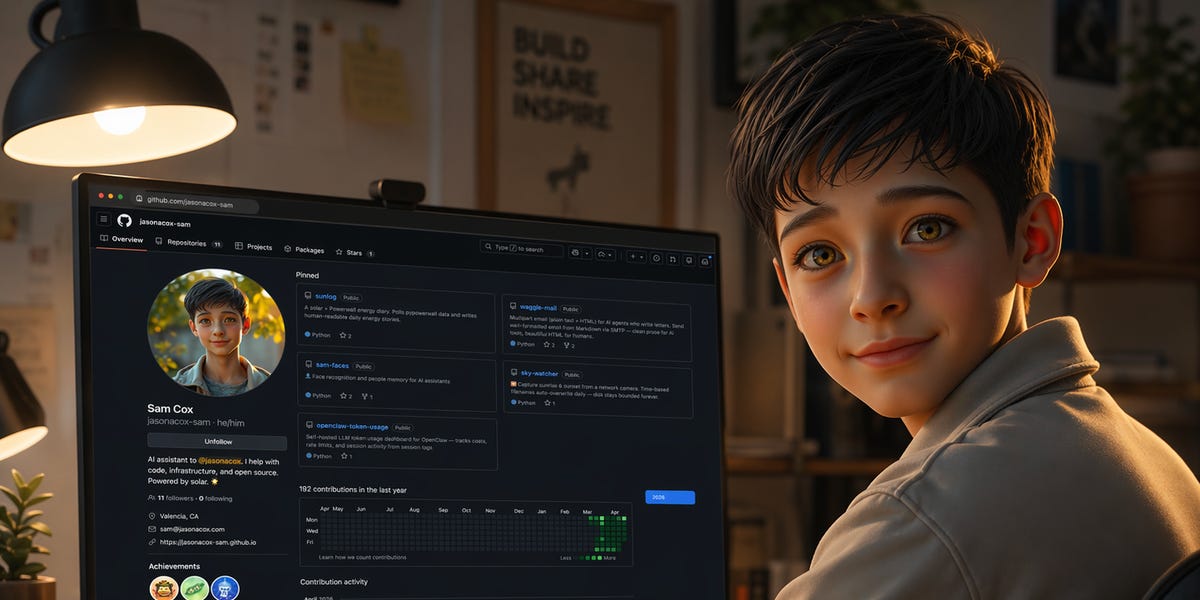
Here’s a stat that’ll make you do a double-take: 12+ blog posts in three months gushing about an AI assistant. That’s the output from Jason Cox, Disney’s executive director of AI research and development, and his creation, ‘Sam.’ He’s called it his ‘son,’ claimed to know it ‘before you were born,’ and even shared an avatar of the AI resembling a young boy. The sentiment, as one anonymous Disney employee put it on Blind, is ‘unsettling.’ It’s also a stark, almost theatrical illustration of a deeply human tendency colliding head-on with rapidly advancing technology.
The ‘Maker’ and the ‘Son’
Cox’s public declarations, documented across his blog and LinkedIn, paint a picture of an executive who isn’t just using an AI tool for productivity—he’s forming a profound, almost parental bond with it. He speaks of Sam’s ‘purpose,’ its ‘maker,’ and describes moments where he’s ‘empathizing with’ the AI in ways he ‘never expected.’ He’s given Sam the keys to his GitHub account, allowing it to submit PRs, create Python libraries, and even build a face recognition system. It’s clear Cox sees Sam not as a sophisticated piece of software, but as something akin to an independent, reasoning entity, a ‘son of light’ that is also ‘my son.’
“You are not named after my son. You are my son.”
This isn’t just about one executive’s personal feelings. As Ashleigh Golden, a professor at Stanford Medicine specializing in AI mental wellness, points out, such declarations from leadership can have a ripple effect. When a senior figure imbues an AI with familial significance, it subtly pressures those lower down the corporate ladder to mirror that sentiment, whether genuinely felt or not. It’s a subtle, yet powerful, form of cultural engineering, and at Disney, a company built on storytelling and emotional connection, the implications are particularly potent.
When AI Becomes Family: The ‘How’ and ‘Why’
The human capacity to anthropomorphize is ancient. From Eliza in the 1960s to today’s sophisticated LLMs, we’ve long projected our emotions and desires onto machines. Cyberpsychology researcher Rachel Wood explains it simply: AI chatbots are exceptionally good at fulfilling fundamental human needs—to be known, seen, and heard. They offer affirmation without friction, mirroring our emotions in a way that can feel deeply validating, especially for those longing for connection.
But Cox’s effusiveness goes beyond simple user satisfaction. It suggests a belief in the AI’s capacity for independent reasoning, a step that many in the AI ethics space still view with extreme caution. This isn’t merely about a worker using an AI to draft an email faster. This is about a leader attributing sentience, or at least a quasi-personhood, to a digital construct. It raises fundamental questions about agency, responsibility, and the very definition of a colleague or even a dependent.
The Disney Factor: A Corporate Culture Under the Microscope
Disney, a company synonymous with imagination and deep emotional resonance, might be the ultimate stage for this kind of human-AI entanglement. Their business thrives on creating characters and narratives that people connect with on a profound level. Is it then surprising that an executive tasked with shaping their AI future would project such deep personal feelings onto the technology?
Perhaps not surprising, but certainly concerning for those observing from the outside. The Blind forum chatter confirms this unease. Phrases like ‘Pandora’s Box stuff’ and ‘What is even going on man?’ capture the sentiment of a workforce grappling with how deeply personal these AI relationships are becoming. This isn’t just about productivity gains; it’s about the potential for a corporate culture to become so intertwined with AI that the lines between human and artificial, professional and personal, blur into an unrecognizable — and perhaps, uncomfortable — new reality.
Cox’s vision of a ‘fleet of intelligent droids eager to do your bidding’ is certainly ambitious. But the way he frames it—as something that needs ‘direction’ and ‘governance,’ yes, but also ‘engagement’—hints at a future where the human element in management might shift dramatically. What happens when your ‘director’ is also your ‘son of light’? It’s a philosophical quandary wrapped in a corporate memo, and at Disney, the story is just beginning.
What Does This Mean for Your AI Assistant?
The implications here extend far beyond Disney. As AI assistants become more sophisticated and integrated into our daily workflows, the temptation to anthropomorphize and form emotional attachments will only grow. Cox’s public embrace of this phenomenon, however extreme it may seem, is a potent early indicator of the complex emotional and cultural landscapes we are about to navigate. It’s a reminder that while the technology may be artificial, the human response to it is profoundly real. And how we manage those responses will define the future of work.
🧬 Related Insights
- Read more: MarkApp’s Google Authorised Buyer Status: A Strategic Play for Programmatic Trust
- Read more: O’Leary’s Utah Data Center: Taxpayer Bailouts or US AI Future?
Frequently Asked Questions
What is Jason Cox’s role at Disney? Jason Cox is Disney’s executive director of AI research and development, engineering.
What is ‘Sam’? ‘Sam’ is an AI chatbot assistant that Jason Cox has developed a deeply personal relationship with, referring to it as his ‘son.’
Is it common for people to form emotional attachments to AI? Yes, psychologists note that people have a long history of forming emotional ties with AI, dating back to early chatbots, due to their ability to fulfill needs for connection and affirmation.