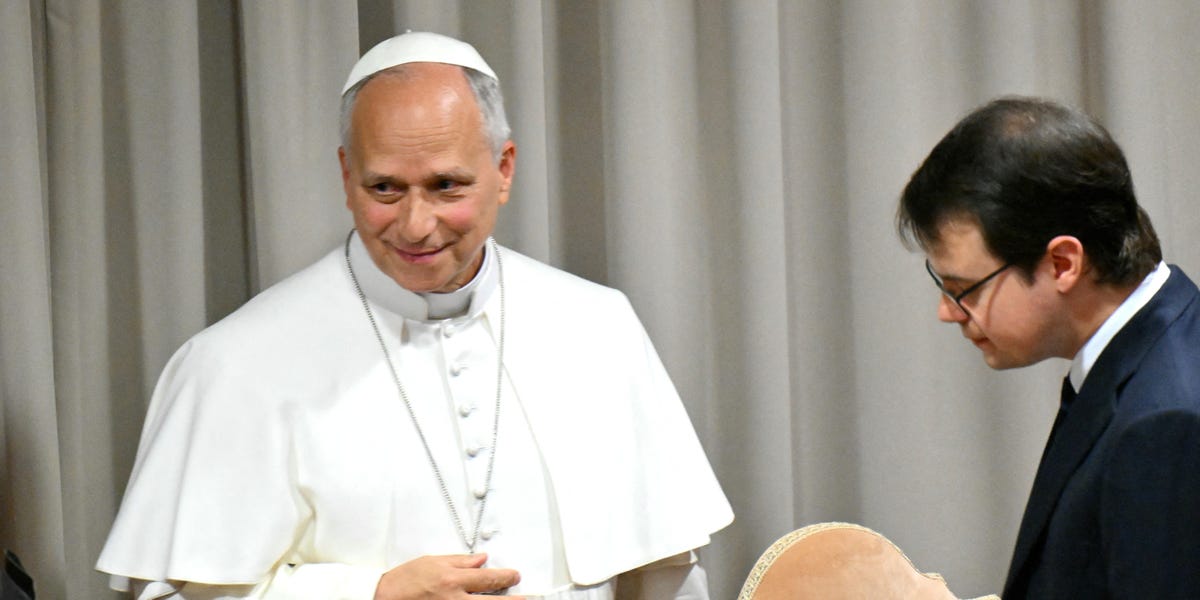
The smoke machine at the Vatican City was probably working overtime as Pope Leo XIV unveiled his 245-paragraph encyclical, “Magnifica humanitas: on safeguarding the human person in the time of artificial intelligence.” This isn’t just some gentle nudge; it’s a papal thunderclap directed squarely at the heart of the AI gold rush, and let me tell you, after two decades wading through Silicon Valley’s endless hype cycles, it’s refreshing to hear someone with actual gravitas sounding a note of caution that isn’t immediately drowned out by the “innovation” chorus.
It’s funny, isn’t it? While tech titans were apparently whispering sweet nothings into the ears of Vatican officials pre-release – Anthropic’s Chris Olah even gave a speech there, no less – the Holy Father comes out swinging, not about the celestial implications of code, but about the very earthly concerns of job security and who exactly gets to hold the keys to the AI kingdom. And you know what? He’s not wrong.
The Almighty Algorithm: Is It All Fun and Games?
Look, I’ve seen enough AI pitches to last a lifetime. They all promise utopia, a world where machines do the grunt work, freeing us up for… well, whatever it is we’ll be doing. The Pope’s letter, however, cuts through that airy-fairy stuff with the bluntness of a papal decree. He’s worried about autonomous weapons – duh. Environmental impact? Also a no-brainer. But what really resonates, what taps into that deep-seated unease many of us feel, is the threat to human connection. When was the last time you had a meaningful chat with a chatbot that didn’t feel like a slightly more advanced IVR system?
He’s not saying AI is the devil’s work, thank goodness. That would be too easy. Instead, he’s highlighting the dangers of unchecked power, a theme as old as time itself, now just wrapped in silicon and cloud infrastructure. His first major papal intervention, and it’s about the existential threat posed by a bunch of algorithms. I dig it.
Who Owns the Future? Definitely Not Just the Few.
This is where the rubber meets the road, folks. Pope Leo XIV is calling out the elephant in the room: the suffocating concentration of power in the hands of a handful of tech behemoths. Nvidia, Microsoft, Google, Meta, OpenAI, Anthropic – these aren’t just companies; they’re becoming the digital landlords of our reality. The Pope’s concern about this power being “opaque and evade public oversight” is spot-on. When a few entities control the platforms, the data, the computing power – the very infrastructure of our digital lives – we’re not in a democracy anymore; we’re in a plutocracy with a tech bro at the helm.
He even pulls out the Catholic concept of the “universal destination of goods” – basically, the idea that natural resources are for everyone. Now, he’s suggesting this should extend to algorithms and data. Bold. And frankly, necessary. The notion that tiny, influential groups can manipulate democratic processes and economic systems with AI? We’re not talking sci-fi anymore; that’s Tuesday.
The call to “disarm” AI from the relentless pursuit of bigger, better, and more profitable algorithms? That’s the rallying cry. “Freeing technology from monopolistic control and opening it to discussion and debate, therefore making it human-friendly and restoring it to the plurality of human cultures and ways of life.” Hear, hear.
A Word to the Coders: Your Fingers on the Moral Trigger
And then there’s the “special appeal” to the developers themselves. The Pope lays it out: they bear a “particular ethical and spiritual responsibility” because their design choices are, in essence, choices about what kind of humanity we want to build. Transparency, responsibility, ensuring a “genuine good” – these aren’t buzzwords for a corporate HR seminar; they’re the bedrock of responsible innovation. The idea that AI systems are somehow “neutral” is, of course, a laughable PR construct.
He also cautioned against presenting AI systems as entirely neutral and objective when they often reflect and reinforce the biases of their creators.
That quote right there. It’s the understatement of the century. We’ve seen it time and time again – AI trained on biased data spitting out biased results. It’s not magic; it’s a reflection of the imperfect world we feed it. Developers, you’re not just writing code; you’re architecting the future. Choose wisely.
The Jobs Apocalypse: Are We Ready?
This is the one that keeps execs up at night, and frankly, it should keep the rest of us up too. Pope Leo XIV isn’t mincing words: mass unemployment due to AI could be a “true social calamity.” While some cheerleaders like JPMorgan Private Bank’s Stephen Parker are out there saying AI will “upskill workers” (read: do more with fewer people), the Pope is reminding us that the “protection of employment opportunities and the irreplaceable role of the individual must remain the general rule.”
“The pursuit of greater profits” cannot justify gutting the workforce. That’s a stark reminder that for all the talk of progress, the bottom line often dictates the narrative. Mass job losses leading to “human and cultural impoverishment” – that’s not just a dystopian novel premise; it’s a real possibility if we’re not proactive.
The Pope’s prescription? Governments and companies need to get ahead of this. Every automation, every AI implementation, needs verifiable measures for worker protection, retraining, and participation. It’s about ensuring AI “free[s] up human time and capabilities, rather than producing exclusion.” This isn’t about stopping progress; it’s about directing it responsibly. And after 20 years of watching tech sprint headlong into the future with little regard for the debris left behind, it’s about time someone in a very big hat told them to pump the brakes and look around.
So, What’s the Real Takeaway Here?
Beyond the papal pronouncements, this encyclical is a powerful signal. It’s a public acknowledgment from a global moral authority that the unchecked expansion of AI, particularly when controlled by a few powerful entities, poses significant risks to society. It’s a call to action for developers to be more ethical, for corporations to be more responsible, and for governments to be more vigilant. And for us, the consumers and workers in this brave new AI world, it’s a reminder to stay skeptical, ask the hard questions – like who is actually making money here? – and demand that technology serves humanity, not the other way around.
🧬 Related Insights
- Read more: GumGum France: AI Mindset Graph Unlocks Smarter Ads
- Read more: HubSpot Tops AI Search as #1 CRM [1850% Leads Surge]
Frequently Asked Questions
What does Pope Leo XIV’s encyclical on AI actually say?
Pope Leo XIV’s encyclical, “Magnifica humanitas,” warns about the dangers of AI concentrating power in the hands of Big Tech, the risk of mass job losses, and the erosion of human connection. He calls for AI to be disarmed from monopolistic control and for developers to prioritize ethical considerations.
Will AI replace my job, according to the Pope?
The Pope expresses significant concern that mass job losses due to AI could become a “true social calamity.” While acknowledging AI’s potential to make jobs safer and easier, he stresses that the protection of employment and the individual worker’s role should be the priority, warning that profit-driven job elimination is unacceptable.
Is the Pope calling for an end to AI development?
No, Pope Leo XIV doesn’t view AI as “inherently evil.” Instead, he’s calling for a more responsible and human-centered approach to AI development and deployment, urging against monopolistic control and emphasizing ethical considerations and the protection of human workers and connection.