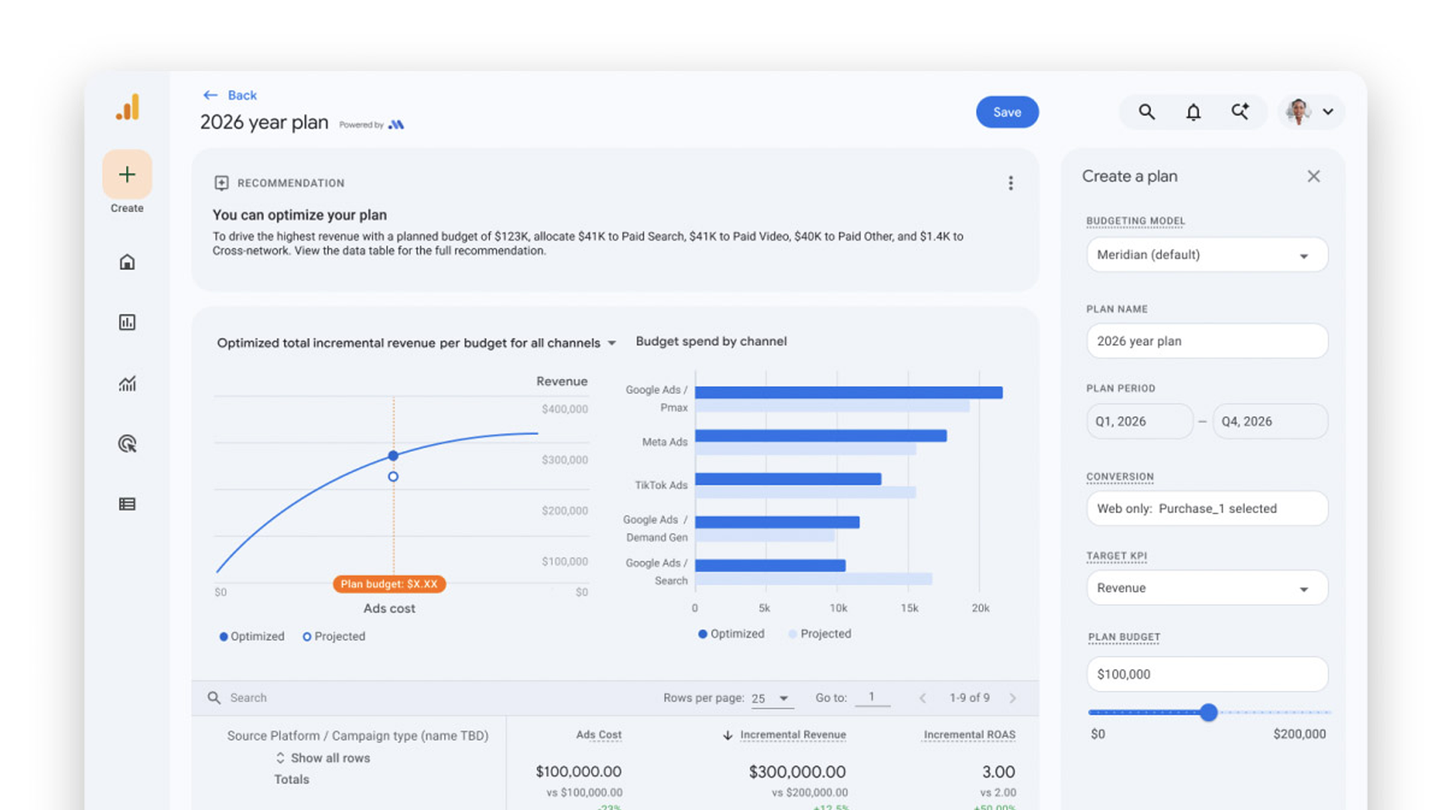
The hum of servers, the flicker of dashboards — it’s the symphony of modern marketing. But for too long, the data has been a cacophony. We’ve got first-party signals here, cross-channel metrics there, and predictive whispers from AI models seemingly everywhere else. The promise of the AI era, fueling growth with data, often founders on the shoals of fragmentation.
Google’s bet, with the impending integration of Meridian, their open-source Marketing Mix Model (MMM), into Google Analytics 360 (GA360), is that it can finally orchestrate this chaos into a coherent melody. This isn’t just another feature; it’s a fundamental architectural shift aimed at providing a “complete picture of performance” and, crucially, “easy ways to take action.” The details, as always, are where the devil — and the opportunity — reside.
Pinpointing What’s Working: Beyond Correlation to Causation
The core allure here is the leap from simply observing correlations to definitively measuring causal performance. Historically, MMMs have been the domain of data scientists, complex undertakings requiring significant external data and manual analysis. By embedding Meridian, Google is attempting to democratize this capability, bringing it into the hands of marketers who manage GA360. The stated goal? To “prove exactly what is driving your business and optimize your media mix.” This is the holy grail of measurement: moving past vanity metrics to understand the true drivers of ROI. The implications for ad spend allocation are profound. No longer will marketers be guessing; they’ll have a quantitative framework for attribution, at least within the confines of their GA360 data ecosystem.
The AI Undercurrent: Gemini’s Predictive Prowess
But the unification story doesn’t stop with historical data. The integration of signals powered by Gemini, Google’s AI model, into Google Ads, particularly the introduction of Qualified Future Conversions (QFCs), is a significant architectural development. QFCs aim to link upper-funnel spend (think brand searches) to future sales. This is predictive analytics bleeding into attribution, a trend we’re seeing across the board. The idea is to uncover “missed revenue” by identifying valuable touchpoints that traditional last-click models might overlook. The real kicker? These predictive signals are slated for eventual integration with Meridian. This creates a feedback loop: historical performance informs future predictions, and those predictions, in turn, refine the MMM’s accuracy. It’s a subtle but powerful evolution, suggesting a future where measurement isn’t just retrospective but deeply predictive.
Beyond the Hype: A Skeptic’s View
Let’s be clear: “unifying insights” and “pinpointing what’s working” sound fantastic. But the devil, as always, is in the execution and the ecosystem. Google’s history is littered with ambitious platform integrations that, while powerful, often lock users deeper into their walled garden. The emphasis on first-party data, while a sensible response to privacy shifts, also conveniently centers the entire measurement framework within Google’s purview. Will Meridian, even in its open-source guise, truly accommodate the breadth of data sources that sophisticated advertisers rely on? Or will it be a best-in-class solution within the Google ecosystem, incentivizing further reliance on Google’s own ad products and platforms?
Furthermore, the concept of “easy ways to take action” is a perpetual advertising promise. MMMs, even simplified, require interpretation. The real challenge won’t be the data unification, but the organizational capacity to act on the insights. Does GA360, with this new layer, become a true command center, or just a more sophisticated dashboard that generates more complex reports? The “predictive scenarios” for guiding investments are a compelling proposition, but their real-world utility will hinge on the accuracy and adaptability of the underlying models.
The Architectural Shift: From Silos to Synthesis
This move represents a significant architectural shift. For years, measurement tools have operated in silos. Web analytics tracked website behavior, attribution platforms stitched together media spend, and MMMs provided high-level strategic direction, often as a quarterly or annual exercise. By embedding an MMM directly into GA360 and linking it with AI-driven predictive signals, Google is attempting to collapse these silos. The vision is a continuous, integrated measurement fabric where strategic planning, tactical optimization, and predictive foresight are all interconnected. This is the promised land of marketing technology: data flowing smoothly, insights surfacing intuitively, and actions being taken with confidence. It’s an ambitious undertaking, and its success will be measured not just by the elegance of the integration, but by its ability to genuinely empower marketers to make smarter, more profitable decisions in an increasingly complex digital world.
🧬 Related Insights
- Read more: CeraVe Hits 40% ROI with NBA Social Strategy
- Read more: Future Leaders Awards 2026: Beyond Buzzwords
Frequently Asked Questions
What does Meridian actually do? Meridian is an open-source Marketing Mix Model designed to help businesses understand the causal impact of their marketing investments across different channels. It’s built to quantify how each marketing activity contributes to overall business outcomes.
Will this replace traditional attribution models? Not entirely. While Meridian aims to provide a more strategic, causal view of performance, traditional attribution models (like last-click or multi-touch) will likely still play a role in tactical, short-term optimization within specific platforms. The integration suggests a future where both are used in tandem, with MMMs guiding strategy and traditional models informing execution.
Is this available now? The article states that Meridian will be brought into Google Analytics 360 “soon.” Specific rollout dates and feature availability may vary.