Here’s a stat that’ll make you sit up: 95 percent. That’s the match rate Comcast Advertising boasts between broadband homes and actual physical addresses. Think about that for a second. In a world drowning in IP addresses that spoof and flutter like digital ghosts, that’s a lighthouse beam. It means advertisers are finally getting a clear line of sight, not just shouting into the echo chamber of the internet.
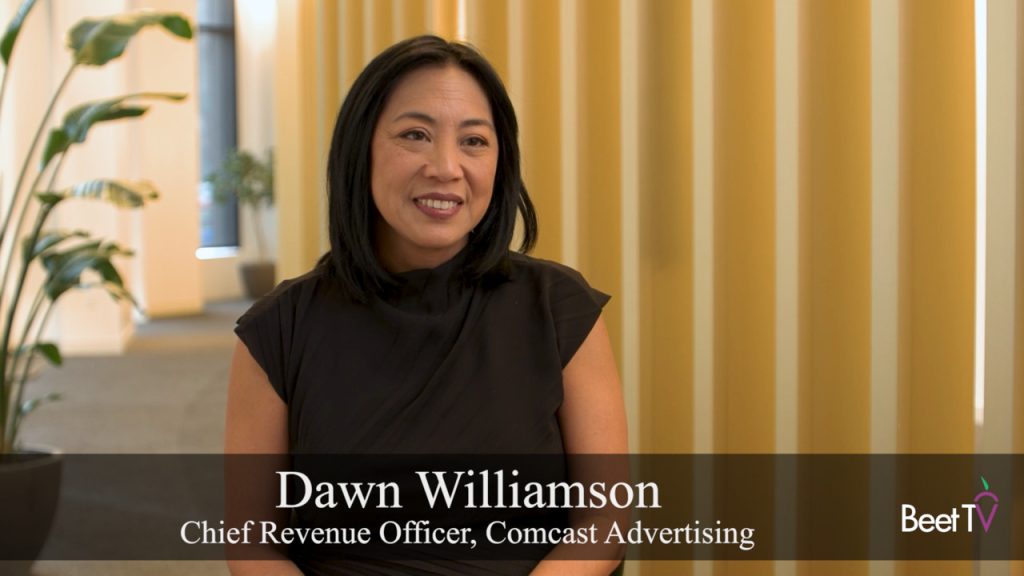
And who’s delivering this clarity? Dawn Williamson, chief revenue officer at Comcast Advertising, and she’s practically vibrating with excitement about what AI is unlocking. She calls AI an “incredible asset,” and from the sound of it, they’re not just dabbling. They’re diving headfirst into making ads smarter, and critically, cheaper.
AI is an incredible asset that we all have. One of the things that we are immediately leveraging AI for is optimizing campaigns.
This isn’t just about shuffling ad placements or tweaking delivery times, though that’s part of it. Williamson points to creative generation as a major win. Imagine your local diner, the one with the legendary pie, suddenly sporting ad copy and visuals so slick, so premium, you’d swear it came from a top-tier agency. Minus the existential dread and the invoice that makes your eyes water. That’s the democratizing power of AI on full display here.
The Data Superpower
But let’s be real, scale is one thing, but precision? That’s the real flex. Williamson is adamant: Comcast’s secret sauce isn’t just its humongous reach (30 million broadband homes, roughly 100 million authenticated viewers). It’s the accuracy of its data. That 95% match rate to physical addresses? It blows the shaky, often unreliable world of IP-based targeting clean out of the water. This means less money wasted on impressions that land in the digital ether, and more actual customers seeing what they’re supposed to see.
And they’re not just layering this hyper-precise data onto one screen. Oh no. They’re weaving it across premium video, multiple apps, and across devices. It’s not a collection of disconnected ad buys; it’s a fully integrated ecosystem designed to catch consumers wherever they are, whenever they’re paying attention.
Outcomes, Not Just Eyeballs
Look, we’re in 2026. Nobody’s impressed by a pretty picture or a million impressions if it doesn’t translate into something tangible. Marketing departments, finance teams, even the folks on the street – everyone wants to know: did it work? Williamson knows this game. When asked about proving outcomes, she practically lights up, talking about proprietary data, partnerships with measurement firms, and even weaving in Mastercard data to track actual purchase behavior.
This is what they’re calling Outcomes+, and the name of the game is simple: show that ads don’t just get a polite scroll-past, they drive actual spending. It’s about connecting the dots from ad exposure to real-world actions like booking a trip or, yes, buying that car.
Breaking Down the Walls (a Little)
And then there’s the Amazon news. Comcast is now hooking up with Amazon’s ad inventory for local sales. Williamson calls it “tremendous,” and it’s easy to see why. It’s like the famously exclusive walled gardens of tech giants are opening up a bit, offering a wider reach for those smaller, local advertisers who are often shut out of the big leagues.
This whole package—AI optimization, incredibly granular household data, and these outcome-focused measurement tools—is Comcast Advertising positioning itself as the place where ads finally deliver on their promise. It’s where the endless debates about credit can finally be replaced by solid proof of what worked, and why.
Is this the future? It sure feels like it. AI isn’t just a shiny new toy; it’s the engine driving the next wave of advertising efficiency and effectiveness, and Comcast is strapping itself in for the ride.
🧬 Related Insights
- Read more: CartographAI: AI Fixes Adtech Vendor Selection Mess [Analysis]
- Read more: Google’s SA360 Beta: Retail Media Goes Offsite and AI-Powered
Frequently Asked Questions
What does Comcast Advertising’s AI optimization do?
It uses AI to make ad campaigns more efficient by improving scheduling, targeting, and creative messaging, leading to fewer wasted impressions and potentially lower costs.
How does Comcast ensure its ads reach the right people?
Comcast uses highly accurate household data, matching viewers to physical addresses with a 95% success rate, which is more precise than traditional IP-based targeting.
Will this AI make ads better for small businesses?
Yes, the goal is to allow local advertisers, like a neighborhood pizza shop, to create high-quality ads at lower costs and reach their target audience more effectively, similar to what large agencies produce.