Look, we’re living through a seismic shift. The way we interact with information, with culture, is fundamentally changing. And sometimes, to really grasp the magnitude of these tectonic movements, it’s best to look at something tangible, something that reflects the collective pulse of humanity. This isn’t just a list of old records; it’s a sonic time capsule, a window into the soul of generations, revealing how our tastes have morphed, how technology has reshaped what ‘popular’ even means.
It’s easy to get lost in the AI jargon, the algorithms, the endless stream of technical advancements. But let’s bring it back to people. What does it mean for you, for me, for everyone, when the very definition of what resonates most deeply changes from a Broadway cast recording to an immersive digital experience? This compilation of the best-selling album each year since 1956 isn’t just trivia; it’s a narrative. It’s the story of how we’ve connected with music, and by extension, with each other, as the world spun and technology, well, it did its thing.
The evolution itself is wild. We’re talking about a time when soundtracks from musicals like ‘My Fair Lady’ and ‘The Sound of Music’ utterly dominated. Imagine that! A whole year’s musical zeitgeist captured not by a rock band or a pop singer, but by a meticulously crafted theatrical production. It speaks to a different kind of shared cultural experience, a slower burn, perhaps, where the collective imagination was fueled by live performance and narrative storytelling.
Then came the ’60s, and things started to get a little more diverse, a little more rock and roll. Yet, even then, a surprising upset occurred. The Beatles, titans of musical innovation with ‘Sgt. Pepper’s Lonely Hearts Club Band,’ were outsold by the decidedly more pop-friendly Monkees’ ‘More of The Monkees.’ It’s a brilliant reminder that critical acclaim and massive sales don’t always march in lockstep. Sometimes, the simpler, more immediate groove just wins the day.
But here’s where it gets truly fascinating, the undeniable impact of technology morphing consumption. Think about the leap from vinyl and cassettes to CDs, and then, the seismic, earth-shattering, planet-realigning advent of digital music and streaming. Billboard’s own methodology has had to bend and twist like a contortionist to keep up. Before 1991, it was retailer reports – a snapshot. Then came Nielsen SoundScan, a more accurate, granular view. And now? We’ve got album-equivalent units, a concept that would have sounded like science fiction a generation ago, blending actual sales with streams and track downloads. It’s how Bad Bunny’s ‘Un Verano Sin Ti’ can be the overall top album in 2022, even as Taylor Swift’s ‘Midnights’ snagged the top spot based on pure sales alone. This isn’t just a change in how we count; it’s a fundamental rewiring of what constitutes ‘popularity’ in the auditory universe.
It’s like trying to measure a cloud by counting raindrops. The old metrics, the single, solid object, are insufficient for the new, diffuse, interconnected reality. This is precisely what’s happening with AI right now. We’re trying to measure its impact using old paradigms, and it’s just not going to work. The shift from selling albums to selling ‘equivalents’ is a perfect analogy for the AI platform shift we’re witnessing. It’s not just about a new tool; it’s about an entirely new way of building, of creating, of being.
So, what does this mean for real people, beyond a nostalgic trip down memory lane? It means understanding that the tools we use to create and consume culture are not just accessories; they are architects of that culture. When the distribution method changes dramatically – from a record store to a streaming app, or from a human programmer to an AI model – the entire ecosystem shifts. The power dynamics change. The creativity that flourishes changes. The very definition of what constitutes ‘value’ in the entertainment or technological space changes.
The ‘Album-Equivalent Unit’ of the AI Era?
This brings us to the core of the AI revolution. Just as album-equivalent units acknowledge that a stream isn’t the same as a purchase but still contributes to an album’s success, we need new ways to measure AI’s impact. Is it the lines of code generated? The efficiency gains? The novel ideas it sparks? The corporate PR will try to sell you simple metrics, the ‘sales’ of AI models, but that’s missing the forest for the trees. The real value, the true ‘album-equivalent unit,’ will be in the emergent capabilities, the entirely new forms of art, science, and business that AI unlocks. We’re not just buying a song anymore; we’re tapping into a vast, generative force.
This list is a beautiful, sprawling proof to human taste and technological evolution. It’s a reminder that the way we experience and value creative output is never static. And as we stand on the precipice of another massive platform shift – AI – looking back at how we’ve navigated these waters before offers invaluable perspective. We’re not just witnessing the future; we’re living it. And it sounds… different.
Your Birth Year’s Bestseller: A Journey
1956: Harry Belafonte — “Calypso” Notable singles: “Day-O (The Banana Boat Song),” “Jamaica Farewell”
1957: “My Fair Lady (Original Broadway Cast)” Notable single: “The Rain in Spain”
1958: “My Fair Lady (Original Broadway Cast)” Notable single: “With A Little Bit of Luck”
1959: Henry Mancini — “Music from Peter Gunn” Notable single: “Peter Gunn”
1960: “The Sound of Music (Original Broadway Cast)” Notable single: “Do-Re-Mi,” “The Sound of Music”
1961: “Camelot (Original Broadway Cast)” Notable single: “If Ever I Would Leave You”
1962: “West Side Story (Soundtrack)” Notable single: “Maria”
1963: “West Side Story (Soundtrack)” Notable single: “I Feel Pretty”
1964: “Hello, Dolly! (Original Broadway Cast)” Notable single: “Hello, Dolly!”
1965: “Mary Poppins (Original Soundtrack)” Notable singles: “A Spoonful of Sugar,” “Supercalifragilisticexpialidocious”
1966: Herb Alpert & The Tijuana Brass — “Whipped Cream & Other Delights” Notable single: “A Taste of Honey”
1967: The Monkees — “More of The Monkees” Notable single: “I’m A Believer”
1968: The Jimmy Hendrix Experience — “Are You Experienced” Notable singles: “Purple Haze,” “Foxy Lady”
1969: Iron Butterfly — “In-A-Gadda-Da-Vida” Notable single: “In-A-Gadda-Da-Vida”
1970: Simon and Garfunkel — “Bridge over Troubled Water” Notable singles: “Bridge over Troubled Water,” “The Boxer”
1971: “Jesus Christ Superstar” Notable single: “Superstar”
1972: Neil Young — “Harvest” Notable single: “Heart of Gold”
1973: War — “The World Is a Ghetto” Notable single: “The Cisco Kid”
1974: Elton John — “Goodbye Yellow Brick Road” Notable single: “Bennie and the Jets”
1975: Elton John — “Elton John’s Greatest Hits” Notable singles: “Your Song,” “Daniel”
1976: Peter Frampton — “Frampton Comes Alive!” Notable single: “Show Me The Way”
1977: Fleetwood Mac — “Rumours” Notable singles: “Go Your Own Way,” “Don’t Stop”
1978: “Saturday Night Fever: The Original Movie Sound Track” Notable singles: “How Deep Is Your Love,” “Stayin’ Alive”
1979: Billy Joel — “52nd Street” Notable single: “My Life”
1980: Pink Floyd — “The Wall” Notable singles: “Another Brick In The Wall (Part 2)”
1981: REO Speedwagon — “Hi Infidelity” Notable singles: “Keep on Loving You,” “Take It on the Run”
1982: Asia — “Asia” Notable single: “Heat of the Moment”
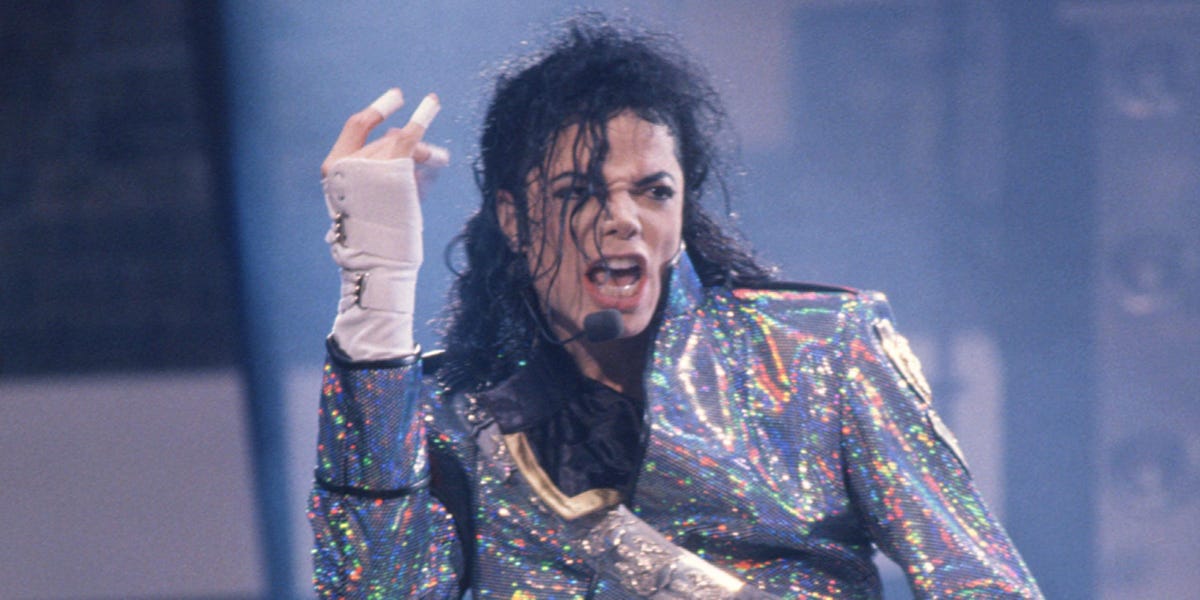
1983: Michael Jackson — “Thriller” Notable singles: “Thriller,” “P.Y.T. (Pretty Young Thing)”
1984: Michael Jackson — “Thriller” Notable singles: “Billie Jean,” “Beat It”
1985: Bruce Springsteen — “Born in the U.S.A.” Notable singles: “Dancing In The Dark,” “Born In The U.S.A.”
1986: Whitney Houston — “Whitney Houston” Notable singles: “How Will I Know,” “Greatest Love Of All”
1987: Bon Jovi — “Slippery When Wet” Notable singles: “You Give Love A Bad Name,” “Livin’ On A Prayer”
1988: George Michael — “Faith” Notable singles: “One More Try,” “Father Figure”
1989: Bobby Brown — “Don’t Be Cruel” Notable single: “My Prerogative”
1990: Janet Jackson — “Janet Jackson’s Rhythm Nation 1814” Notable singles: “Miss You Much,” “Rhythm Nation”
1991: Mariah Carey — “Mariah Carey” Notable singles: “Vision of Love,” “Love Takes Time”
1992: Billy Ray Cyrus — “Some Gave All” Copies sold: 4,832,000 Notable singles: “Achy Breaky He
🧬 Related Insights
- Read more: 2026 World Cup: Sponsorships Hit $50M, CPMs Skyrocket
- Read more: Daily Briefing: May 30, 2026