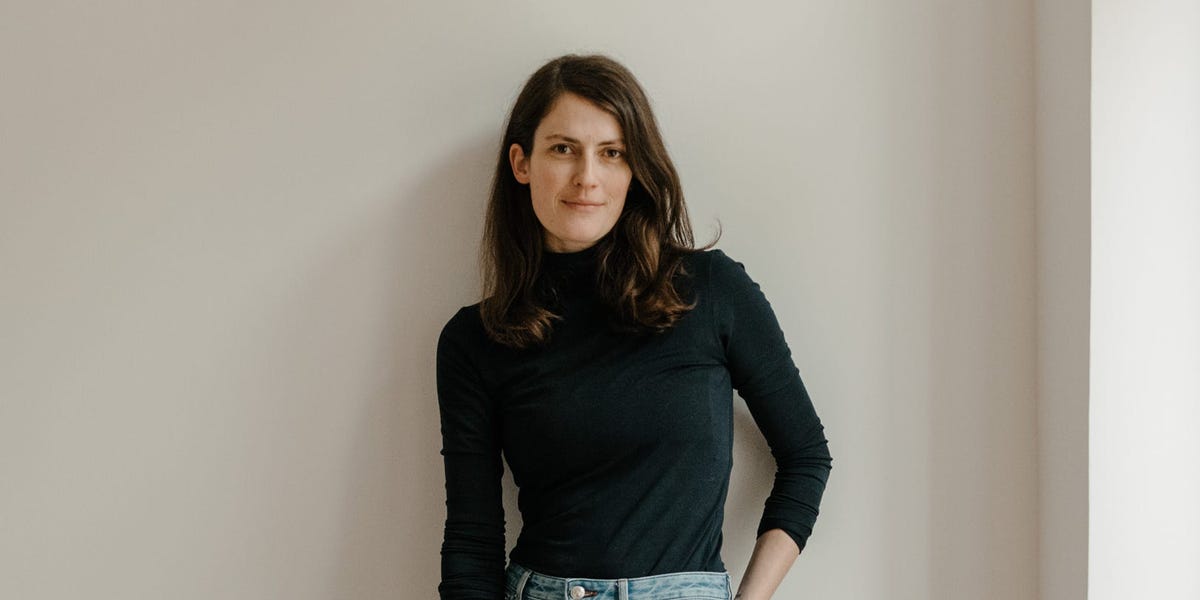
The relentless hum of traffic outside the apartment window in Sonoma was a constant, unnerving reminder of a place that wasn’t quite hers.
Ruth Barry, a Scottish baker who found her life — and her husband — in Berlin, packed up her young family and swapped the famed California sunshine for the gritty, familiar embrace of Germany’s capital. It wasn’t a step backward, she insists, but a hard-won pivot toward a life where their foundations felt solid, not perpetually shifting sands. Their story, a stark counterpoint to the relentless narrative of Silicon Valley as the ultimate destination, highlights the seismic disconnect between aspirational tech-hub living and the stark economic realities faced by many families.
For Barry, the journey began in Berlin, a city that buzzed with the energy of new beginnings. She ran a popular bakery in a hip district, a tangible symbol of her burgeoning life. Then, disaster struck. A series of unforeseen blows led to bankruptcy in 2021, forcing her to shutter the doors on her dream. The sting of professional failure, coupled with the desire for a fresh start away from the ghosts of her collapsed business, led the couple to the San Francisco Bay Area, where her husband had deep family roots.
“I felt there’d never be any need to return,” Barry stated in retrospect, a phrase that now echoes with an almost poignant irony.
The path to American residency was a grueling three-year odyssey. While navigating the labyrinthine green card process, their first son was born in 2022. Instead of the anticipated comfort, Barry found herself increasingly isolated, a foreigner even in her husband’s homeland. Despite her fluency in German, she’d always carried the immigrant’s burden of feeling like an outsider, a feeling amplified by her upbringing in the remote Scottish Highlands. The American project, initially conceived as a grand turning of a new page, was proving to be anything but.
The San Francisco Mirage
By November 2024, they landed in Sonoma, a charming town an hour north of San Francisco. The anticipated sense of arrival, that feeling of having truly ‘made it,’ never materialized. The missing piece, the gaping hole in their new life, was a job for her husband. A seasoned software engineer with years of experience, he faced a deafening silence from potential employers. Applications vanished into the ether, and the demoralization was palpable. Their savings, once a cushion, began to evaporate at an alarming rate. The cost of living was a brutal shock: $1,000 a month for a few hours of kindergarten, $300 a week for basic groceries. A simple trip to the supermarket became an exercise in dread.
Barry recalls the visceral shock of paying for groceries during a visit to her parents in Scotland, knowing the same basket would cost three times as much back in Sonoma. The presence of an electric car offered some respite from fuel costs, and a low-income family health insurance policy meant they weren’t burdened by exorbitant premiums, though the specter of an unaffordable health crisis loomed large. The emotional toll was immense, exacerbated by the impending death of her husband’s father, a slow fade that left them feeling utterly powerless. The weight of his perceived failure to provide for his family began to crush her husband.
“We had to be serious about our options, especially as I was pregnant with our second child.”
The stark reality set in: they couldn’t thrive, let alone flourish, in the US at that moment. With another child on the way, the pressure to find stability intensified.
A Calculated Retreat to Berlin
December 2025 marked their return to Berlin. It was an acceptance, Barry admits, that she might fall back into misery. But this time, something had shifted. Her husband landed a solid job within two weeks of their second son’s birth. The familiar comfort of delivering their child in the same excellent hospital where their first was born was deeply reassuring. Access to reliable public transport and freedom from the gnawing anxiety of daily financial insecurity proved transformative. Germany, in her view, offered a tangible sense of security that the US, despite its glittering promises, had failed to deliver.
“Germany is a great example of a wealthy country that, broadly, looks after its residents.”
This wasn’t just about convenience; it was about a fundamental societal contract. Their eldest son would attend a free bilingual nursery, and they benefited from parental leave and child benefits. Berlin, while undeniably a transient city, offered a grounding reconnection with old friends and the nascent building blocks of a stable community for their growing family. Their immediate plan: remain in Germany until they could apply for citizenship, a straightforward process after their accumulated years of residency. The future beyond that remained an open question.
The Ongoing Negotiation
Yet, this renewed stability isn’t without its own particular set of hurdles. The rental market in Berlin is, to put it mildly, a nightmare. They’re currently shelling out €2,900 (roughly $3,400) a month, with aspirations of finding a rent-controlled flat for under €2,000. Barry, currently a full-time caregiver to their two boys, harbors a desire to bake for people again. She doesn’t miss the frenetic pace and financial strain of running her own bakery, but envisions a venture that harmonizes with her family life, a stark contrast to the brutal 14-hour days of her past.
There are things she misses about California, of course: operating in her native language, the dizzying culinary landscape, the breathtaking natural beauty, and the cherished presence of friends and family. But the experience has forged a crucial understanding: certain elements of quality of life are simply non-negotiable.
🧬 Related Insights
- Read more: Dollar General Doubles Audio Ads Network
- Read more: Multi-Touch Attribution Models Compared: Last Click, Linear, and Data-Driven
Frequently Asked Questions
What does it mean to be an expat in this story? An expat is someone who has temporarily or permanently moved to a country other than their native one. Ruth Barry, originally from Scotland, lived as an expat in the US before returning to Germany, where she had previously lived as an expat.
Why did the family decide to move back to Berlin? The family moved back to Berlin due to significant financial struggles and a lack of job opportunities for the husband in California, alongside a desire for greater social and economic stability.
Will Ruth Barry open a bakery again? She expresses a desire to bake for people again but wants to find a way to do it that fits around her family life, avoiding the intense hours of her previous bakery. She is not currently running a business.