AI IS THE NEW PLATFORM.
Look, the dust is still settling, and frankly, it’s a glorious mess. We’ve been talking about AI for years, treating it like just another tool in the shed. Wrong. Utterly, fundamentally wrong. AI isn’t a tool; it’s the entire damn workshop. It’s the foundation upon which entire new ways of building, measuring, and understanding our work are being laid. And nowhere is this more apparent, or more vital, than in the dusty, often-misunderstood corners of digital marketing measurement.
For too long, we’ve been like astronomers looking at individual stars, meticulously charting their brightness and position, completely oblivious to the gravitational dance they’re performing together, shaping entire galaxies. That’s been us with marketing channels. Paid social? A star. PPC? Another. They’ve lived in their own little celestial spheres, their metrics tracked in isolation. But the reality? They’re part of a cosmic ballet, and AI is the cosmic choreographer finally showing us the choreography.
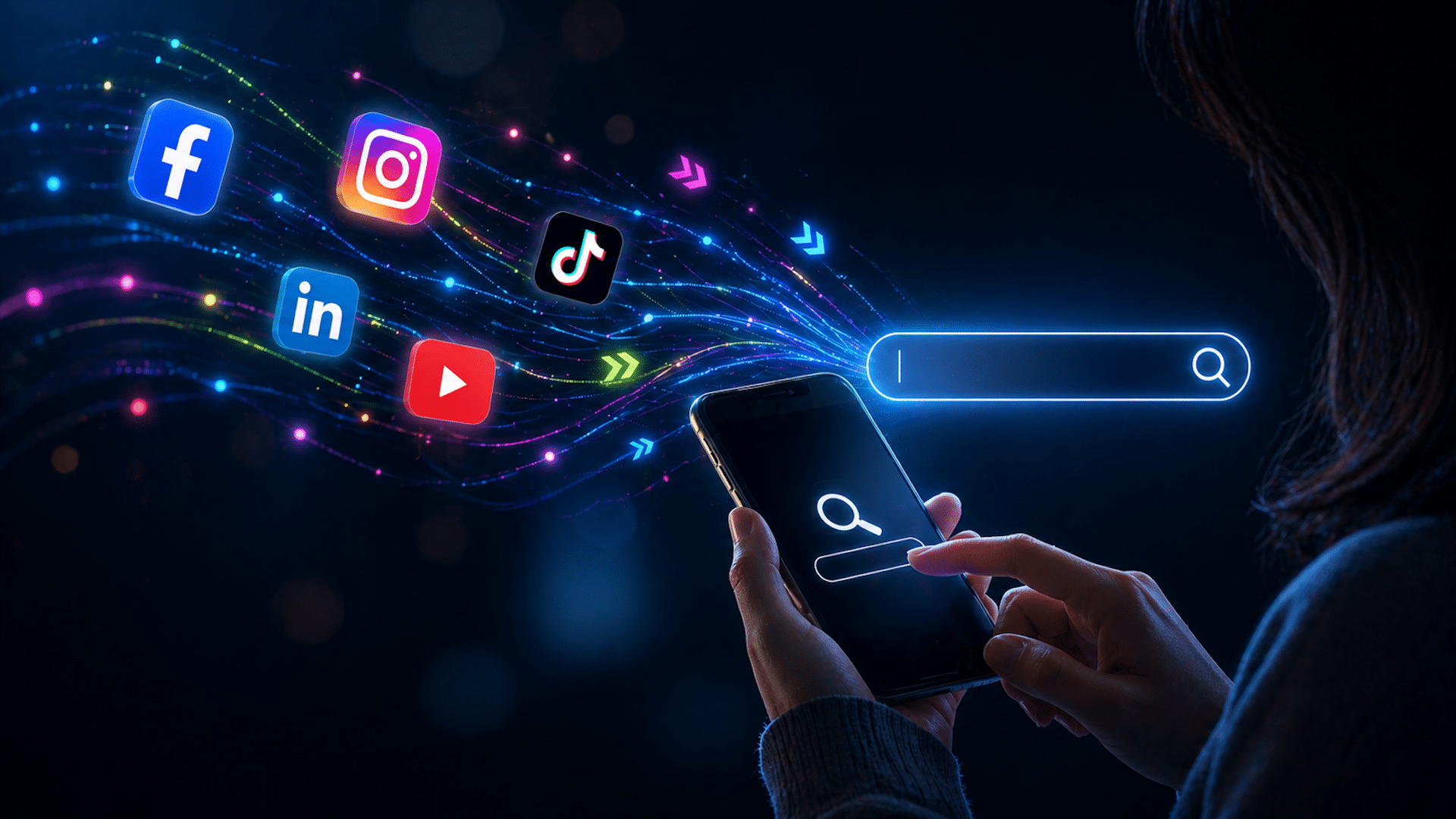
The old way of thinking, where a conversion has to happen on the platform where the ad was shown, is frankly archaic. It’s like saying a ripple on a pond only matters if it creates a wave in the exact same spot. Nonsense! That ripple travels, it interacts, it influences. Paid social ads are those ripples. They build awareness, they spark curiosity, they plant seeds. And those seeds don’t always sprout on TikTok or Facebook. Often, they blossom later, in the fertile soil of a Google search.
Unmasking the Social-Search Symphony
This isn’t just about fuzzy brand awareness anymore. This is about hard, measurable impact. The team behind this analysis has laid out a solid framework, a way to finally break free from the tyranny of single-platform attribution. Their core idea is simple, yet profound: design tests that actively reveal the spillover effect. And that’s where the magic, powered by AI’s analytical prowess, truly begins.
Think of it like this: you’re trying to prove that a great opening band, even if they don’t sell a single t-shirt directly, actually gets more people excited and listening to the headliner. You wouldn’t just measure the band’s merch sales. You’d look at the crowd’s energy for the main act, you’d check if people are sticking around longer, if they’re singing along more. That’s the kind of cross-pollination we’re talking about, and AI is giving us the super-powered binoculars to see it.
Social ads don’t always convert in-platform. Here’s how to prove their impact on paid search traffic and conversions.
The methodology here is a breath of fresh air. Instead of relying on the flawed ‘before-and-after’ approach that’s susceptible to all sorts of seasonal or external noise, they’re advocating for a geographic split. It’s a smart, controlled experiment. You ramp up social spend in specific regions, and then you meticulously compare the PPC performance in those regions against control regions where social spend remained static. It’s a scientific approach to uncovering the hidden hand of social influence.
But here’s where AI truly elevates this: the sheer volume of data and the complexity of the variables involved. Controlling for regional sports teams, major conferences, or even localized weather events? That’s a human headache. AI, however, can sift through countless data points, identifying correlations and isolating the true impact of your social campaigns from the background chatter of the world. It’s like having a super-intelligent detective who can not only follow every lead but also accounts for every potential distraction.
Beyond the Click: Measuring True Influence
And the measurement itself? It’s evolving. While comparing platform data is a start, the real value comes from deeper analytics. AI-driven attribution models are becoming sophisticated enough to trace a user’s journey across multiple touchpoints, understanding that a click on a social ad might be the spark that leads to a branded search query, then a click on a PPC ad, and finally, a conversion. It’s not a straight line; it’s a web, and AI is the spider that can map it all.
My unique insight here? This isn’t just about optimizing ad spend; it’s about fundamentally rethinking brand building in a hyper-connected world. The PR spin often focuses on direct response, but the real power of platforms like social media is in their ability to act as massive awareness engines, priming the pump for other, more conversion-focused channels like PPC. The companies that truly embrace this holistic view, powered by AI’s analytical might, will be the ones that win. They won’t just be running ads; they’ll be orchestrating entire marketing symphonies.
Is This a New Era for Marketing Measurement?
Absolutely. We’re moving from isolated silos to an integrated ecosystem. AI is the glue, the intelligence that allows us to see how the entire system breathes and functions together. It’s the difference between understanding individual instruments and appreciating the full orchestra.
The potential pitfall, of course, is ensuring you have the data infrastructure and analytical capabilities to support these more complex tests. It’s no good designing a brilliant experiment if you can’t actually collect and interpret the results. But the investment is undeniable. The companies that don’t adapt, that remain chained to their old, siloed dashboards, are going to find themselves at a severe disadvantage.
🧬 Related Insights
- Read more: Real-Time Bidding Explained: The Technology Behind Digital Ad Auctions
- Read more: Viant Buys TVision for $40M [Ad Measurement Shakeup]
Frequently Asked Questions
What is the main challenge in measuring paid social’s impact on PPC?
The main challenge is that social ads often influence PPC indirectly by building brand awareness and recall, leading to more branded searches and higher click-through rates on search ads, which isn’t always captured by platform-specific conversion metrics.
How does AI help measure this impact?
AI excels at analyzing complex, multi-touchpoint customer journeys and vast datasets, allowing marketers to identify correlations and attribute conversions across different channels more accurately than traditional methods.
Can this method increase my overall marketing budget?
This method helps demonstrate the value and efficiency of your entire marketing mix, potentially justifying increased investment by proving the ROI of less directly trackable channels like paid social on core performance channels like PPC.