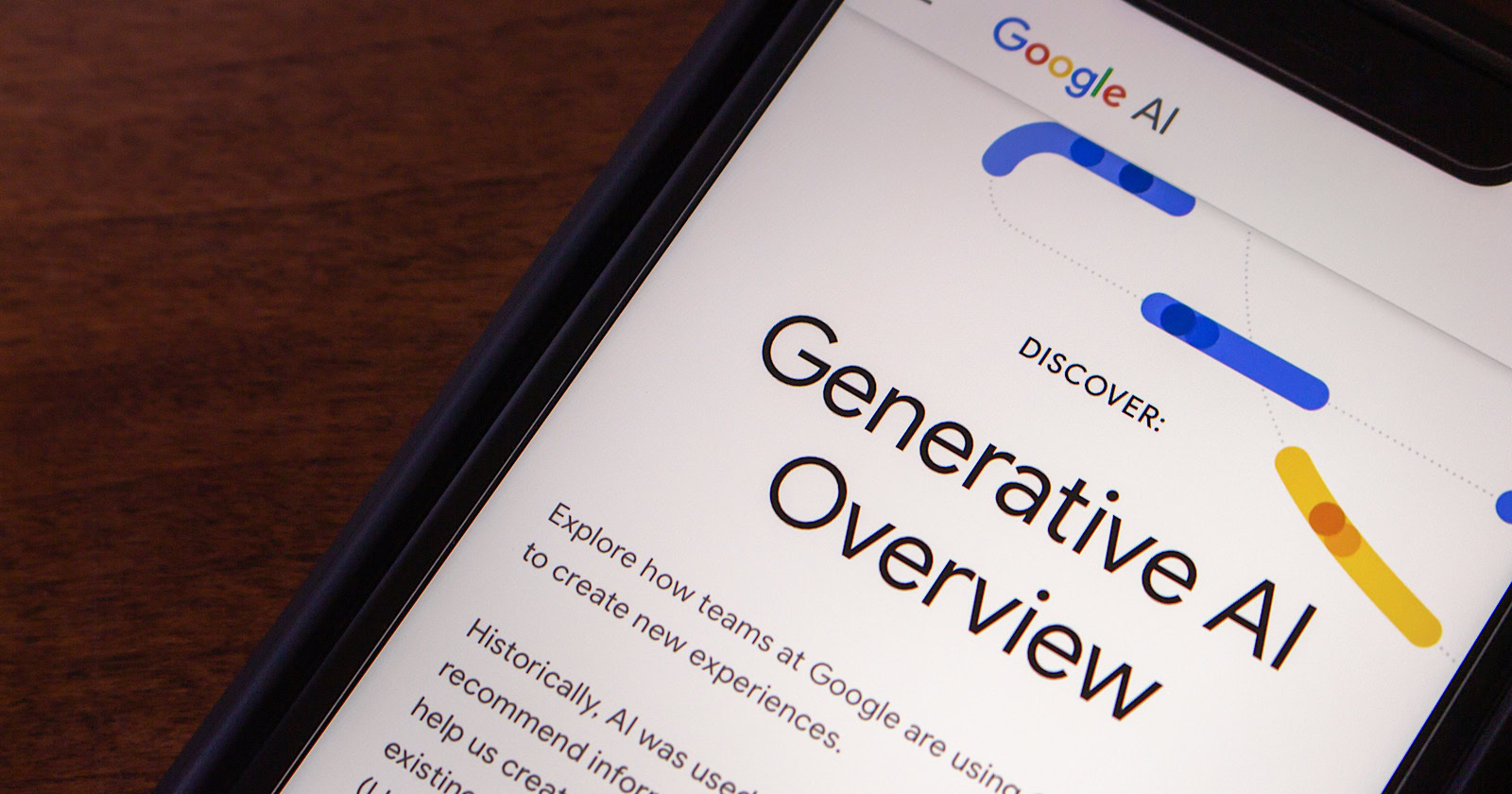
So, what does this mean for your average internet user? It means the serendipity of discovery, the little detours down interesting rabbit holes that make the web so vibrant, are shrinking. It means that when you type a question into Google, you’re increasingly likely to get an answer from Google, right there on the search results page, rather than a springboard to learn more elsewhere.
This isn’t just a tweak; it’s a fundamental platform shift unfolding before our eyes. Imagine the internet as a bustling marketplace. For years, search engines were the town criers, pointing you towards different stalls, different merchants where you could find exactly what you needed (and perhaps stumble upon something you didn’t even know you were looking for!). Now, with AI Overviews, it’s like the town square has been cleared, and one super-stall has sprung up in the center, offering a curated summary of everything. Convenient? Sometimes. But it certainly changes the dynamic for all the other merchants.
The Traffic Tsunami: An Unsettling Drop
A recent randomized field experiment, the first of its kind to truly isolate the impact in a real browsing environment, has dropped a bombshell: Google’s AI Overviews are decimating organic clicks to external websites. We’re talking a staggering 38% reduction on queries where these AI-generated summaries appear. That’s not a ripple; that’s a tidal wave washing over publishers who rely on that traffic.
The study, conducted by researchers from the Indian School of Mines and Carnegie Mellon University, equipped 1,065 U.S. participants with a Chrome extension. This clever little tool randomly assigned users to see Google Search as normal, have AI Overviews deliberately hidden, or be funneled into Google’s dedicated AI Mode. For two weeks, these active desktop Chrome users navigated the web, and the results are, frankly, eye-opening.
Satisfaction Static: A User Experience Paradox
Here’s the kicker, the part that truly makes you pause: while outbound clicks plummet, user satisfaction doesn’t budge. When the AI Overviews were hidden, participants reported nearly identical levels of satisfaction, information quality, and ease of finding what they needed compared to those who saw them. This suggests that the very feature designed to enhance the search experience might be doing so at the direct expense of the broader web ecosystem, without any tangible gain for the end-user.
It’s a classic case of optimizing for one metric—keeping users on the page—at the potential detriment of another, more distributed, form of user engagement and information dissemination. The researchers themselves put it rather bluntly:
AI Overviews “divert traffic away from publishers without delivering measurable improvements in user experience.”
The AI Mode Enigma: A Glimpse into the Future?
And what about Google’s dedicated AI Mode? The experiment found that users directed there experienced even lower outbound click rates, higher zero-click rates (meaning they got their answer without leaving the search page at all), and, tellingly, lower satisfaction at the end of the study compared to other groups. This hints that while AI summaries are becoming the default, a more integrated, less experimental approach might not be the silver bullet Google hopes.
This randomized controlled trial adds a critical layer of causality to the observational data we’ve seen previously. While Pew Research and Ahrefs have reported similar trends of reduced click-through rates, this experiment moves beyond correlation to prove the direct impact of AI Overviews. It’s like moving from noticing that more people are carrying umbrellas when it rains, to actually having a scientist turn on the sprinkler system and seeing if people still reach for their umbrellas.
A New Epoch for Publishers and Search
This is more than just a footnote in Google’s quarterly report. It’s a seismic shift that redefines the relationship between search engines, publishers, and users. For content creators, bloggers, news outlets—anyone who thrives on driving traffic to their own platforms—this presents an existential challenge. The long tail of discoverability, the very engine of the open web, is under immense pressure. We’re not just talking about fewer clicks; we’re talking about a potential reallocation of attention and ad revenue that could reshape the internet as we know it.
Google VP Liz Reid has spoken of AI Overviews cutting ‘bounce clicks,’ implying a user benefit by providing quicker answers. Yet, this experiment directly challenges that assertion by measuring satisfaction. It highlights a disconnect, a potential oversimplification of what constitutes a ‘good’ search experience. Is it merely getting an answer quickly, or is it also the journey of exploration and verification that a more open web allows?
This isn’t to say AI in search is inherently bad. Far from it! It represents a monumental leap forward, a new operating system for information. But like any new platform, it comes with unintended consequences that need careful scrutiny. The question now isn’t if AI will change search, but how we can ensure this powerful technology enriches, rather than erodes, the diverse and dynamic ecosystem of the internet.
🧬 Related Insights
- Read more: IAB Tech Lab: Bidstream Signals Get Real-Time Boost [AI Platform Shift]
- Read more: HubSpot Tops AI Search as #1 CRM [1850% Leads Surge]
Frequently Asked Questions
What is the main finding of the new Google AI Overviews study? The primary finding is that Google’s AI Overviews reduce organic clicks to external websites by 38% on queries where they appear, without a corresponding increase in user satisfaction.
Will AI Overviews replace traditional search results entirely? The study doesn’t suggest an immediate replacement, but it highlights a significant shift where AI Overviews are increasingly favored, leading to fewer clicks to publisher sites. Google’s AI Mode also showed lower user satisfaction.
How does this impact website owners and publishers? Website owners and publishers are likely to see a substantial decrease in referral traffic from Google searches, impacting their ability to generate revenue and reach audiences directly.