The stale smell of campaign flyers and dusty TV ads? Gone. Replaced by the hum of servers and the anxious clicking of keyboards.
Look, politics has always been a messy business, and the way campaigns blast their messages at us is no different. But this latest wave, fueled by this never-ending polarization and margins thinner than a supermodel’s patience, plus this whole AI thing… it’s turned what used to be a marathon into a sprint. And the finish line keeps moving. GMMB, a big player in this political advertising circus, is out here saying campaigns absolutely cannot be glued to one way of doing things. They’re talking about ‘open architecture,’ which, translated from marketing-speak, means being able to plug and play all sorts of data, verification tools, and reporting systems. Why? Because the rules change. The platforms change. And if you’re stuck with yesterday’s tech, you’re already behind.
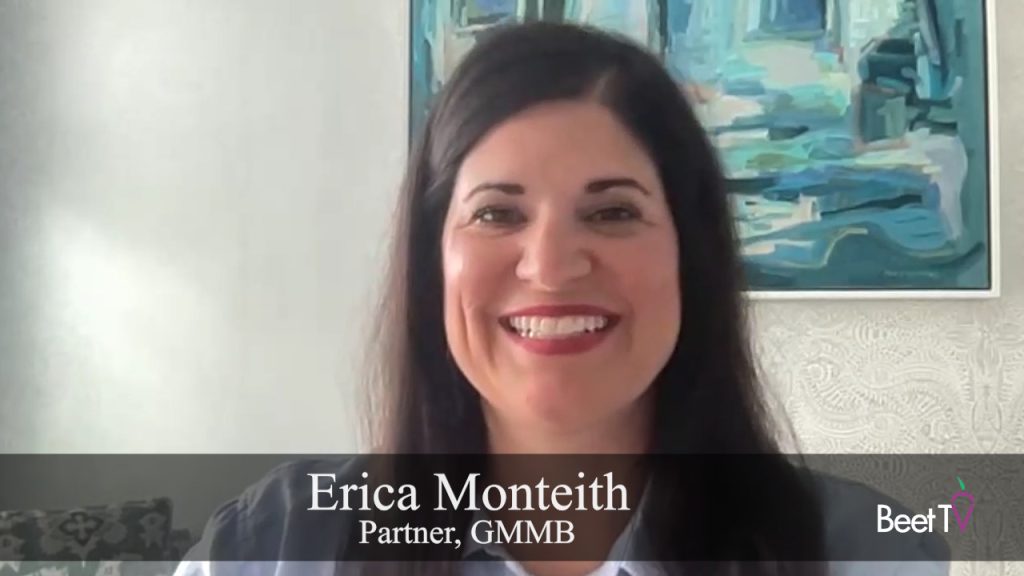
“Political campaigns and teams can’t really afford to be locked into a single workflow identity solution or reporting system,” Erica Monteith, partner at politics-focused agency GMMB, told Beet.TV editorial director Lisa Granatstein. “Open architecture really allows us to integrate multiple data partners, multiple verification tools and measurement systems that ensure that we’re able to adapt and shift quickly if needed.”
This isn’t just about being nimble; it’s about survival. Every election cycle feels like a new set of landmines, and if your ad tech isn’t ready to dance when the music changes, you’re toast.
AI Tightens the Feedback Loop, Sort Of
Now, here’s where it gets interesting, and where my BS detector starts pinging. They’re saying AI is making things faster, better, more insightful. AI helps churn out ad variations, test them with ‘synthetic audiences’ (fancy way of saying fake people), and make smarter calls. Monteith claims it’s all about shrinking the time between seeing what works, knowing who you’re talking to, and tweaking where the money goes, especially in that fragmented world of premium video.
“The biggest shift in how political advertisers are using premium video right now is really tightening that feedback loop between creative audience insights and media optimizations across a really fragmented premium video environment,” Monteith said. “It’s not just speeding up that process, but it’s also helping the quality of our decision making.”
This sounds great on paper. Faster insights, better decisions. But who’s really making the money here? Is it the campaign, or the tech companies selling them these AI-powered solutions? It’s an old song, just with new instruments.
Automation: Less Clicks, More Worry?
They also love the word ‘automation.’ Apparently, platforms like FreeWheel are taking over the grunt work of buying ads, freeing up campaign teams to do… what? Think about strategy? Make sure they’re not accidentally breaking some obscure campaign finance law? Monteith suggests it’s about reducing that ‘executional friction.’ Fewer manual clicks, more brainpower. But here’s the kicker, and it’s a good one: political ads can’t be fully automated. The reputational and regulatory risks are too damn high. One wrong move, one rogue ad, and suddenly you’ve got a crisis. No time to fix it if the machines are running the show entirely.
“The biggest impact is really reducing that executional friction. As those workflows are becoming more automated, teams can focus less on execution and more on decision making,” Monteith said. “In political media, it just carries too much reputational and regulatory risk. When something goes wrong, there isn’t a lot of time to correct it.”
This is where the humans have to step in. Strategy, creative, the big calls – that’s still on us. AI can churn out options, but it can’t tell you if an ad sounds like a tone-deaf millionaire trying to connect with the working class. That requires a human, with all their messy biases and cultural understanding.
Judgment: Still the King, Apparently
AI can crunch numbers, whip up ad versions, and speed up testing. But it’s not going to decide what makes voters tick, or what’s going to land you in hot water with the FCC. You need someone who understands the nuances of tone, the cultural landmines, and those pesky second-order effects that can blow up a campaign faster than you can say ‘social media gaffe.’
“Human judgment remains essential anywhere there’s persuasion, risk, or public trust involved,” Monteith said. “Political messaging in particular really requires understanding of tone, cultural context, and those second order effects.”
It’s a classic case of AI as a tool, not a replacement. The tech might be dazzling, but it’s the human brain, with all its flaws and brilliance, that’s still steering the ship. Especially when the stakes are this high.
Superhumans at Scale: Are We There Yet?
So, AI is already messing with how campaigns plan their video ads. It’s helping with audience modeling, digging through signals, and making sure the ad spend is optimized. But this ‘fragmentation’ they keep talking about? It’s still a headache. Inconsistencies everywhere. Still, the idea is that AI plus humans equals ‘superhumans’ who can then scale their efforts. They’re getting better data, better pacing. It’s like giving your weary campaign manager a rocket pack – it helps them move faster and cover more ground.
“It’s already changing large parts of it, particularly around the workflow when it comes to audience modeling, signal analysis. We’re getting so much better data and pacing optimization,” Monteith said.
But here’s my take, after watching this circus for two decades: AI is a powerful magnifying glass, it’s not a crystal ball. It can show you patterns, accelerate processes, and probably save some campaign staffers a few sleepless nights crunching spreadsheets. But the core of political advertising – the persuasion, the emotion, the connection (or lack thereof) – that’s still a deeply human endeavor. And the people making the real money are the ones providing the shiny new AI tools, not necessarily the campaigns wielding them. It’s a constant arms race, and the only guaranteed winner is the vendor.
“I still think humans-plus-AI are creating superhumans that can then scale. That’s really where we are and how AI is helping us make a difference,” Monteith said.
This whole ‘humans-plus-AI’ thing is where the rubber meets the road, or where the AI falls flat on its face. We’ll see. Probably sooner rather than later.
Is This AI Revolution Actually New?
Frankly, no. We’ve been layering tech onto political campaigns since the days of direct mail and phone banks. From microtargeting with voter files to the early days of social media ads, each new wave promised to be a ‘game-changer.’ AI is just the latest, most sophisticated iteration. The core challenge remains the same: cutting through the noise and connecting with voters in a way that feels authentic, even when it’s meticulously crafted by algorithms. The difference now is the speed and scale at which these messages can be deployed and adjusted. It’s less a revolution, more a hyper-acceleration of existing trends.
Why Does This Matter for Developers?
For the folks building these systems, it’s a constant game of catch-up. They’re not just building ad servers anymore; they’re integrating complex AI models for audience segmentation, predictive analytics, and creative generation. The demand is for flexible, API-driven platforms that can ingest data from myriad sources and output to dynamic ad platforms. Expect more work on real-time data pipelines, machine learning infrastructure, and tools that can handle the immense processing power required for campaign-level AI. The compliance and verification layers also become incredibly complex – developers will need to build strong checks and balances into these automated workflows, which is, frankly, a nightmare. And let’s not forget the need for intuitive interfaces for campaign staffers who, despite their best efforts, are not data scientists.
🧬 Related Insights
- Read more: Illia Polosukhin’s 12 AI Agents: Billionaire Staff or Digital Disaster Waiting?
- Read more: Media Shake-up: 2026 WHCD Shows Startups Dominating
Frequently Asked Questions
What does GMMB say AI is doing for political advertising? GMMB’s Erica Monteith says AI is accelerating testing and iteration, tightening feedback loops between creative and media optimization, and reducing ‘executional friction’ by automating workflows.
Can AI replace human judgment in political campaigns? No. Monteith emphasizes that human judgment is essential for persuasion, risk assessment, and understanding cultural context and tone in political messaging, which AI cannot fully replicate.
What is ‘open architecture’ in this context? ‘Open architecture’ refers to campaign ad tech systems that can easily integrate with multiple data partners, verification tools, and measurement systems, allowing for quick adaptation to changing regulations and platform adjustments.