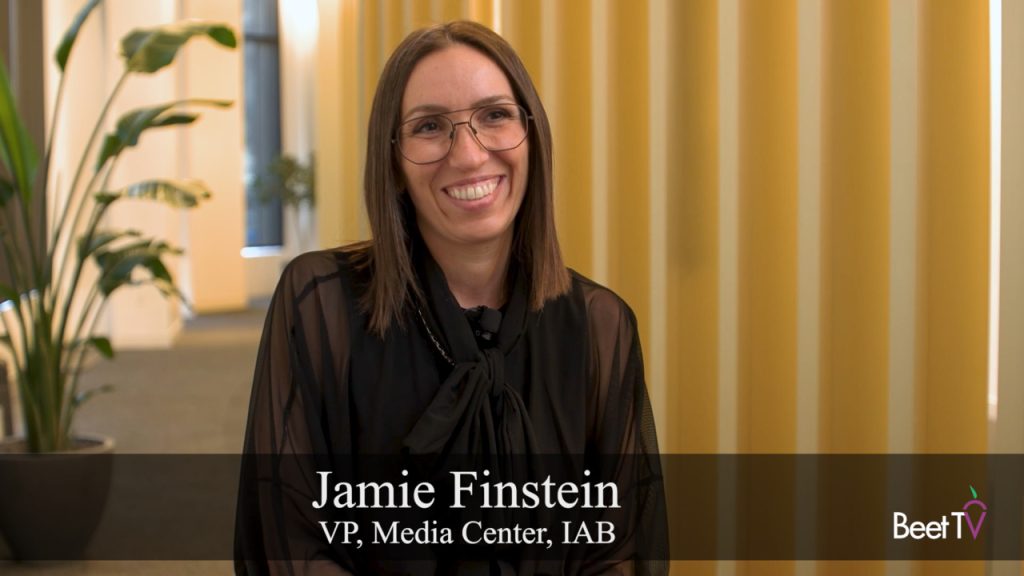
It turns out the death knell for advertising in the streaming era was, like so many media pronouncements, wildly exaggerated. Peter Naylor, chief client officer at Nielsen, stood before Beet.TV’s 20th-anniversary milestone and delivered a data-driven eulogy for the old ad model, only to reveal it’s been upgraded, not annihilated. The disruption wasn’t the end of commercials; it was the dawn of hyper-targeted, one-to-one marketing delivered at television’s massive scale.
Streaming, with its initial “blank slate” appeal, promised a radical departure from traditional television. Yet, here we are, two decades into the digital video revolution, and the humble 15- and 30-second spot not only persists but thrives, now integrated into ad-supported tiers that consumers have readily embraced. This isn’t just a return to form; it’s a strategic evolution driven by economics and audience acceptance, proving that while the delivery mechanism changes, the fundamental value exchange between content, viewers, and advertisers remains remarkably constant.
Did Streaming Actually Kill Ads?
Naylor’s perspective cuts through the industry’s persistent hype cycle. He points to a stark reality: nearly every major streaming platform now offers a bifurcated subscription model—ad-supported and ad-free. This isn’t a niche offering; it’s a mainstream business strategy that directly appeals to budget-conscious consumers. The narrative of viewers universally fleeing ads is challenged by the undeniable market traction of lower-priced, ad-inclusive options. It’s a clear indicator that while vocal opposition to ads exists, the tangible benefit of reduced subscription fees often outweighs the perceived annoyance.
He noted that nearly every major streamer now offers both ad-supported and ad-free tiers, a development that should make anyone who buried the 30-second spot blush.
The more things change, the more they stay the same,” he said, adding that 15-second and 30-second ads remain “a very effective way to communicate in these environments.
This is more than just a quaint observation; it’s a market dynamic. The data suggests consumers are willing to “watch” ads in exchange for savings, effectively subsidizing content and keeping the advertising ecosystem alive and well. The rebels of streaming are now the establishment, and advertising is very much a part of their business plan.
The Data-Driven Ascent of Connected TV
The evolution from linear broadcast to the fragmented digital landscape was itself a massive shift, but Naylor emphasizes that the true power of streaming lies in its ability to marry television’s broad reach with digital’s granular precision. This is where connected TV (CTV) truly shines. It’s no longer just a passive, one-way broadcast; it’s an interactive channel ripe for marketing intelligence. The “one-to-many” model of traditional TV is giving way to a “one-to-one” paradigm, where every viewer interaction can be tracked, measured, and acted upon.
This means that the same sophisticated targeting, measurement, and outcome-driven analytics that marketers have come to expect from digital channels are now being applied to the living room screen. This convergence is transforming CTV from a mere branding platform into a performance marketing engine, capable of driving direct commerce and measurable results. The implications for brands are profound: the ability to not only reach vast audiences but to do so with unparalleled specificity and accountability.
For too long, cross-platform measurement has been the industry’s Achilles’ heel. Brands pour dollars into a complex media mix—streaming, social, linear TV—and struggle to tie it all together. What’s the incremental reach? How does frequency impact perception? Nielsen, historically defined by its ratings, is now positioning itself as the essential “marketing intelligence company,” aiming to fill those critical measurement blanks. Naylor’s vision for Nielsen is one of a holistic analytics provider, capable of offering a unified view across an increasingly fragmented media universe. This is not just about counting eyeballs; it’s about understanding the entire customer journey.
Personalization: The One-Word Future
Naylor’s encapsulation of the past two decades, and his projection for the next, boils down to a single, potent word: personalization. Twenty years ago, media was inherently a broadcast, a one-to-many conversation. Today, with addressable advertising capabilities expanding exponentially, that conversation is rapidly becoming one-to-one. This shift promises a future where content and advertising are not just seen, but are deeply relevant to the individual viewer. It’s a future that sounds efficient, measurable, and, for advertisers, undeniably profitable. It also sounds, perhaps a little unsettlingly, like a world where every screen in your home knows precisely who you are and what you might want. The question for the industry isn’t if this future will arrive, but how quickly and how ethically it will be implemented.
🧬 Related Insights
- Read more: 62% of Gen Z & Millennials Prefer AI Shopping Tools
- Read more: $41B Chargeback Crisis: Banks Drowning in Manual Work
Frequently Asked Questions
What does Nielsen’s “marketing intelligence company” shift mean? It means Nielsen aims to provide broader insights beyond just traditional TV ratings, focusing on helping brands understand cross-platform campaign effectiveness and overall market performance.
Will personalization lead to more ads? Not necessarily more ads, but rather more relevant ads delivered through ad-supported tiers, ideally offering a better experience for consumers and better results for advertisers.
How is CTV different from traditional TV advertising? CTV use digital precision (targeting, measurability) for a broad, TV-like audience, allowing for two-way interaction and direct response campaigns, unlike the one-way broadcast of traditional TV.