Remember the endless parade of perfectly coiffed entrepreneurs in financial marketing? The ones whose businesses seemed to run themselves, every spreadsheet immaculate, every decision a stroke of genius? Yeah, me neither. That’s precisely the “sea of sameness” Quicken’s head of creative, Philip Lowe, wanted to shatter. Everyone was expecting more of the same polished, sterile approach. But Quicken? They decided to bake a whole new recipe.
And here’s the kicker: they’re using AI not just to generate initial concepts, but to test them. We’re talking storyboards, animated mockups, and even facial-recognition data to see where eyeballs glaze over. It’s a far cry from the old days of focus groups and gut feelings. This is a data-driven approach layered with pure, unadulterated playfulness.
Is This the Future of Creative Testing?
Quicken and their agency, Camp + King, didn’t just throw a bunch of kids in front of a camera. They rigorously developed between 10 and 15 concepts, feeding them into AI to build lightweight mockups. Then, they put those through pre-testing tools like iSpot and analyzed facial-recognition attention data. It’s like having a crystal ball that can predict viewer engagement before you spend a dime on production. Lowe even mentioned considering a dedicated creative technologist. That’s how serious they are about separating helpful AI tools from the digital clutter.
This isn’t just about cute commercials. When adults mess up in ads, it can feel shameful. But with kids? Their chaos is charming. It’s relatable. It avoids being judgmental. Lowe’s insight here is brilliant: humor, especially the unscripted, human kind, is the ultimate connector in a world saturated with doom and gloom.
Why Kids Are Actually Serious Business
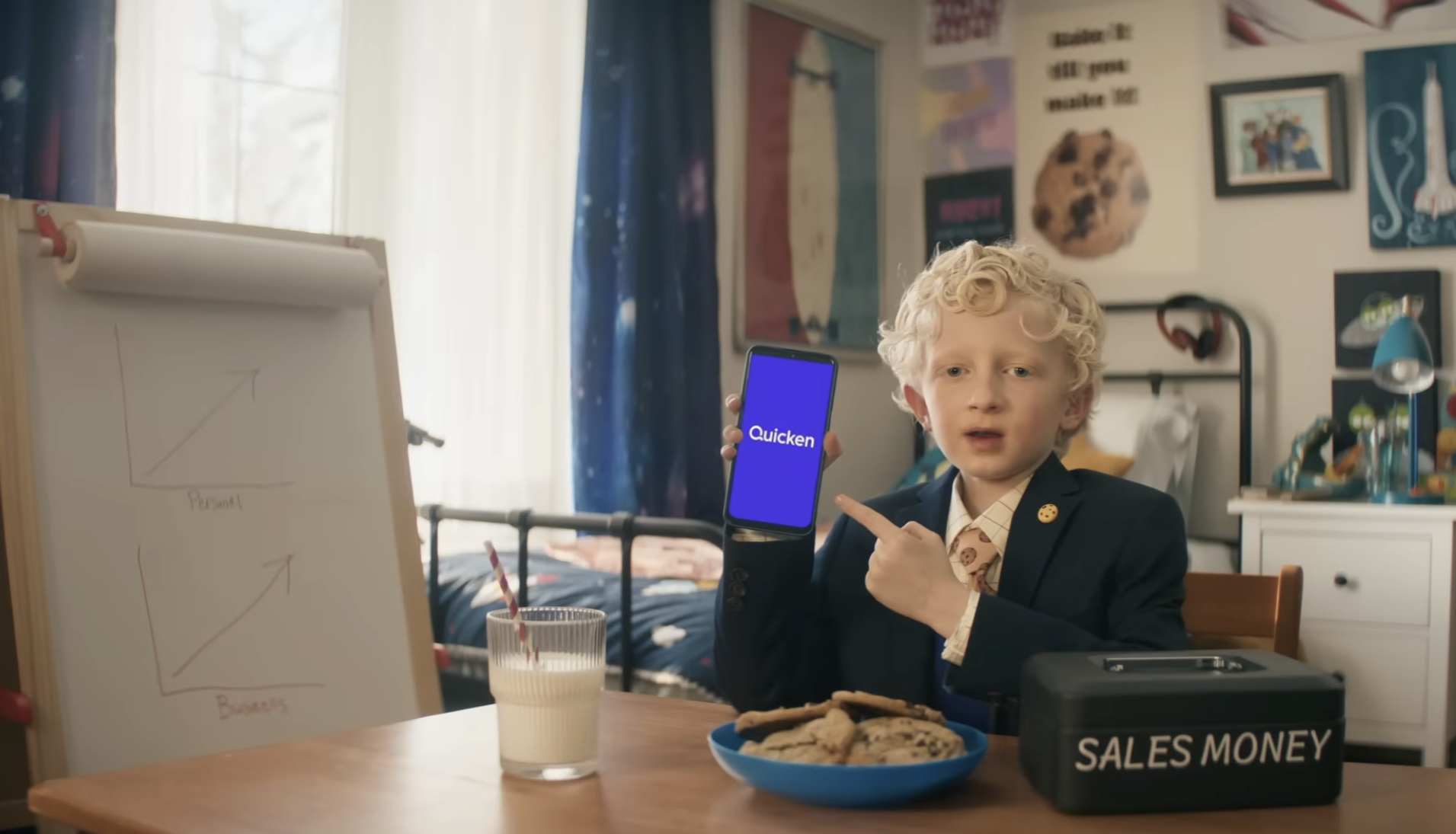
Take that little boy running his “cookie empire,” answering the phone with “Bake it till you make it.” Or the Kidz Car Rental owner wrestling with allowance money versus business funds. These aren’t just silly moments; they’re profound parallels to the everyday struggles of small business owners. They’re grappling with margins, cash flow confusion, and the sheer overwhelm of it all. Except, these kids do it with a disarming innocence that bypasses the usual marketing defenses.
“When adults fail in an ad, it can feel shame-based,” Lowe said. “But with kids, there’s a charm to the chaos. It becomes more human and relatable and avoids being judgmental in any way.”
This campaign use that inherent human truth – that running a business is messy, unpredictable, and often hilarious – and uses it to talk about Quicken’s all-in-one app. It’s not about telling people they need to be perfect; it’s about showing them that Quicken can help manage the beautiful, messy reality.
The AI Angle is More Than a Buzzword
It’s easy to dismiss AI in creative as just another corporate buzzword, another shiny new toy. But Quicken is demonstrating a pragmatic application. They’re using it as a sophisticated filter. Instead of guessing which child-run business concept will resonate most, they’re letting AI provide data-driven insights. This allows them to refine their message and creative execution with an unprecedented level of precision, all while maintaining that essential human element. It’s a powerful synergy—human creativity amplified by intelligent tools, not replaced by them. It’s the ultimate “bake it till you make it” for advertising itself. The bloopers and outtakes, repurposed for social media, further highlight this authentic approach, turning potential production hiccups into genuine moments of delight.
Ultimately, this campaign isn’t just about awareness; it’s about connection. The positive engagement on social media, especially from a finance brand (where complaints are usually the norm), speaks volumes. People are connecting with the vulnerability and humor, which is exactly what Quicken intended. They’re making finance management feel accessible and, dare I say, fun. And in today’s often overwhelming business landscape, that’s a powerful proposition.
🧬 Related Insights
- Read more: Why Is Your Marketing Measurement Still Crawling While Competitors Sprint?
- Read more: Meta & Google Earnings: Ad Market Clarity Emerges
Frequently Asked Questions
What does Quicken’s new campaign actually do? Quicken’s campaign uses child actors to portray small business owners in relatable, humorous scenarios to promote their all-in-one app for managing personal and business finances.
How did Quicken use AI in this campaign? Quicken utilized AI to generate storyboards and animated mockups for initial concepts and employed AI-powered pre-testing tools, including facial-recognition data, to gauge potential viewer engagement before production.
Will this kid-focused approach work for serious financial products? By leaning into humor and relatable chaos, Quicken aims to bypass the sterile, fear-based marketing often seen in finance. The positive social media engagement suggests this approach is resonating well with their target audience.